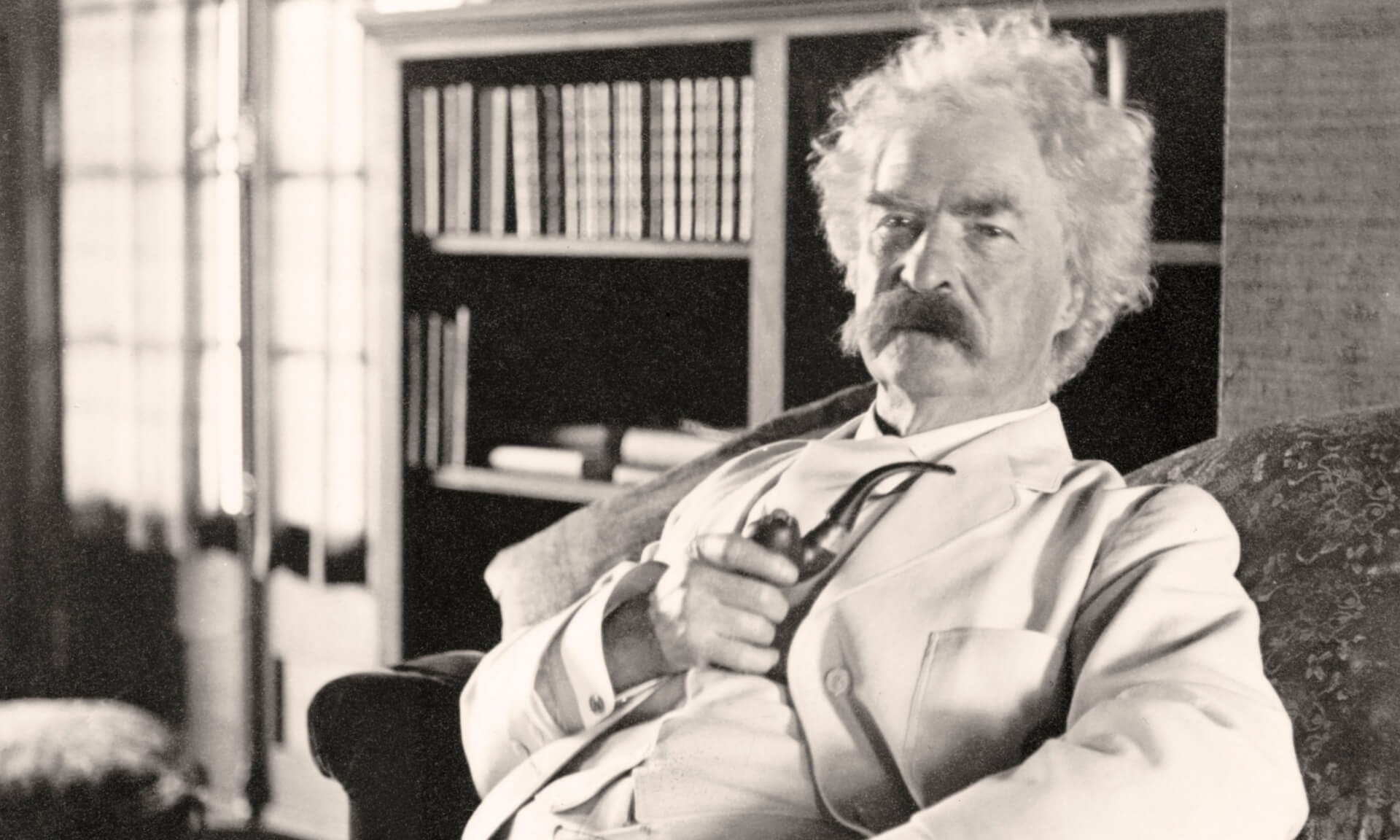
Mark Twain said it most strikingly when he observed that “the difference between the almost right word and the right word is really a large matter — ’tis the difference between the lightning bug and the lightning.”
That thunderbolt of lexical precision came from Twain’s pen in 1890, when he was 55-years-old. Personal turmoil — failing business schemes leading to bankruptcy, sluggish book sales, the death of his favorite child — would darken the rest of that decade, beclouding the sunny prose of skylarking, Tom Sawyer times. Amid this pessimism, though, he had yet to face what most writers struggle to keep at bay as middle-age shuffles into anecdotage.
Let’s call it the dimming of the lightning.
You’ll be sitting at your desk composing something, and what the French call the mot juste exasperatingly eludes expression. It’s not a case of writer’s block so much as writer’s blank.
The mot juste or its close equivalent eventually arrives somehow but not with the alacrity of yore. Back then, those halcyon days of composition, committing words to a page went swimmingly. Now, alas, it can often feel like slogging through sand to the top of a steep dune.
Enduring this stylistic stall prompted uneasiness until I came across a research paper. An influential 2022 study published in Trends in Cognitive Sciences found evidence from neuroimaging and behavioral studies that, among healthy women and men between 65 and 80, temporary blank-outs to retrieve the right word can be nothing more than (in the experts’ semi-technical term) “brain clutter.”
It’s less a matter of losing an earlier facility than an accumulated overload of information clogging the pathways of memory. Having more upstairs, if you will, makes it more difficult to bring words downstairs. The headline on one newspaper account was comforting, even pride-provoking: “Loss of memory is caused by too much knowledge.” Such findings provide reassurance, if not the remedy for this age-related angst.
A non-scientific wordsmith might liken this process to a computer hard drive slowing down as data multiplies. The researchers, in fact, found that “the brains of older adults allocate more space to accumulated knowledge and so have more material to navigate around.”
All those decades of reading and writing lead to a logjam of words and phrases. The accumulated linguistic abundance requires dodging assorted flotsam and jetsam to recover the most exact phrasing. It turns out to be a somewhat time-consuming cerebral salvage operation.
Thank goodness that contemporary inquiry helps explain why words can become elusive as years pile up. It’s also gratifying to learn that one isn’t all alone at sea sailing through these uncharted waters.

In 1954, when Winston Churchill was six months shy of his 80th birthday and serving a second time as Great Britain’s prime minister, he confessed to his wife, Clementine, that he found it more difficult to roar like a lion on the page, as he had during World War II the previous decade.
Churchill needed to write a speech for a political assemblage in London; however, he admitted: “This is a toil which lies ahead of me, and I do not conceal from you that original composition is a greater burden than it used to be, while I dislike having my speeches made for me by others as much as I ever did.”
Ghostwriters were personae non gratae to someone who had combined careers as an author and politician from his mid-20s onward. Just the year before his lament to Clementine he was awarded the Nobel Prize in Literature for, as the citation affirmed, “his mastery of historical and biographical description as well as for brilliant oratory in defending exalted human values.”
By then, Churchill had published more than three dozen books, including 11 collections of his speeches. Despite all that know-how, the “mastery” of younger years was unnervingly difficult to revive in his twilight years.
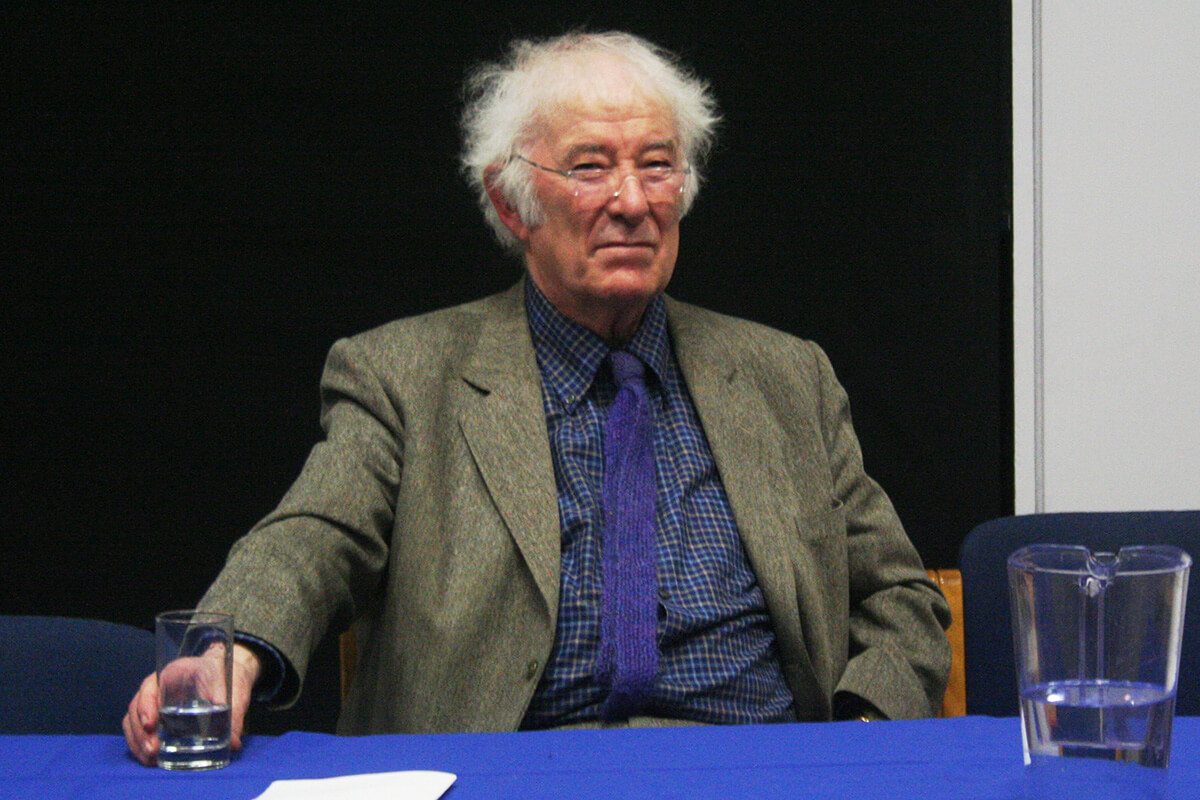
Another Nobel recipient, the Irish poet Seamus Heaney, worried in one of his later lyrical works, “In the Attic,” that age — he was then 70 — was producing a most distressing consequence. What he described as “the memorable” was, unfortunately, sinking rock-like into “the irretrievable,” seemingly lost but somehow not completely forgotten.
Yet both Churchill and Heaney kept summoning words and continued to produce books. Their “brain clutter” — imagine the amount for each literary laureate — might have erected unanticipated barriers, but these obstacles didn’t become insurmountable for either of them. They carried on; they persevered.
What’s a scribbler to do when dealing with authorial gridlock? It doesn’t take brain surgery to sweep away the debris of decades-old “clutter” to arrive at the desired syntactical destination.
One trick is so old-school it’s almost embarrassing to suggest. A thesaurus — you might remember buying one long ago with a fellow named Roget as the author — can become an idiomatic ghost when the muse of composition falters.
Literary lightning might not flash and produce thunder quite as quickly as in the past, but with effort it’s possible to stave off the faint and intermittent illumination of lightning bugs.
Bob Schmuhl is the Walter H. Annenberg-Edmund P. Joyce Professor Emeritus of American Studies and Journalism at Notre Dame. His book, The Last Lion and the First Lady: Winston Churchill and Eleanor Roosevelt, will be published by Liveright/W.W. Norton in fall 2027.