

Control-room consoles lit up during the April 1 liftoff of the Artemis II lunar mission while planetary geoscientist Kelsey Young ’09 worked at Houston’s Johnson Space Flight Center with her NASA lunar science team. Alyssa Farber ’08 watched the launch from the NASA Causeway near the Kennedy Space Center in Florida, her mother and two of her children standing beside her as the Orion spacecraft roared into the sky.
Neither Young nor Farber is quite sure when they fully exhaled again. Maybe not until the Artemis crew splashed down 10 days later, they say.
“It has been full joy since they landed,” Farber adds.
“Moon joy,” they both call it.
Artemis II, a crewed lunar flyby mission, marked humanity’s return to deep space for the first time in more than 50 years. The crew traveled farther from Earth than any humans before them, leaving low-Earth orbit and surpassing a distance record set by the Apollo 13 mission in 1970.
Young and Farber were among the thousands of people in the United States government and the private sector whose work made the mission possible.
Young has worked as a NASA scientist since 2016. For Artemis II, her role expanded into a brand-new position she created — lunar science lead.
“I have always been very comfortable defining my own path and finding my own space,” Young says.

Before the mission’s launch, she defined its scientific and exploration goals, targeting features like impact craters and ancient lava flows on the moon’s far side. She led crew training, preparing astronauts to identify key phenomena and relay their findings to NASA. During the flight, she worked at the control console, making real-time mission decisions.
She also established two new science “backroom” teams to support mission control, one covering scientific evaluation and another science-related mission operations. The former analyzed incoming images and recordings to guide the crew’s study of geological features, while the latter focused on human factors such as monitoring radiation exposure and the astronauts’ physiological responses.
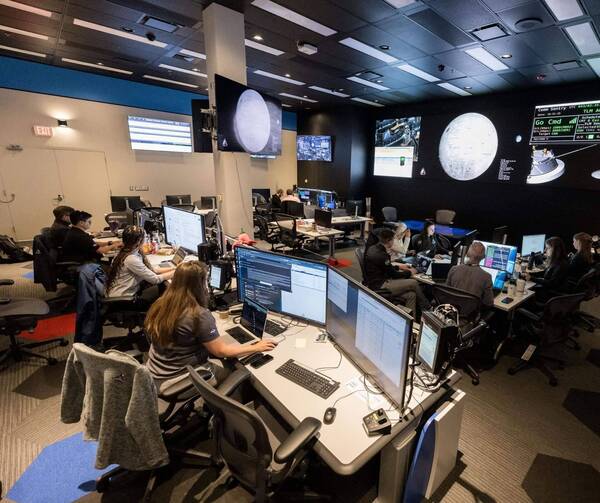
Because of her team’s work, Artemis II became the first NASA mission in which astronauts weren’t simply transmitting observations but were involved in an active dialogue with scientists on Earth. As they shared what they were seeing and hypothesized in real time, lunar experts could immediately respond with feedback, ask follow-up questions and request additional details, allowing the crew to adjust focus and push their discoveries further.
Young and her team won’t finish going through all the data the Artemis II astronauts brought home for several months.
Where Young focused on what the astronauts would learn on the mission, Farber’s primary concern was how they would get to the moon and back.
A software engineering senior manager overseeing flight systems at Lockheed Martin, Farber leads one of three Orion software product teams, supervising roughly 200 engineers responsible for the spacecraft’s guidance, navigation, control, propulsion, docking and backup systems.
The firm’s software governs how Orion flies from launch through splashdown — and how it operates when things go wrong. Even things like the checklist that the astronauts use for tasks are automated through software her team provides.
The work is about preparation — building layers of redundancy so that even worst-case scenarios don’t become catastrophic. Every part of the spacecraft is supported by multiple backup systems, and Farber’s team, composed of NASA and Lockheed Martin employees, continues working throughout the mission to ensure they can fix things remotely before they jeopardize the mission — or the safety of the astronauts.
“Anytime anything went wrong, boom: There were people who knew the answer,” Farber says. “They could send the right commands in seconds or pull together the resources to make the right decision.”
One issue the crew faced was how deep space radiation can disrupt spacecraft electronics. During the mission, radiation strikes temporarily disabled some computers and displays, but built-in software detected the faults, restarted the systems using backup data, and restored normal operations. Farber’s team monitored these in-flight events. Each time, everything worked as designed with no data loss.
“This mission was a hard-fought success,” Farber says. “Not just perfect and smooth sailing. But when it mattered, we had the right minds looking at the solutions.”

For NASA’s Young, Artemis II was primarily about discovery. After all, Earth and its moon are so close together, as far as the solar system goes, that for the past 4.5 billion years, they have experienced many of the same formative events. But unlike Earth, the moon has no plate tectonics, oceans or vegetation to continually reshape and obscure its surface, meaning it offers a far clearer record of that shared history and a uniquely valuable place to study it. The moon, Young explains, is “a witness plate for the whole solar system.”

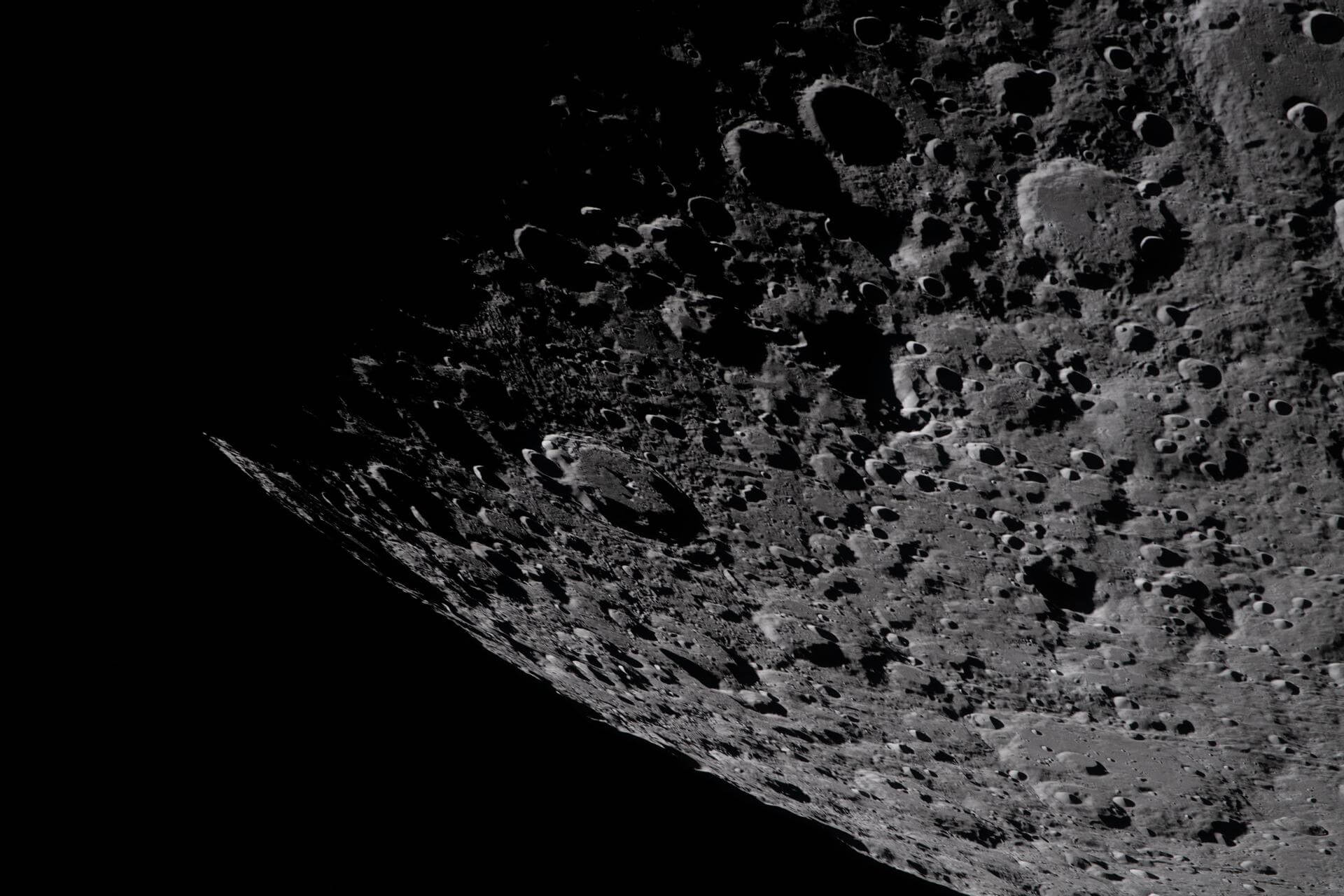

Already, the April 2026 mission has revealed new lunar insights — from noting previously undiscovered geological features to spotting subtle variations in the moon’s surface colors that may reveal its mineral composition and how it’s morphed over time. Some of these details are so faint that astronauts could see them only under specific angles of sunlight.
More discoveries remain buried in the data sent back through photographs and annotations, which Young’s team will continue to review before any public release.
“The moon is something that unites all of us.” Young says. “Every single human being all over the planet has their own way of connecting with the moon. And this mission brought the moon a little bit closer to home, to all of us, but there is still so much we have yet to understand about it.”
The last crewed lunar mission, Apollo 17, launched in 1972 — long before Farber and Young were born. NASA’s first six lunar space flights, starting in 1969, captured the American imagination, but after decades passed without further progress, much of that shared sense of awe and possibility had faded. Now, by taking another historic step toward returning astronauts to the lunar surface, Artemis II is rekindling that spirit — inviting a new generation to share in the feeling.


“Kelsey has obviously learned an awful lot since she left Notre Dame,” says lunar scientist Clive Neal, a professor of civil and environmental engineering and earth sciences, and one of Young’s mentors. “And to see her when she was on NASA TV during the mission? She couldn’t stop smiling, and that was infectious.”
Farber arrived at Notre Dame torn between mechanical engineering and theater. Despite an initial dislike of computer programming, she realized she loved “making things fly” and majored in aerospace engineering instead.
Young, an “outdoor-loving, field-trip kid,” was drawn to environmental geosciences. At a student, that curiosity took her to Iceland, where she studied volcanic formations as analogs for Mars, where similar features appear.
As students, the women had a passing connection for one year on the Notre Dame rowing team, bonding as two of the few engineering majors on the roster, but their paths seldom crossed thereafter. Years later, separated by 1,600 miles — Farber working at Lockheed Martin in Denver; Young at NASA’s Goddard Space Flight Center in Greenbelt, Maryland — they became teammates again on Artemis II.
“I got to experience Apollo through storybooks and history lessons and old videos,” Farber says. “And that was a huge cultural moment my parents were a part of, but for me, it’s just in the history books. And Artemis II is . . . happening in real time. And to know I even had a small part to play in that is just really just amazing.”
Colleagues, friends, even distant relatives reached out to both Young and Farber after liftoff.
“It was very heartwarming,” Farber says. “To have a distant relative call and be like, ‘Dude, I know you’re a part of this; I’m so proud of you.’ There was a lot of family pride in that. So it was really cool to maybe be that beacon of joy and hope for others as well.”

Farber’s 8-year-old son talks about following in his mother’s footsteps. Young’s 2-year-old daughter points up and shouts “Moon!” whenever she sees it.
Those involved in the mission feel the same awe. Farber remembers seeing her manager, her senior by 20 years, shed tears at splashdown. She also saw joy on the faces of employees just out of college, knowing that they were able to contribute to something momentous.
“We had full moon joy,” Farber says. “Now we have a little bit of Earth joy, too.”
Michelle Cuneo is an associate editor of this magazine.