
When I was 15 years old, I took a vocational test at school. The exercise was meant to unearth what my classmates and I liked to do, in the hope that each of us could then discern what we were meant to do. I’d forgotten about it entirely in the decades since, until my mother, a dedicated scavenger of my childhood relics, recently found an old copy of the results and mailed it to me.
My vocation, it seems, was not in the realm of mathematics or science, where I scored in the middle ranges. My mechanical and engineering interest was so low that it did not register as a percentage but as a flat line. Music and social services were of moderate appeal, as were, weirdly, working in an office and working outdoors. (Maybe teenage me just didn’t want to work anywhere.)
Only two arenas stood out. I had high “literary” interests, which, the report explained, meant that I liked to read and express myself in writing. I also scored high for “persuasive” — meaning I was someone who liked to “impose his point of view” and “influence the opinion of others.” These interests added up to several possible careers, including as a writer, journalist and professor of letters.
I may not have aced the test, but the test aced me. Throughout my professional life, I’ve worked as an editor, book critic, author, newspaper columnist and intermittent professor. In essence, I have devoted my career to reading and then to writing, for readers, about what I’ve read. Literary and persuasive.
I realize what a luxury it is to read for a living, to turn a hobby into a livelihood. I exist surrounded by texts of all kinds; the most common physical addition to my home is more shelf space. Yet I increasingly feel like the practitioner of a dying form, an adherent of a worthy but lonely vocation. The National Endowment for the Arts found that, in 2022, fewer than half of American adults read even one book of any kind. And the Department of Labor reports that Americans age 15 or older spend only 15 or 16 minutes a day reading anything for personal interest. That is barely 1 percent of each day.
We’ve heard the laments and explanations: We are too busy or distracted or stressed to find time for reading. We’re too attached to our devices, too hooked on YouTube or TikTok or podcasts to linger on anything as retro as printed pages bound between covers. There may be something to this, of course. But through my own reading life, I’ve found that the challenge of reading — and of reading well — is a matter not of sociology or technology, but of humanity.
Many studies, videos and even books purport to instruct us on the right way to read — how to read like a professor, like a lawyer, like a CEO, like a genius. I appreciate the effort, but I want to suggest an alternative form of reading, one that may come more naturally to us: How to read like a human.
We won’t all be chief executives or professors or (God forbid) lawyers, but we are all human beings. So, how best to blend our reading and our humanity?
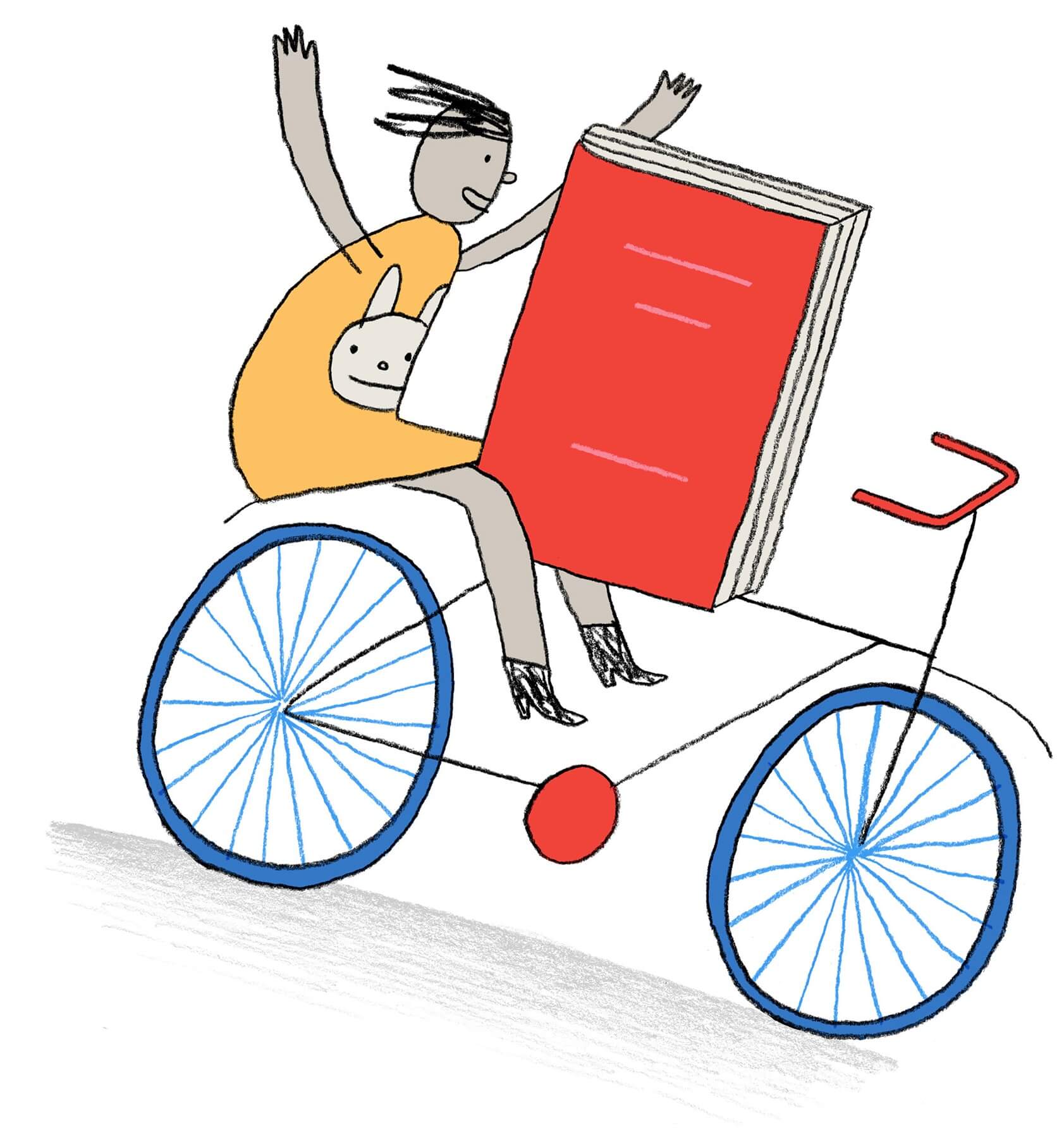
Treat your books like your friends.
If you’re lucky, you have all manner of friends in your life — best friends, close friends, work friends, neighborhood friends, friends whom you might not choose if you met today but with whom the history you share ensures a lasting, unbreakable link. You may have marginal friendships that would end without frequent interaction (as at the gym, a book club or church), and you may have friendships that can endure long absences, even long silences, with no trouble at all.
Books are like this, too. Some I return to every few years and learn something wonderful on each occasion; others just help me pass the time. Some books I loved as a child, and I attempt now to pass that love along to my own children; others I read out of a sense of professional duty.
Sometimes I need to bond with one individual book. I met Louise Fitzhugh’s Harriet the Spy when I was in elementary school and, trust me, Harriet and I still hang out. At other moments, I prefer to dive into several books at once. Thanks to my work, my interests, my children and my forced labor on a literary prize jury, I usually have three or four books going at a time. This means that, no matter my moods or the challenges of daily life, at least one of my books, like one of my friends, will be there when I need it. There is safety in page numbers.
Friends thrive in community, and books do, too. It’s a thrill when I bring together friends from different circles and see them begin to click; it’s also wonderful when disparate books from different phases of my life start to connect. The more I read, the more my books speak to each other. It’s like my brain is throwing a party, and everything I’ve ever read is invited.
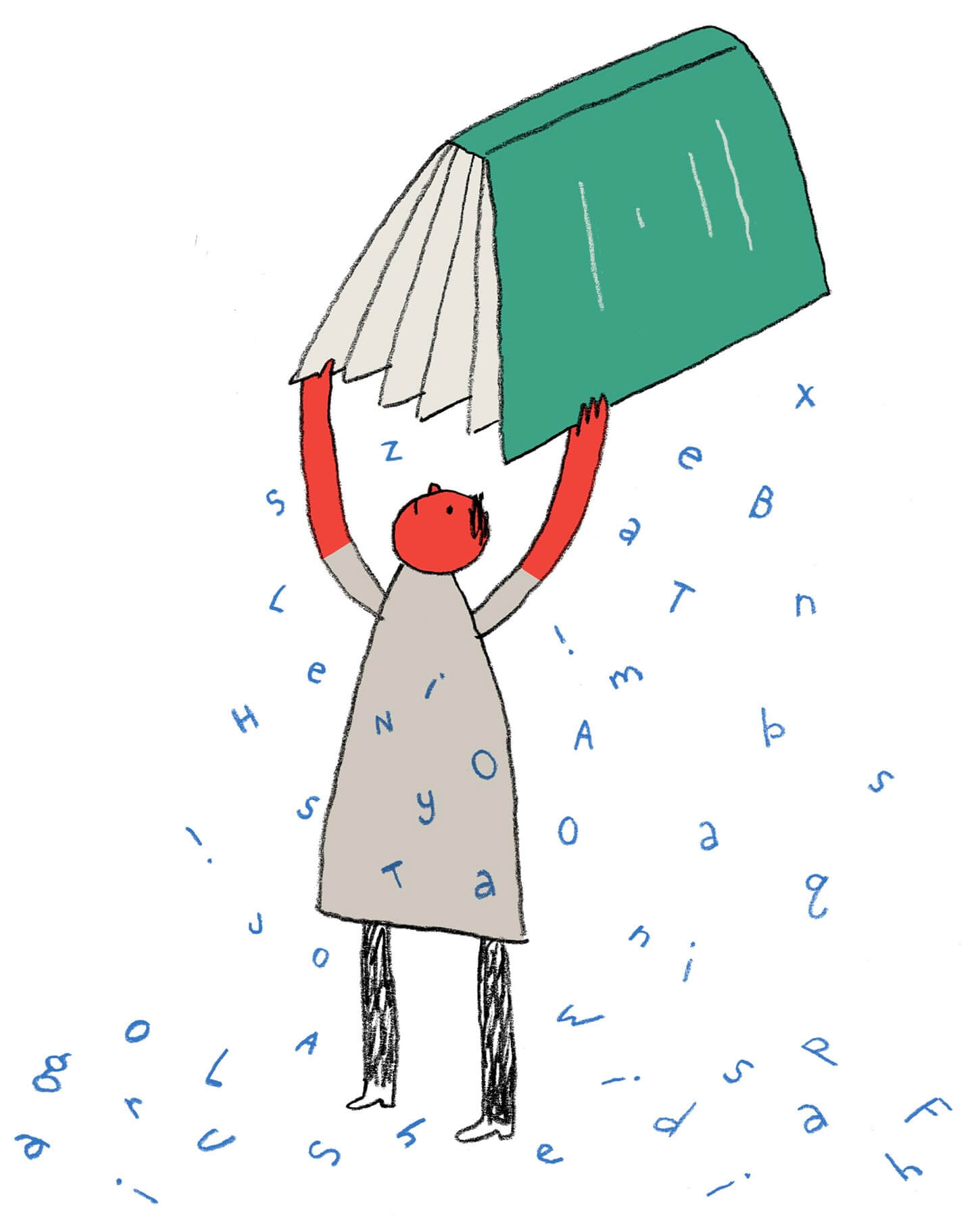
Don’t look for yourself in books.
Human beings are naturally curious. We’re explorers and travelers and risk-takers; we like to experience new cultures, try new foods, meet new people. This is because difference is appealing, whereas too much sameness can get boring. Opening a new book is — or should be — like visiting a foreign country.
I’m skeptical of the popular notion that we should read books that we can relate to, or that schools should assign readings in which students can see their own stories reflected. After all, how dull would your life be if all your friends were just like you? I don’t always want to see my story reflected or validated in the books I read. I’d rather delve into worlds and lives that feel entirely different from mine — and then feel that exquisite shock of recognition when I see slivers of myself, those foibles and mercies of a shared humanity, in a distant person or a distant land.
Harriet M. Welsch, the immortal protagonist of Harriet the Spy, was a wealthy kid with a live-in nanny who attended a snooty private school on the Upper East Side of Manhattan in the early 1960s. On the surface, she and I had very little in common. But when Harriet’s middle-school classmates found her private notebook and read what she was writing about them — sometimes mean but always honest — she became afraid.
I know that fear. We all know that fear. It’s the fear that asks: What will they think of me once they realize who I really am?
When we can feel our own fears, and glimpse our own joys, in the lives of others who seem unlike us, we are touching something universal. We are reading like humans.

You should fight over books. Even better, fight with books.
Humans are contentious; we compete and we argue. So, let’s be open to books that fight with us, that challenge what we think we know about the world and what we like to think about ourselves. A colleague of mine has gone so far as to say that we should read books we hate — meaning authors we don’t like, topics or styles we’d rather avoid. Reading what we hate helps us determine and refine what we value. So don’t just toss a book aside if it seems to contradict your gut instincts. Keep reading and try to figure what about it bothers you, and why.
Wrestling with those demons, you might pin them down — or you might discover they’re actually angels. Reading is how you’ll come to understand what you believe and why you believe it, and whether the person you think you are is, in fact, who you really are, or who you truly want to be.
That’s why banning books is so insidious. It doesn’t protect our minds; it flattens them. It feeds our certainties and starves our imaginations. The more we banish ideas we don’t like, the more we’ll start to reject any new ideas at all. After all, with that mindset, books you disagree with are dangerous; and books you do agree with are redundant. So why learn anything?
In Harriet the Spy, when Harriet’s friends seem to abandon her and her parents don’t know how to help, Harriet’s beloved nanny, Ole Golly, bucks her up, reminding her that “life is a struggle, and a good spy gets in there and fights.” The more you fight with books, the more your books will be there for you later, fighting on your side.
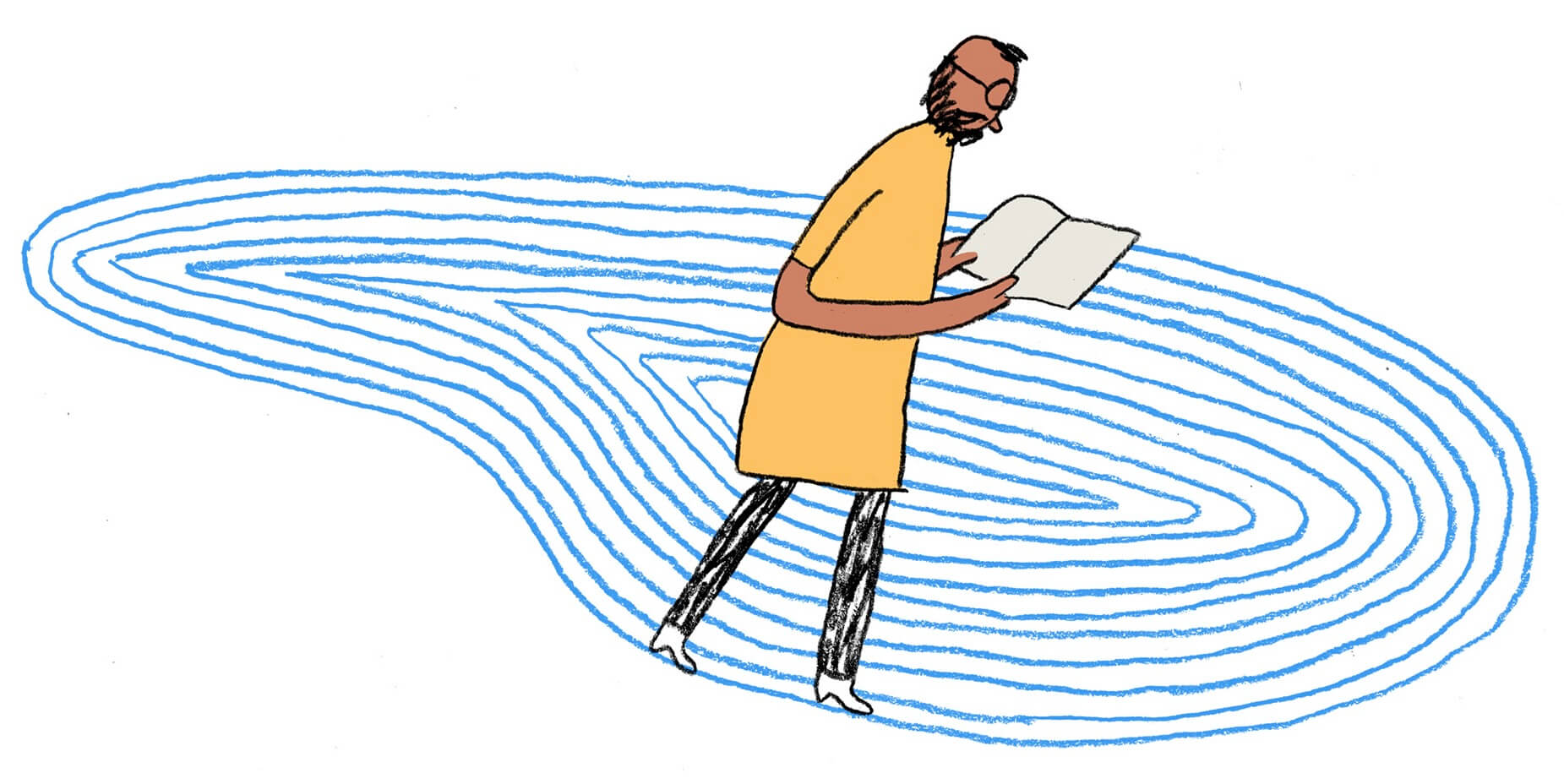
Don’t just read books. Reread them.
Humans like to make and preserve memories. We paint portraits and take photos. We write in diaries and publish histories and memoirs. We keep records of everything. Our books are a form of personal record-keeping.
I love rereading books that I read long ago. Especially if I have the original copy — then I can see the passages I underlined, the notes I made in the margins. And I wonder, why did those ideas strike me so much back then? Maybe something else seems important now from those same pages. Books thus become a record of our own minds — of the author’s mind, but of readers’ minds, too.
I’ve always been torn about those summer reading challenges in which kids earn a prize or certificate for reading a certain number of books before the new school year begins. It’s a nice incentive to read more books, but with reading, volume isn’t everything. New books are wonderful, but rereading a single book, even several times over, is no less worthwhile. Each time you try it, the book will be different, because the world around you is different, and because you have changed as well. Get to know one book well over the years, and you’ll know yourself better, too.
The first few times I read Harriet the Spy as a kid, I was riveted by the title character. I wanted to develop my own spy route, and I tried — unsuccessfully — to write clever observations in notebooks of my own. (I even decided that if I had a daughter, I’d name her Harriet. I do have a daughter now, but I also have a wife who vetoed my plan.) Still, as I grew older and read the book many times over, I found myself understanding Harriet’s parents so much better. I used to think they were just tiresome and distant, ancillary to the main story, but over time they became more vital and more complex. Their efforts to connect with Harriet, to understand her struggles and motivations, made me reconsider my relationship with my own parents, and eventually with my own children.
The book hadn’t changed; it showed me how I had changed.
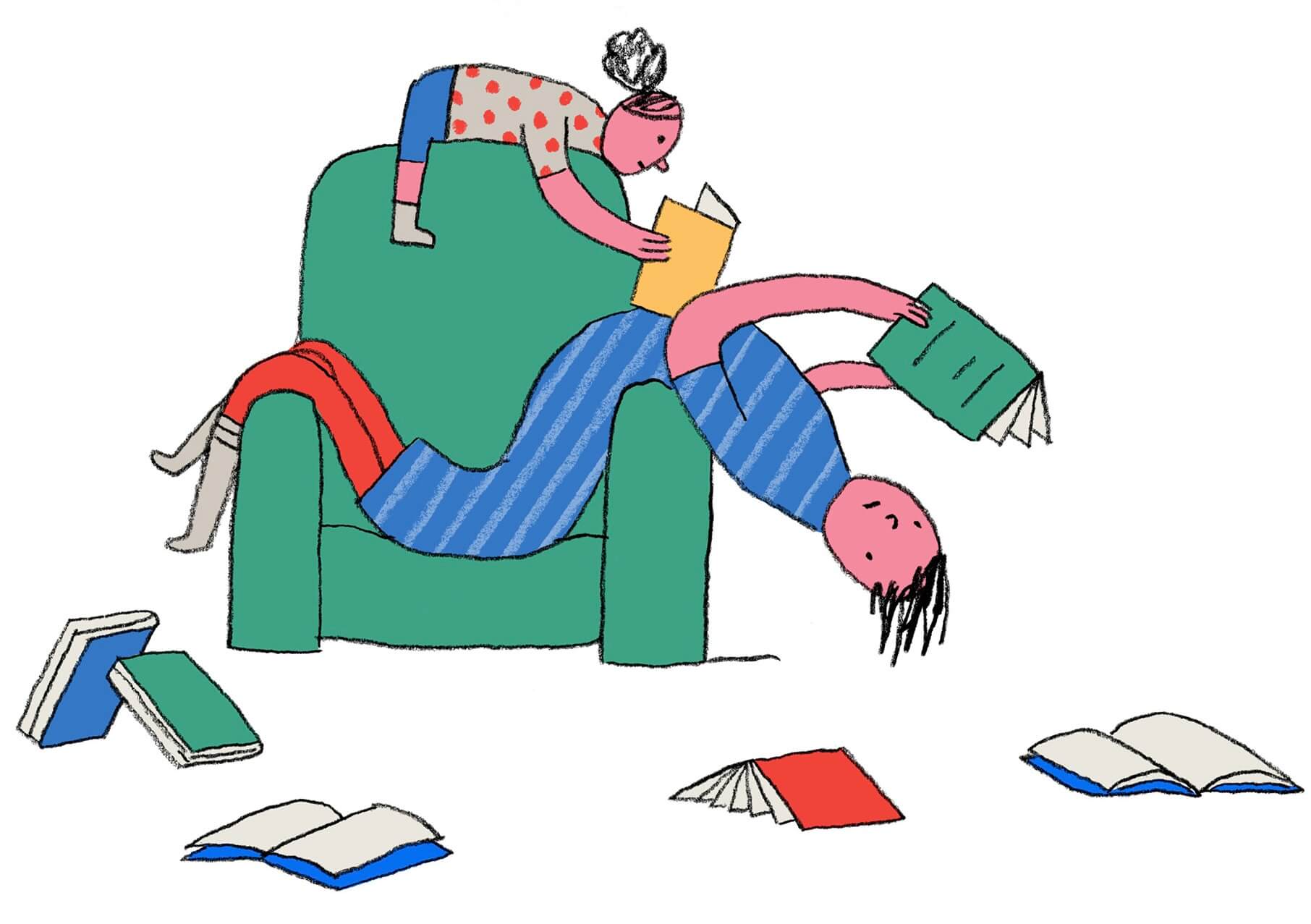
Be a messy reader.
Humans are messy, and that’s OK. A life of reading, a reading vocation, should be gloriously messy.
That means reading all sorts of books in all sorts of ways. Read nonfiction to learn facts; read fiction to glimpse truth. Read classic works and read random ones. (Sometimes the random ones will become classics for you.) Read books that seem silly and books that seem serious; over time, the books in those categories might flip.
Read alone or read in community. (But if you join a book club, don’t be the person who doesn’t finish the book but pontificates about it anyway. Trust me, everyone can tell.)
As you get older, read with your children for as long as they can stand it, which might be longer than you expect. In recent years my kids and I have sat together to read and talk about Mark Twain’s Adventures of Huckleberry Finn and Percival Everett’s James, Oscar Wilde’s The Picture of Dorian Gray and Agatha Christie’s The Secret Adversary — and, of course, Harriet the Spy and its lovely, lesser-known sequel, The Long Secret. These readings are among my most treasured family memories; I hope someday they will become so for my kids, too.
I’ve often heard it said that if a new book fails to excite you in the first chapter or so, you should just stop reading it and pick up another, that life’s too short to stick with a book that doesn’t grab you. I could not disagree more. Life is too short not to read those books.
We all have people in our lives who, when we first met, may have seemed awkward and off-putting, a bad fit for friendship, yet now they are dear to us. Books are like that. That’s because our ideas, views and tastes are never as set as we think they are. They’re still messy. We should not read to reaffirm who we are but to rediscover ourselves.
One of my favorite moments in Harriet the Spy occurs when Harriet is rehearsing for the sixth-grade pageant. All the kids are assigned to play the parts of a Christmas dinner, and Harriet is supposed to play an onion. She instinctively hates the role and threatens to quit the pageant. “You can’t quit,” a friend whispers to her. “This is a SCHOOL.”
Feeling defeated, Harriet begins practicing at home. “Harriet tried to feel like an onion,” Fitzhugh writes. “She found herself screwing her eyes up tight, wrapping her arms around her body, then buckling her knees and rolling to the ground. . . . Harriet rolled round and round the room.” Soon, her father joins in the rolling session, while her amused mother watches them. “It wasn’t bad at all,” Harriet decides, “this being an onion.”
Then Harriet grabs her pen and notebook and asks herself: “I wonder what it would be like to be a table or a chair or a bathtub or another person.”
To me, this passage captures the essence of the book, and the experience of reading. Throughout Harriet the Spy, Harriet learns to see the world through the eyes of her offended friends and classmates, and she resolves to stay true to herself even as she knows she is, inevitably, becoming someone new.
Reading does not have to be a professional vocation. It can be a habit, a discipline, a joy, a constant exercise in self-discovery, no matter whether you imagine yourself to be literary or persuasive. If your reading ever leads you to wonder what it would be like to be another person, then I’d say you’re doing it right. You are reading like a human.
Carlos Lozada is an opinion columnist at The New York Times, author of The Washington Book: How to Read Politics and Politicians and a visiting professor of the practice for public discourse at Notre Dame’s Institute for Ethics and the Common Good. He won the Pulitzer Prize for Criticism in 2019. This essay is adapted from the commencement address he delivered at Saint Anselm College in Manchester, New Hampshire, in May 2025.