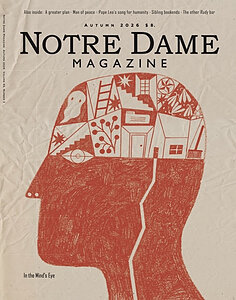
I’m reminded again and again not to be too certain in my recollections. Any credible recounting should begin with a disclaimer like, “If I remember correctly” — the implication being that I probably don’t. That’s a load-bearing “if.”
Too often I just blurt. I saw an old friend recently, the first time we’d crossed paths in decades. I made a passing comment, retrieved from the recesses of my brain, that I thought had a firm basis in our shared reality. His response, as good-humored as I’d have expected from the way I remember him, suggested otherwise.
The thing about memory is, I wasn’t necessarily wrong and he wasn’t necessarily right. (I was necessarily embarrassed, but I’m pretty sure that’s a different brain process.) The lesson — not that I needed another reminder — was that perceived certainties about the past are actually a pastiche cobbled together from subsequent recollections of people and moments. Is that how it happened, what they said, the way I reacted? Or just fragments of fact reassembled, through repeated reminiscence, into a mosaic of the mind’s own making?
That may be too artistic an image, suggesting too vivid a mental panorama. A better metaphor — at least as I get older and more escapes me — might be a copy of a copy of a copy, left mostly unattended but now unearthed, yellowing and crinkling.
All I’ve described so far is individual memory, the stuff of our personal lives. Kerry Temple ’74, who you’ll recall as the longtime editor of this magazine, does that much better, revisiting scenes from his life encoded in the neural signals that cross his mind. Using flashpoints of his past, he lights our way through the labyrinthine processes that influence how and what we remember. I expect reading him on these pages again will bring back fond memories.
Mark Phillips mines his own life story, too, remembering people he’s loved and lost while delving into deeper roots of his family tree and the land he inhabits, which has a history far pre-dating his forebears. Out navigating the terrain, he encounters his people, and visions of sights and sounds their predecessors knew and named. He heeds what he calls their ghost stories, imbibing ancestral knowledge about bygone times and landscapes he never witnessed.
From war-ravaged Ukraine, Anna Romandash ’23MGA explores the consequences of willful neglect of history at a national level — the salting of old wounds that still haven’t healed even as new casualties accumulate. Her reflection on the era of Soviet occupation and the forgiveness-by-forgetting of Ukrainians who accommodated atrocities and administered oppression has resonances far beyond her homeland. We allow the complicit to go unpunished, and conflicts to persist unresolved, at our peril.
What ties these essays together in my mind is the cautionary sentiment where I began. They remind us that stories of the past — from firsthand experience and the inheritances of ancestry, geography and nationality — are fraught and contingent, often incomplete or outright incorrect.
Not that we should dismiss them. There’s almost certainly truth in any memory,
personal or collective, but also inevitable errors introduced by aging and the distance
of time, even lies we tell ourselves and each other. And the consequences of misremembering could be much worse than mild embarrassment.
We’d be wise not to forget that.
Jason Kelly is editor of this magazine.