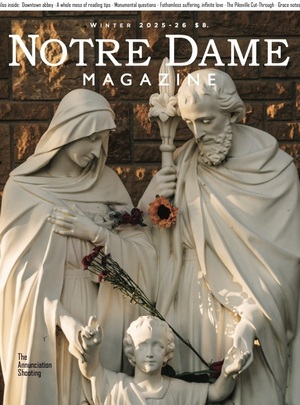
You may find some articles in this issue difficult to read. That’s not a warning, but a commendation for those who have shared their stories so that we might bear witness. Sometimes the most powerful reporting makes us flinch, compelling us to avert our gaze rather than face the disturbing realities that invade our world.
Through the haunting experiences of those were there, Michelle Krupa ’00 tells the story of a Minneapolis church that experienced an all-too-familiar horror when gunshots reverberated through a Mass attended by schoolchildren. Reflecting on a nearly bygone chapter of his life, filmmaker Gerry Straub puts human faces on the suffering of children in Uganda, where he once found unimaginable misery.
In both stories and others in these pages, the inexhaustible strength of individuals and communities shines through. Krupa shows us how the tight-knit families of Annunciation parish held each other even closer as they embarked on the long process of grieving and healing, together. And where Straub encountered emaciated children, sick with polio, helpless in the dirt, he also met Jane, an older sister caring for her siblings with a selfless spirit.
The power in such retellings comes not from the tragic events they recount, but from the inspiring response — the immediate, almost instinctive, rallying around one another. Mister Rogers’ famous advice to children experiencing a crisis comes to mind: “Look for the helpers.” Amid great anguish, they appear, reminding us of the good permeating everywhere.
Mel Livatino has known such people throughout his life, some only for fleeting moments. He introduces us to several whose ordinary acts of compassion — help with a flat tire on a rainy day, quiet generosity on a modest income — impressed upon him the enduring impact of goodness.
At St. Benedict’s Prep in Newark, New Jersey, goodness fills the halls. An inner-city school for students “other schools might barely tolerate,” as Anthony DePalma writes, St. Benedict’s instead welcomes and cedes leadership to them, nurturing a culture that combines intense physical challenges with attentive psychological care. The results attract educators by the dozens seeking to replicate the flourishing academic environment that a deeply rooted monastic community has cultivated in the city’s “grubby concrete heart.”
Just as we can find light in darkness, the inverse is also true. James McKenzie ’71Ph.D. looked up — literally — to a man put on a pedestal as a Civil War hero, the first to enlist for the Union cause. That checked out, but in looking closer, McKenzie discovered little else to celebrate. The facts complicating the laudatory narrative prompted him to ruminate on the sins of omission in certain public memorials, but also to reflect on his personal history and the potential lurking within himself to commit the sort of acts he condemns.
We have reason to believe the better angels of our nature can overcome our capacity for hate and harm. These stories tell us so, through the eyes of people who have seen the worst but have never lost sight of the resilient hope inherent in the human heart.
Jason Kelly is editor of this magazine.