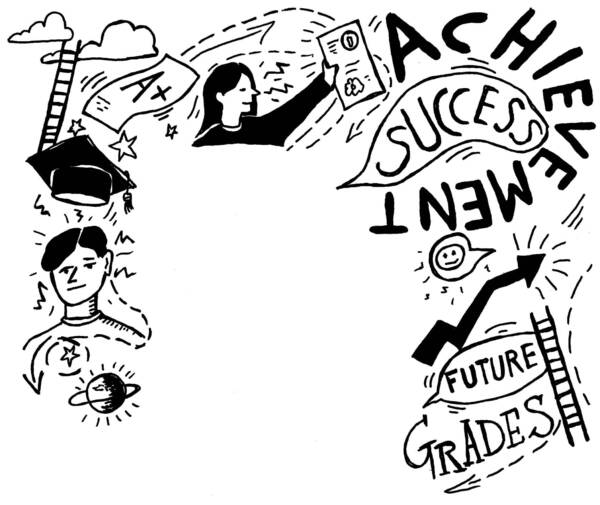
A few semesters ago, I experienced something that felt new and portentous. A first-year student signed up for office hours to argue that my attendance policy in the philosophy course God and the Good Life was too strict. I was baffled. I give students two “free” unexcused absences and make it clear they can avoid penalty for University-excused reasons — illness, mandatory departmental exams, job interviews, religious holidays. If anything, I’ve worried my policy is too lenient.
After emphasizing how much he was getting out of my class, the student listed his activities, clubs, volunteer opportunities and other obligations. I empathized, admitting that I wouldn’t want to be that busy, but I also pushed back: Taking core classes is an essential part of a college education; those other activities are valuable but optional. If you can’t balance college clubs with your college courses, it seems clear to me what has to give. But he was unmoved.
“I enjoy your class, I think the expectations are fair, I’m learning a lot about philosophy and about myself,” he said. “But you have to understand that attending classes is my lowest priority.”
This stung a bit, and I said so. But I was more curious than offended. I tried in the moment, unsuccessfully, to get myself in that headspace. If taking classes was his lowest priority, then what did he think college was about? We reached an amicable resolution: I told him he’d fail if he didn’t show up to class, and he didn’t miss a session for the rest of the semester.
As he was leaving the meeting, I asked — almost as an aside, to build a stronger rapport — what his major and career goals were.
“I’m double-majoring in Sociology and in Education, Schooling, and Society,” he said. “I think I want to get a Ph.D. in education.”
This encounter has returned to me in various moments since. The story is full of contradictions and lacks any clear moral, but buried in this student’s paradoxical attitudes and the values they manifest is a key to understanding the undergraduate experience with all its pressures, anxieties and unstated assumptions. It’s a story I offer in conversation with colleagues who think kids these days just “aren’t willing to do the work.”
“Which work?” I ask. My students are certainly doing more work than I ever did in college, though most of it, increasingly, seems to be outside the classroom.
In these conversations, I use the anecdote as an invitation to puzzle through the complexity faced by the contemporary college student. This kid wasn’t lazy. He valued education in practice and in theory. But he earnestly believed that taking classes — at least required classes like mine — was the least important thing he did.
While accompanying students to an investment conference this past fall, I placed another piece of the puzzle. As major employers begin their recruitment cycles earlier and earlier, some now starting in the fall of sophomore year, student organizations have come to be seen as the most essential preparation. A student-run investment club, for instance, allows freshmen to apply for formal roles on a “board” managing actual money. Another club flies students across the country to present on real-life consulting cases with actual companies. If you don’t land one of these board positions or one of the better projects with a top company — weeks after arriving on campus — conventional wisdom is that you’ll need to find a leadership position in a second-tier club and do something truly remarkable to stand out.
“What if you can’t do that?” I asked.
The oldest student in the group — a month into his junior year — shrugged. “Maybe it’s time to start thinking about a different career path.”
I’ll admit that my first instinct was to dismiss this perspective as ill-informed. I’ve observed colleagues telling students not to worry so much about extracurriculars or to argue about grades down to the percentage point. I’ve given such advice myself. Employers don’t care so much about those things, we tell them; the whole purpose of college is to engage in learning for its own sake. Transferable skills and knowledge will inevitably follow, like a blessing, for those who resist the temptation to instrumentalize. Worrying about “return on investment” is degrading and makes no sense vis à vis the intrinsic value of education.
But hearing this junior make his case, with examples of an almost-direct correlation between club membership and return offers at the “Big 4,” I realized just how little evidence my own view was based on. His reply also helped explain the attitude of the student who considered regular class attendance his lowest priority, and it may hold the key to understanding where college students think the real learning happens.
Over the last five years, a colleague and I have built a learning environment at Notre Dame that tries to offer a small but powerful counterculture to help students resist such influences. The Sheedy Family Program in Economy, Enterprise, and Society gathers undergraduates who have declared majors in both business and arts and letters disciplines into tight-knit learning cohorts and invites them to explore the links between work, meaning, purpose and the good life.
We study business, but always in conversation with the liberal arts. On any given day, we’re as likely to discuss Shakespeare as Adam Smith. We read poetry alongside works from the Chicago school of neoclassical economics. We ask basic questions about freedom, responsibility, and risk, not as a break from their “real” education, but as its foundation. The program fortifies the liberal arts core in the context of deep relationships, a community that encourages students to converse with faculty, peers and some of history’s great thinkers through primary texts.
No credential is tied to the program. Students receive no transcript notation, and it’s not advertised as a resume boost. Yet they show up late at night for unscripted conversations, on retreats with no phones, at semiformal dinners where the only requirement is attention and dialogue. We’ve learned that when students sense the work is real — when it connects to their deepest questions — they don’t want to avoid, automate or offload. They want to participate and engage.
Instead of vague gestures toward “critical thinking” or promises that disciplinary methodologies will be “more relevant to employers than ever,” Sheedy fits into the curriculum in a way that we have been cocreating with our students. The program recognizes that learning takes place when students have regular opportunities to explore, grapple with and test knowledge that lies just outside their comfort zone.
Many students assume that such grappling no longer happens in the classroom, and our awareness of that assumption compels Sheedy faculty to design courses that challenge it. But it often feels wrong to draw a hard line between coursework and extracurricular programming. Our students are as likely to reference Aristotle and poetry during a question-and-answer session on a site visit to Google headquarters as they are during a first-year retreat. Indeed, we earn our credibility when we model this sort of engagement during a recruiting panel at a major investment firm. We bring our students to places of employment, dialogue with the employers themselves and reflect with each other at night back at the hostel.
I describe what we are doing in Sheedy as formative, continuous education, but sometimes it’s more relevant to talk about it as purpose-driven career discernment. We value common experiences; even our guest speakers participate in two-and-a-half-hour dialogues with us over dinner.
In this way, I see the Sheedy program as closer to the “schools” of the ancient Greeks than what that word has come to represent. For Aristotle’s students, guided learning on the path toward understanding often took place on literal paths: They were called the Peripatetics because they held class on walks around the city.
Sheedy builds on an experiment I started while designing God and the Good Life almost a decade ago. I was a teaching assistant complaining to the professor about how her traditional Philosophy 101 course put vital questions through disciplinary conventions that drained them of relevance to our students’ lives. We marveled at how the conversations we’d have with each other based on articles in The Atlantic or op-eds in The New York Times lost their force when wrapped in the academic language of philosophy. She challenged me to stop complaining and do better.
A year and a half later, we launched the new course, aiming to give students the time, space and resources to ask big questions like, “What makes life meaningful?” and “Should you practice a religion?”
I expect a lot from the GGL students. For instance, they have to complete a unit on thinking like a philosopher — critically, analytically, with an eye toward clarity and precision in articulating the reasons behind their beliefs. In May I published a paper in an academic journal documenting how that unit increased students’ LSAT-style “critical thinking” skills — examining and evaluating evidence and arguments — by 15 to 20 percent.
I also require my students to “map” arguments, an empirical system of “informal reasoning” that helps visually represent the logic behind a set of claims. They start by mapping arguments from The New York Times, move on to primary sources, then visualize their own arguments for answers to the big questions we present in class. At the end of the semester, they write a 7-to-10-page paper explaining those arguments.
In class, I walk them through complex ideas slowly: What does it mean for happiness to be someone’s “ultimate goal”? How do we reconcile the fact that money we’re spending on essentials like our kids’ educations could be donated to save hundreds of human lives across the world? I ask them to consider the relevance of ancient wisdom in their own lives.
Both Sheedy and God and the Good Life aim to respond to students’ skepticism about the value of classroom learning by demonstrating that value in their own experience rather than dismissing their worries as ill-founded, or by insisting that learning for its own sake will somehow yield the Solomonic reward of wisdom and riches and power. But what was so baffling about my office-hours interaction with that overcommitted student was that even for someone like him, who claimed to recognize that value, something still stood in the way of wholehearted engagement. What was it? Some pressure, over and above the incentive structures internal to my class, had relegated coursework in his mind to a lower priority. And he was hinting about the source of that pressure by asking for blanket immunity from grade penalties.
Through investigating this issue, I’ve only become more convinced: I’d say 80 to 90 percent of higher education’s current problems, even those we associate with widespread use of artificial intelligence, are actually driven by broken systems of evaluation. Like grading.
Once upon a time, education aimed to produce freedom — liberality — of mind and soul. The unity of the liberal arts, which encompassed mathematics, science, philosophy, literature and even music, was thought to provide the character necessary to flourish as an individual and member of a political body. We can imagine the college campuses where this paradigm reigned as idyllic communities of shared inquiry. Up until the 19th century, for instance, students learning via the Oxford-style “tutorial” method would be mentored by students not much older than themselves. Meeting in small groups of three or four, they would discuss a topic chosen by the tutor, who had “mastered” that topic, after reading a list of provided texts. These tutors were experts in a sense, but their job also included the pastoral care of those in their charge. They acted in the place of parents to ensure their students’ spiritual, moral and academic formation.
By the late 19th century, this intimate, personal, dialogue-based model had been replaced virtually everywhere by a model more recognizable today. Professors were now expected to be world experts in their fields, which they demonstrated by producing influential scholarly texts. Tutors were increasingly replaced by teaching assistants, miniprofessors who mainly took up the task of grading and ranking students against each other. Over time, pastoral care was outsourced to professionals in “residential life” and university counseling centers. The space between life and learning increased until “classrooms,” as interchangeable and impersonal as boardrooms or even hospital rooms, were designated as the primary spaces of learning on campus, walling off education from all other aspects of the college experience.
Critics of these once-new “research universities” have long lamented that they pull faculty and students into a factory model of knowledge-production, rather than the communal pursuit of truth for its own sake. By the mid-20th century, that concern had only deepened. In 1947, the Truman Commission warned, “Present college programs are not contributing adequately to the quality of students’ adult lives . . . in large part because the unity of liberal education has been splintered by overspecialization.”
On this telling of the story, laid out by Jonathan Zimmerman in The Amateur Hour: A History of College Teaching in America, a fundamental fracture appeared in academia with the adoption of the German research model, which promised to increase the quality of scholarship by establishing consistent conventions and clear standards of achievement, and to increase the quality of learning by making it research-in-miniature. Curricula became shaped by disciplinary norms. Suddenly every serious course was expected to culminate in a 10-to-12-page “research paper” that mimicked and was evaluated by the standards of scholarly publication.

One result of this gradual shift has been an increasing pressure to devise objective standards, employable by anonymous evaluators, that will perfectly measure the quality of intellectual effort and rank the creators of these “knowledge products” accordingly. The system of undergraduate grading we’ve inherited parrots doctoral and masters’ examinations. The four-point GPA scale evolved from a rubric — based on the system for evaluating the quality or “grade” of eggs — that was meant to allow colleges and universities to indicate the strength with which they recommended potential faculty to one another.
These systems of measurement quickly took on a life of their own in the incentive structures they created for faculty and students alike. Prestige and peer review, for instance, became synonymous in evaluations of tenure cases, and the seeds of “publish or perish” were firmly planted in the soil of our campuses. Simultaneously, for undergrads, the pressure to achieve the perfect 4.0 gradually replaced the more general intellectual mastery of subject areas, and, as a useful shorthand for employers, came to be seen as an essential signal in the employment game.
But a problem quickly arises for any system that ties incentive structures to objective metrics. Since such metrics, like grades, are never identical with the thing itself, like subject-mastery, it’s possible for the two to peel apart. And when the incentives at play don’t adequately distinguish between true value and the simulation of such value, they give people reasons to create the appearance of such value in place of the value itself.
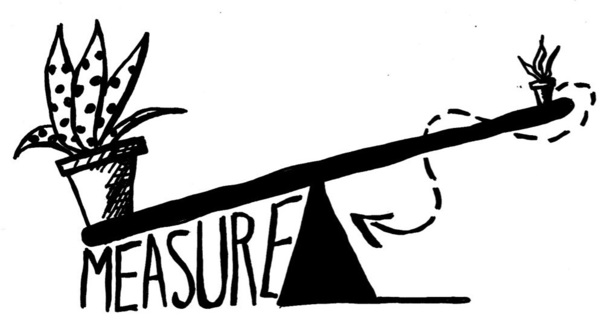
According to what economists call Goodhart’s Law, “When a measure becomes a target, it ceases to be a good measure.” Suppose you run a pin factory. If you measure employees solely on the number of pins they produce and offer fat bonuses to those who make the most, you might end up with thousands of tiny, useless nails. If you correct course by measuring productivity on the total weight of the nails produced, you might beget the opposite problem, with workers competing to create the fewest but heaviest pins.
Even when you measure the right things, our human tendency to gamify our environments to win maximum rewards can misalign results. Consider a technology entrepreneur who builds an online platform to encourage human connection through a social network, but ends up, through a series of financially rational and competitively necessary steps, creating instead a machine that eats sociality and spits out anxiety, depression, misery and isolation. Measurement, as a practical matter, aims at continuous improvement. Like “profit” and “likes,” grades, as part of the quality-feedback loop, have a way of flattening and distorting genuine value, especially when students show up with their own, powerful interests, such as the eventual reward of a lucrative career. But as any true craftsperson will tell you, constructive evaluation is, and must be, an organic, dynamic process. To avoid the Goodhartian cycle that flattens value, standards of excellence must instead be grounded in one’s own exemplary work and balanced against the practical wisdom of respected practitioners who remain in dialogue with revolutionary innovations. No static, standardized criteria can be applied mechanically by third parties. No standardized tests or external rewards can serve as permanent, stable markers of value.

Faculty face similarly frustrating systems of evaluation. The culture of continuous productivity among today’s scholars is measured by two things: the number and status of one’s academic publications, and the effectiveness of one’s teaching as measured, quantitatively, by course evaluations. Rather uncontroversially, the heightened status anxiety of the publish-or-perish model has not improved the quality of scholarly thought over time. And using student satisfaction as a proxy for teaching excellence has introduced perverse incentives — about which more in a moment.
The pressure on students is more diffuse. They must demonstrate exceptionalism through perfect grades, the winning of honors and awards across disparate domains, the crafting of resumes that make them sound like seasoned CEOs.
These achievement-culture problems meet in a kind of prisoner’s dilemma: Tacit cooperation between faculty and students on mutually positive evaluations benefits both parties, whether they’re honest or accurate or otherwise; studies suggest that “expected GPA” is the strongest corollary to the strength of one’s course evaluations. Professors who give lower grades consider themselves more “rigorous,” with no other evidence, whereas students warn peers online (and through low evaluation scores) to avoid what they see as artificially deflated final grades.
When you ask either party to reflect on the integrity of these evaluations, many will admit that neither measure does an especially good job of representing quality. But for many, quality isn’t the most important consideration. An easy A for a perfect evaluation seems like an excellent trade, especially to those faculty and students for whom the most important work on campus appears to have little to do with what happens in the classroom. Administrators are far more sensitive to student dissatisfaction than to nuanced evidence of quality or rigor. And both grades and course evaluations appear to be in a moment of mass inflation.
I don’t think this dynamic is new, but it may be reaching absurd levels. Recruiting companies today may readily fill their cubicles with minimum-4.0 GPAs from Ivy League schools. Job postings for adjuncts read like promotion criteria for full professorships in the 1980s. And just as the pressure for perfect grades has gradually displaced learning from the center of our students’ academic lives, so has the publish-or-perish logic that determines employment prospects and status displaced teaching from the center of professors’ lives. Seen in this light, neither students nor faculty appear irrational when they minimize the effort they spend on teaching or learning. We’re all just responding to incentives.
So-called grade inflation is a symptom of this broader incentive structure. The most dramatic and corrosive changes to education in the recent past are not decreased standards of excellence but our growing capacities to produce knowledge-artifacts that meet our grading standards with almost no effort. While many argue that we should raise those grading standards, I believe doing so would be just another pointless move in an arms race that has lost real meaning. The widespread use of AI is just the next logical step in a game that has already given us term-paper mills, cheating websites and college-admissions coaches. Each of these represents a crisis of trust in our ability to demonstrate or measure any real value in higher education.
Everybody knows students are using generative AI to complete coursework. When I read the faculty discourse around AI and learning, I’m reminded of the “hermeneutics of suspicion,” a term philosopher Paul Ricoeur coined for an interpretive lens that assumes deception and bad faith. Many of us now approach every assignment submitted to our learning management systems with the accusatory posture of spouses in an acrimonious divorce. But you can only hold this posture for so long before it drives you nuts. It might be time to consider a more charitable interpretation of student behavior.
As someone who spends a lot of time thinking about teaching — and teaching students to think about learning — I’m surprised more people haven’t posed what I see as the most uncomfortable question: What if students who turn to AI for homework help are just responding rationally to the system we’ve designed? What if they’re just giving us what we’ve long been asking for: a flawless performance of disciplinary knowledge-production?
Suppose that using AI to complete coursework isn’t primarily a sign of laziness or entitlement. Suppose, too, that it’s not a sign of moral degeneration or indifference to traditional scholarly values like integrity, honesty and transparency. Suppose instead that students are using tools like ChatGPT not because they want to cut corners or because they’re trying to game a system they otherwise believe in for short-term advantage, but rather because they’ve lost all faith in an educational system they no longer trust to fulfill its lofty promises of “liberation of the mind” and “cultivation of the soul.”
On this theory, the chatbots aren’t disintegrating a largely functional if imperfect model of learning; rather, they’re revealing what students have long suspected: Universities aren’t really in the business of teaching for intellectual or personal transformation. What if higher education has simply mistaken the target — the grade, the degree, the H-index or CV line — for the thing itself: learning as a foundation for flourishing, with teaching as a vital part of that process?
A recent New York Times article summed up a Harvard faculty report on absenteeism and grade inflation. It reads like a stunning, unguarded admission: “Many students skip class and fail to do the reading,” the report found, and professors and administrators have barely begun to acknowledge the problem.
The high-achieving, educationally elite kids aren’t alright.

My own experiences and research — both online and in loosely structured observational visits to “elite educational institutions” — suggest that Harvard here is a synecdoche for higher ed. Among the surreal things the report found: Around 60 percent of the grades given at Harvard are A’s, up from 40 percent in 2015; and, despite worries about absenteeism, students at Harvard are permitted to enroll in two courses that meet at the same time. One professor is quoted as defending this policy because prohibiting it would give students “heartburn.”
“When they do show up for class,” the Times reporter wrote, “they are focused on their devices, and are reluctant to speak out. Sometimes it is because they are afraid of sharing ideas that others will disagree with. But often, they have not read enough of the homework to make a meaningful contribution.
“Rampant grade inflation allows them to coast through anyway,” her summary continued. “That means many students graduate without having benefited from talking very much with their teachers and peers, and they stay stuck in ideological bubbles, unwilling or unable to engage with challenging ideas.”
Harvard’s arts and sciences dean acknowledged that the university’s report contains “hard truths about our learning culture.” An example of the school’s response, as reported in the Times? “Some instructors now take attendance.”
For many commentators, the Harvard report was merely about “grade inflation,” a problem we think we understand, and one that’s been growing from the small brush fire set by the internet into the forest fire that generative AI has blown into a frenzy. But it actually sits at the intersection of the interrelated crises I’ve been describing: the erosion of classroom engagement and the rise of AI.
If AI can produce credible, undergraduate-level work, and if we continue to rely on grades as the main measure of learning, we may soon face a world where every student gets an A — not because they’ve mastered the material, or because they have become too sensitive to handle the hard truth, but because it’s impossible for professors to know what their students actually know. The same dynamics are threatening to completely undo the (already wildly imperfect) peer review system for evaluating research.
Faculty have long lamented the apparent inevitability of this scenario, but campus newspaper editorials, including one in The Observer titled “AI-proof the Core Curriculum,” reveal that students are just as unhappy about the situation. Maybe — plot twist — they’re going to be the ones to help us avoid an AI arms race toward mutually assured ignorance.
Some schools try to combat grade inflation with mandated grade deflation. But these efforts will fail, insofar as they’re treating a symptom rather than the disease. For a decade starting in 2004, Princeton capped A grades at 35 percent per class. The policy proved unconducive to the maintenance of a collegial learning community. As one Princeton undergraduate reported in 2014, “Because of grade deflation, it has been extremely hard to find any kind of collaborative environment. . . . Often even good friends of mine would refuse to explain simple concepts . . . for fear that I would do better than them . . . Classes here often feel like shark tanks.”
Another student complained: “On the first day of classes, my teacher said that only 3 of us in a class of 11 would receive A’s. This often means that despite receiving an overall grade of 90+ a student cannot receive an A-grade because some other student got a 91 or 92.”
We can imagine the frustration of these students, many of whom have worked hard to perfect their performance in the grading game. We can imagine the negative effects on mental health and community life. We can empathize with the student who asks: Why must some of us fail just because most of us are clearing the highest bar of success?
In God and the Good Life and my Sheedy courses, I’ve experimented with a practice called labor-based grading, where students receive full credit if they are willing to revise assignments, sometimes many times over, until they meet the standard. As in the so-called real world, if students complete their work and demonstrate actual mastery, they get their credit. (When’s the last time an employer reviewed your work and gave you 83 percent of your promised paycheck?)
While some might worry that this approach effectively lowers standards, the coursework I am describing came as the culmination of a three-year redesign aimed at proving that such an evaluation system need not sacrifice rigor, a result I demonstrate in my article about critical-thinking skills, which I referenced before.
What we need now isn’t just a defense of traditional values, increased surveillance, GPA deflation or a total AI ban, but a recovery of purpose. We need to renew what our missions have always stated: The purpose of the university isn’t mere knowledge-production or credentialing. Instead, at its best, the university forms people to the good. It enlightens and liberates. It creates conditions for shared political life and human flourishing — virtues that cannot be automated.
In the age of AI, is learning — really learning — still possible on college campuses? Can we still recover the element of human relationships that has and can and should serve as an essential condition of education?
The environment we’ve built in the Sheedy program is but one demonstration that it’s possible. The God and the Good Life course shows that we can maintain acceptable standards of rigor, and even do this at scale. Both strive to make space for authentic learning outside the world of totalizing objective measurement.

To engage in a genuine, relational experience of teaching and learning, a student needs a set of intellectual virtues — curiosity, clarity of thought, intellectual rigor, love of the truth — but so does her teacher. These virtues must be modeled and taught in the process of education itself, something that will require all of us to realign our focus, at least occasionally, away from the signifiers of grades, GPAs, or CV lines, and back toward the things they aim to signify: genuine learning and deep formation. A true educator “beholds with” students — all hearts fixed on truth, beauty and goodness — rather than attempting to infuse their brains with information or to invent complex evaluation stratagems that divide and rank them arbitrarily, or by their ability to game the system.
Dialogue is the mode in which this process is embodied. It fosters engagement with challenging ideas and elicits the feedback necessary to integrate new information into one’s knowledge base. It does these things, ideally, in environments where students are comfortable enough to take risks and to build the intellectual skills and virtues they need to learn.
That is the invitation before us. Not just to regulate AI or fortify assignments against it, and not to double down on an arbitrary distribution of metrics that pushes students toward a performative substitute for learning that is fast becoming indistinguishable from AI-generated slop.
Rather, the invitation is to rebuild trust in the idea that real learning matters, and that it’s possible here and now. To create more spaces where learning feels less like performance and more like formation.
Paul Blaschko is a former assistant teaching professor of philosophy at Notre Dame, where he was the founding director of the Sheedy Family Program in Economy, Enterprise, and Society and cocreator of God and the Good Life, a philosophy course. He will embark this year on a listening tour of American institutions of higher education, driving an RV with his wife and five children. Learn more at paulblaschko.com and follow along at paulblaschko.substack.com.