When economics and Chinese major Macy Kerwin ’25 finished a challenging computer-programming problem set last September, she felt the need to “reconnect with life.” So, she bought a sewing machine.
After a year studying at Durham University in England and then a summer in London, Kerwin wanted to revamp her style. Fashion had become an outlet, and she decided to experiment with making clothing.
Her first night sewing post-problem-set was “obsessive,” she says. She stayed up until 3 a.m. finishing a gingham maxi skirt. This spring, she put her skills to the test by creating two dresses for commencement.
Since learning to sew last fall, Kerwin says she has purchased barely any clothing, preferring to recreate her favorite designs herself. She has sewn scrunchies, beach bags, Christmas stockings and a shirt that says “Auntie” after her nephew was born. Making her own graduation dress felt like the natural next step.
“The idea of wearing something you make on such a big day was important to me,” Kerwin says. “I wanted something that felt unique, and I feel like it’s just so different when you spend time with something.”
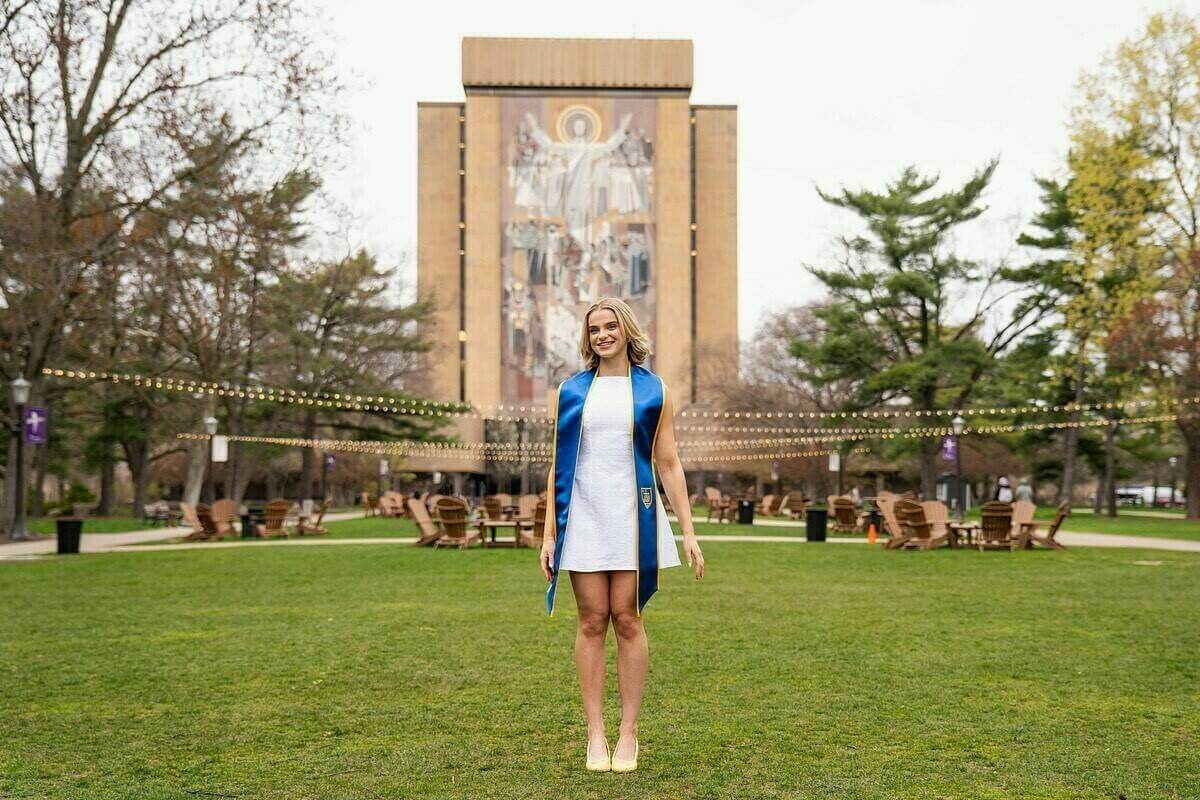
By April, Kerwin had already completed a traditional white dress, which many graduating women wear for group photos at commencement time. She found inspiration online, identified the core components — a boat neck and princess seams — and chose the fabric from her ever-growing stash. The day after she had her wisdom teeth out, she sewed the entire dress. Kerwin finishes each of her creations with a “Made by Macy” label.
At the commencement ceremony, Kerwin will wear a colorful dress with fabric she had bought from a British store. She says it was important for her to make something she could wear again
Kerwin’s grandmother had taught her to sew as a child, but the lessons didn’t stick. She retaught herself with YouTube videos, but she often frantically calls her grandmother with questions.
“It was zero to 100 really quick,” Kerwin says. “I was building a fabric stash and wanted to go to Joann [a fabric and craft store] every weekend.”
As she learns more about sewing, she says, the value of making one’s own clothes becomes more apparent.
“I didn’t realize sustainability was an important issue for me until I started sewing,” she says. “Fabric is expensive, and it takes me a long time sometimes to make stuff. . . . As an economics major, I started to think about that a lot, and the whole supply chain to get any dress from Abercrombie.”
She sews nearly every day. Time at the machine became her reward when she completed academic assignments. When she visits new places, she brings fabrics back as souvenirs rather than magnets or postcards.
“It’s such an important outlet for me,” she says. “Finding something that is purely a form of expression — I didn’t think that was something that I needed, but it definitely is. How do people live without this?”
In addition to sending her friends sewing vlogs, Kerwin runs an Instagram sewing account and connects with other sewers online. Having a community outside of Notre Dame is an important part of the appeal of creative hobbies for her.
“You’re going to have to make new friends and find who you are in a new city or new place. I think having a hobby is the easiest way to do that,” Kerwin says. “Hobbies make people more interesting.”
Kerwin will attend graduate school in the United Kingdom to study international management and economics. She plans to continue sewing in her free time.
She still has “so much to learn,” she says — from pattern-making to fabric compositions to the supply chains behind the apparel industry. She even dreams of sewing her wedding dress or bridesmaids’ dresses one day.
For now, she just has to figure out if she’s taking her sewing machine with her across the ocean.
Kathryn Muchnick, an English and economics major and journalism minor, was the magazine’s spring intern.