When the school year ended for Notre Dame students in the early 1900s, some of them headed for summer vacation at the University’s lakeside resort in southwestern Michigan.
Known as San José Park, the camp offered swimming, boating, fishing, sports and religious instruction.
The property served mainly as a student summer camp until the early 1920s; as a retreat for priests, seminarians and religious brothers during the 1920s and 1930s; and after World War II as Notre Dame Boys’ Camp, operated by the Brothers of Holy Cross.
In spring 1903, Notre Dame bought 16 acres on the north shore of Bankson Lake, a 200-acre spring-fed lake near Lawton, Michigan. The property was easily reached via train from Niles, Michigan, to Lawton, followed by a short wagon ride.
In that era, Notre Dame still ran a boarding school for high school boys and another for grade-school boys, who were known as minims. And the University since the 1880s had been attracting students from as far away as Mexico, and Central and South America.
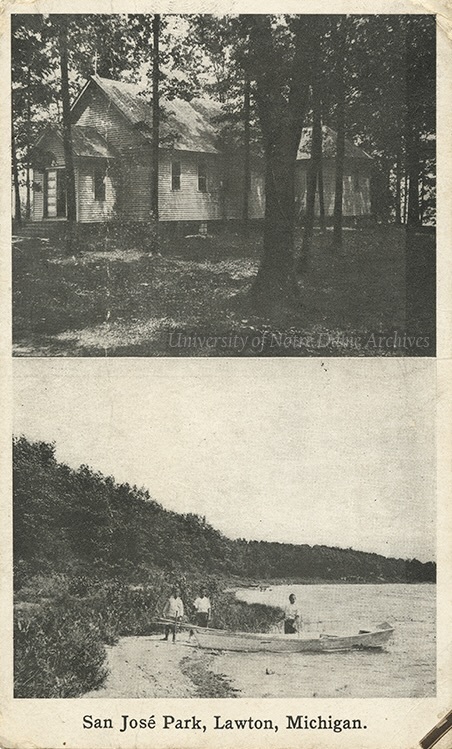


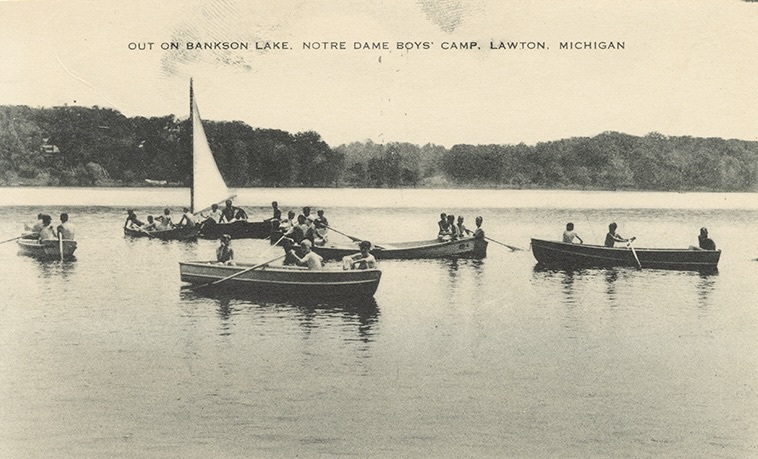
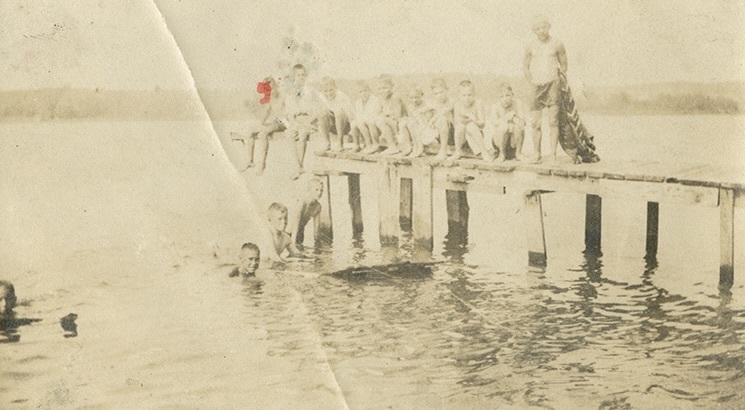
San José Park had a 40-room hotel, three cottages, a chapel, a dance and activities hall, and a small store. The facility was dedicated with an open-air Mass. About 50 students lived there that first summer, including a number of Mexican and Cuban students who entertained their peers with guitar and mandolin music.
“A Vacation Paradise” is how the Notre Dame Scholastic in 1904 described the camp. “This delightful summer resort has been purchased by the University to meet the requirements of boys who have not completed their course and whose return home would involve a long voyage or an expensive and tedious journey by rail,” the publication reported. Providing a rural retreat was a healthful way to remove boys from the din and temptation of city life, “which prove so attractive and often very injurious to students,” the publication stated.

“San José is an ideal place for spending the warm months,” The Dome yearbook reported in 1907. “There is an excellent beach for bathing, and a fleet of about forty boats, furnishing ample opportunity for rowing on the lake. The fishing, also, is unexcelled in that vicinity; black bass and perch especially abound.” Yearbook photos show campers relaxing on the beach, floating on a raft and sitting on a shady front porch.
Brother Hugh Clark, CSC, accompanied by his small dog, for many years was the camp’s director. Several professors spent vacations there, teaching classes part-time to boys seeking to keep up with their studies.
Notre Dame’s resort hosted community celebrations on July 4 and Labor Day, drawing thousands of visitors from surrounding villages and towns, according to newspaper reports. The gatherings included picnic dinners, sports competitions, music and dancing. The baseball diamond for years was a spot for lively games between Notre Dame campers and ball players from nearby towns, and those contests drew crowds.
No females were permitted to stay at the resort, even in the hotel building. “An unwritten law has been passed that prohibits the home from accepting even the wives of professors,” the South Bend Tribune reported in 1910.
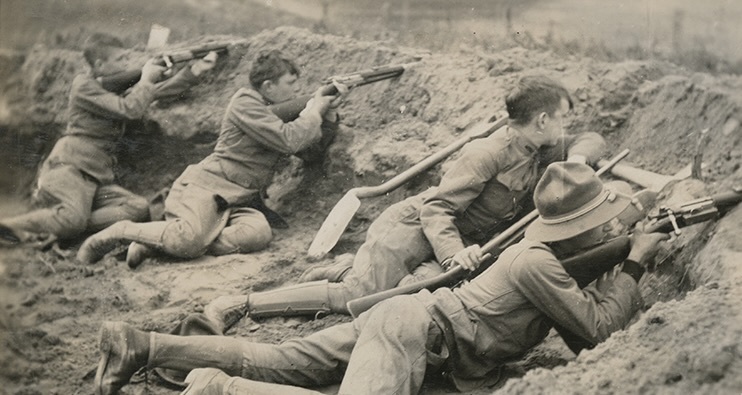
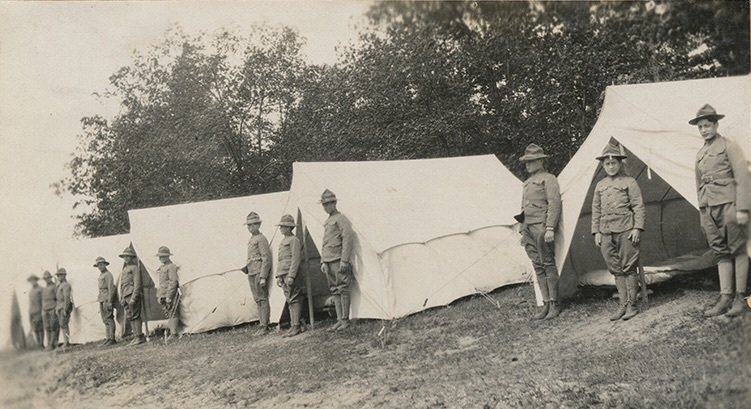
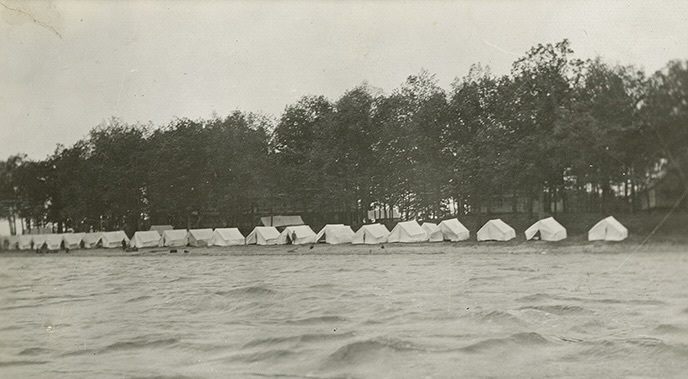
In 1915, with Europe embroiled in World War I, 100 Notre Dame student military cadets traveled to Bankson Lake to camp in tents and participate in training drills. The University’s civil engineering students visited to practice land surveying.
In 1921, one young camper mailed a postcard from San José Park to his parents in Nicaragua. “My dear Father and Mother: We are very happy here. We have lots of fun when we go swimming. Your loving son, Vondel Remy Fransen.” Fransen attended Notre Dame as a minim from 1917 to 1924.

In 1930, South Bend’s first African-American troop of Boy Scouts had their first camping experience at the Bankson Lake property, spending Labor Day weekend there. During the Depression and World War II, the camp mainly served as a summer home for Holy Cross religious men.
From 1947 to 1959, the property operated as Notre Dame Boys’ Camp, a Catholic youth camp run by the religious brothers. Oversight of the land transferred fully to the Brothers in the 1950s. The camp enrolled boys ages 8 to 14, offering swimming, fishing, horseback riding, sports and religious instruction.
The camp closed in 1959, when the Holy Cross congregation announced the property would be sold. About 127 boys had attended that summer. With religious brothers needing to attend summer classes to meet enhanced educational requirements in states where the order operated high schools, there wasn’t enough manpower available to run the camp.
By 1965, the property was sold to the Fellowship of Evangelical Churches, which renamed it Miracle Camp and Retreat Center. FEC still owns the land, and has been running summer youth camps and year-round Christian retreats there for more than 60 years.
Margaret Fosmoe is an associate editor of this magazine.