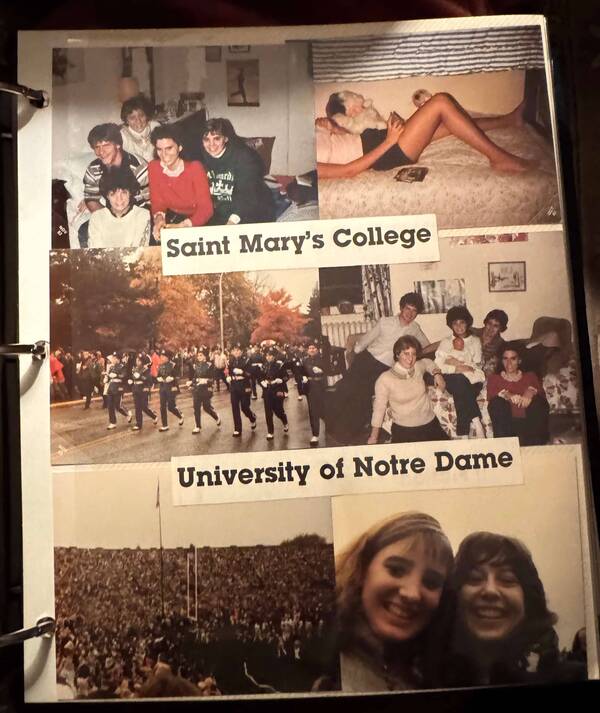
At Saint Ignatius, my Jesuit high school in downtown Chicago, were plenty of kids who seemed confident they were going to Notre Dame. They wore sweatshirts and hats, had stickers on their cars, water bottles and iPads, went to multiple football games every fall — the whole deal. Though I was born to a Saint Mary’s Mom and a Notre Dame Dad, I was not one of those kids. I was too stressed out most of the time to think about college. I spent at least half my high school years feeling nauseated before math tests and worried that a single essay grade would make or break my chances of getting in anywhere.
Nonetheless life, as it tends to do, surprised me. Junior year, I took a tour of Notre Dame, and at the risk of cliché, it really did feel like the place for me. After a grueling application process and two months of anxiety, I was accepted. It felt like a miracle at the time.
Not long after that — maybe a couple hours later — I realized I was about to relate to my parents in a whole new way. As freshman year approached, I became fascinated with their college lives in the 1980s and with Notre Dame history in general, an interest that hasn’t let up, two years in. In fact, it’s gotten stronger, thanks to my classes.
What started as my hunting online for my parents’ names and asking about their memories of Senior Bar and the annual snowball fight became much more of an intellectual endeavor this past semester. In the spring, I took courses called Witnessing the Sixties and The Eighties Never Ended, both taught by American studies faculty. Between those two classes, I studied everything from radical feminism to Reaganomics, from LSD to Toni Morrison, from Vietnam to AIDS. And, of course, a whole lot of Notre Dame history.
In my ’60s class, we spent hours talking about hippies and the counterculture. Notre Dame students are not especially active these days, politically speaking, so I was surprised to learn during a class visit to the University’s archives that, at the time of the Vietnam War, many students were involved in protests, such as organizing an “Anti-Military Ball” in the old Fieldhouse. This led me to wonder why Notre Dame students today seem apathetic about world events. I’ve concluded that many feel that they simply do not have the time to care as much as they’d like to.

I’m speaking from experience. Despite my majoring in American studies, which is sometimes labeled an “easier” major, I tend to feel so bogged down by work and other expectations that doing anything beyond what is required feels overwhelming. What I gather from my parents and my classes is that this situation hasn’t always been the case.
Students in my ’80s seminar were required to look through The Observer archives from that decade and choose three articles to analyze in a presentation. One of mine, from 1981, was called “Thoughts on Literary Fest.” The writer, Mark Rust ’81, encouraged students to attend the now-defunct Sophomore Literary Festival, even if they had doubts: “If you are one who feels that literature is for an elite group of highly trained students, you are as wrong as you could possibly be,” he wrote. “Literature, by its very nature, is in the most non-elitist intellectual sphere.”
My first thought was that a Sophomore Literary Festival would gain no traction with the student body today. Maybe I’m wrong, but my hunch is that students don’t read enough to get excited about poets and novelists. Even if an event like that did interest students, plenty of us don’t feel we have time to participate in something intellectual purely for enjoyment — especially without extra credit.
It’s not that we aren’t academically curious, though I suppose one could argue that, considering what phones have done to our brains. Rather it’s that we are so overbooked, whether by choice or by sheer workload. Making time for something like a literary festival feels impossible. In the words of my ’60s professor during a conversation about the counterculture: “Look at our Google calendars. . . . Why can’t we just be?”
Most days, I definitely don’t feel like I can “just be.” During the spring semester, I was lucky if I got seven hours of sleep on any given weeknight. A typical night’s reading load was often more than 100 pages per class, plus papers and projects, depending on the week. Even when I got enough sleep, it was usually at the expense of completing my work for the next day, a tradeoff I hated, as I knew I would never have let that happen just a couple years ago.
As the semester dragged on, I noticed myself skipping more dining hall lunches out of necessity as assignments piled up. Instead, I’d do a Grab and Go and hunker down somewhere, trying to complete work before my next class. As a result, I missed out on a lot of time with friends that I wish I could get back.
I don’t think I’m the only one with this problem — the fact that so many students line up for bag lunches instead of eating a sit-down meal suggests as much. But although my classes wrapped up each day, my work was never finished. Besides the breaks I might take to eat dinner, shower or work out, I was always trying to complete my reading: Most of my classes were discussion-based, meaning we were graded largely on participation, so I felt like I was just keeping my head above water most of the time.
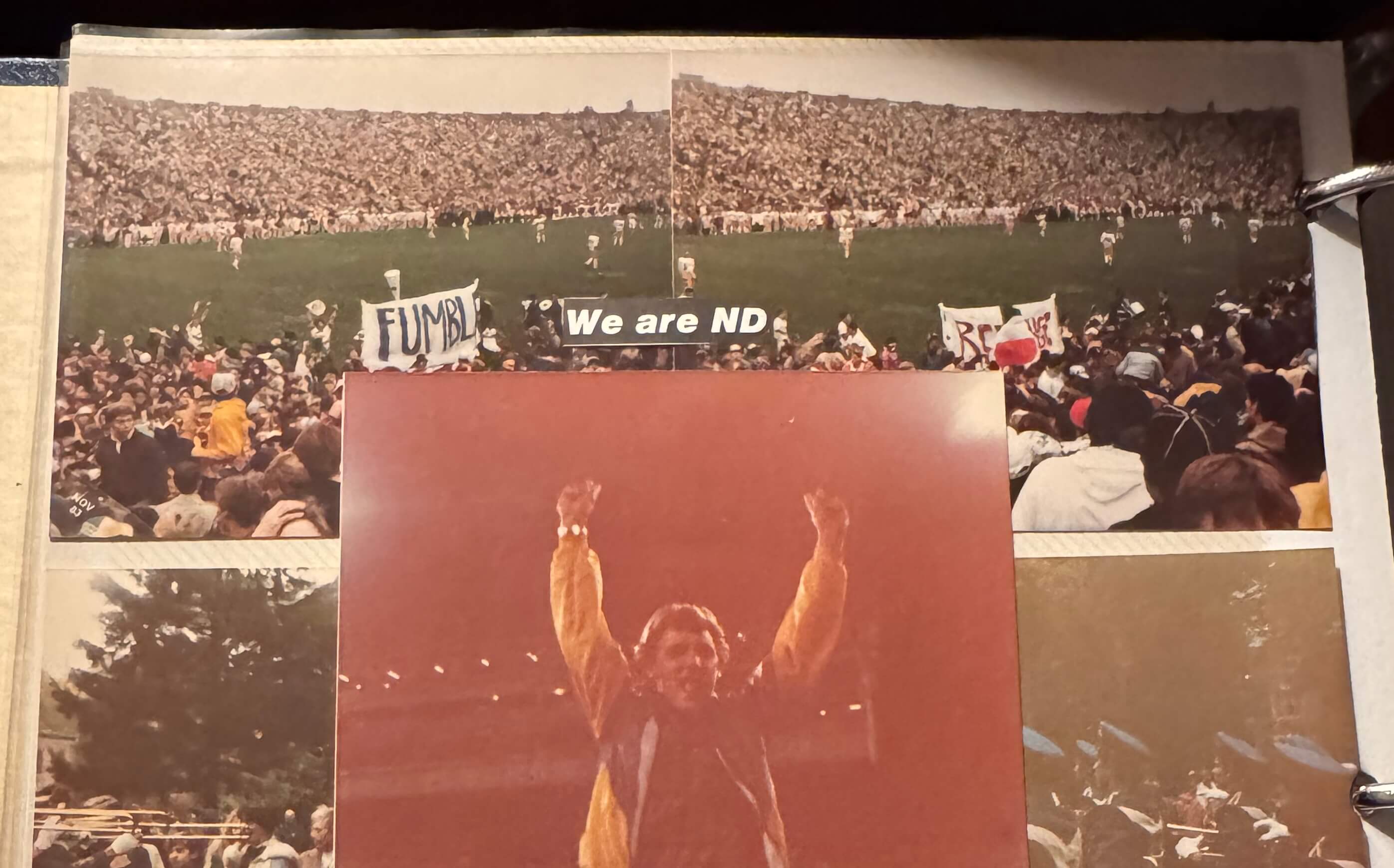
My parents tell me they didn’t feel so overscheduled, so either I need to work on my time management or the college experience has changed — at least a bit. The changes I perceive aren’t just academic, either. This past Easter break, I was looking at my mother’s college scrapbook, its photos taken between 1982 and 1986. Her generation seemed to be more adept at human connection. The pages are full of handwritten notes from her friends (and some SYR dates who thanked her for coming) and photos that look genuinely candid. On one page are two Valentine’s Day cards and, among other pictures, a photo of my mother on a landline phone, grinning at the camera. Everyone looks so happy, even doing the most mundane things. I know I’m romanticizing, but it must have been nice not worrying about your tone in a text or scrolling through 100 photos to decide which would be the best for an Instagram cover slide.
In many of my classes, we barely talk to one another unless our professor tells us to — conversation has almost become an assignment in itself. I’m certainly guilty of burying my head in my phone when I pass someone I’d rather not say hello to. And my AirPods feel like my best friend sometimes.
What’s changed? I don’t have an exact answer to that question, but I can certainly infer from my observations. One problem is the internet. Professors know students have access to advanced homework workarounds, more so than previous generations, especially now with artificial intelligence, so they feel comfortable assigning — or even obligated to assign — more work. And when students feel they have too much work, they either find shortcuts or exhaust themselves trying to finish it all.
Another issue is how learning has become secondary to career aims. The job market is not easy right now, and it seems to me we are pushed to determine our futures earlier. My friends who are interested in investment banking arrived as freshmen knowing that already; my father the investment banker didn’t decide on his career path until he was a senior. Having time for career discernment is imperative; it’s part of what college is for, but that freedom to search and sift just doesn’t seem to be there anymore. People feel intense pressure to load up their resumes, often losing themselves in the process.
The constant availability of our phones has also changed social interaction. Why write a thank-you note to your SYR or formal date when you can text them on Snapchat? Why wish someone a happy birthday when you can just like their Instagram story? Convenience has become paramount, and gestures once widely accepted now seem over-the-top.
Since I arrived as a freshman, I’ve come to realize the social impact of our exhaustion. We feel perpetually depleted and hoard our energy just to keep up with our work. Now I wonder if those Ignatius kids I thought were miles ahead of me academically, who appeared so sure of their college destinations, were as anxious and hard on themselves as I was.
It’s difficult to give yourself grace under these circumstances. Even when I don’t put my best effort into an assignment because I choose instead to sleep, or when I feel behind in planning for my future — which sometimes seems like it’s all I should be doing — I struggle to shake the idea that I’m a failure or at least not a serious student.
The carefree attitude that once seemed to radiate from college students, the free time so many seemed to have for idle but interesting pursuits like attending a literary festival, the restless energy that surged into activism feels like history. As I walk to class listening to “Everyday I Write The Book” by Elvis Costello or “Pretty In Pink” by The Psychedelic Furs, I often wish I went to school in my parents’ time. From a distance, it seems more relaxed, more innocent. Better. But nostalgia is a part of life, too. I remind myself to enjoy my four years here as much as I can before more is inevitably expected of me in whatever job I find. I also try to remember that I’m never going to be the perfect student I felt I needed to be in high school. I hope my peers can do the same. Something tells me we’ll be the object of a similar nostalgia one day.
Brigid Iannelli, a rising junior American studies major with minors in journalism and education, was this magazine’s spring intern.