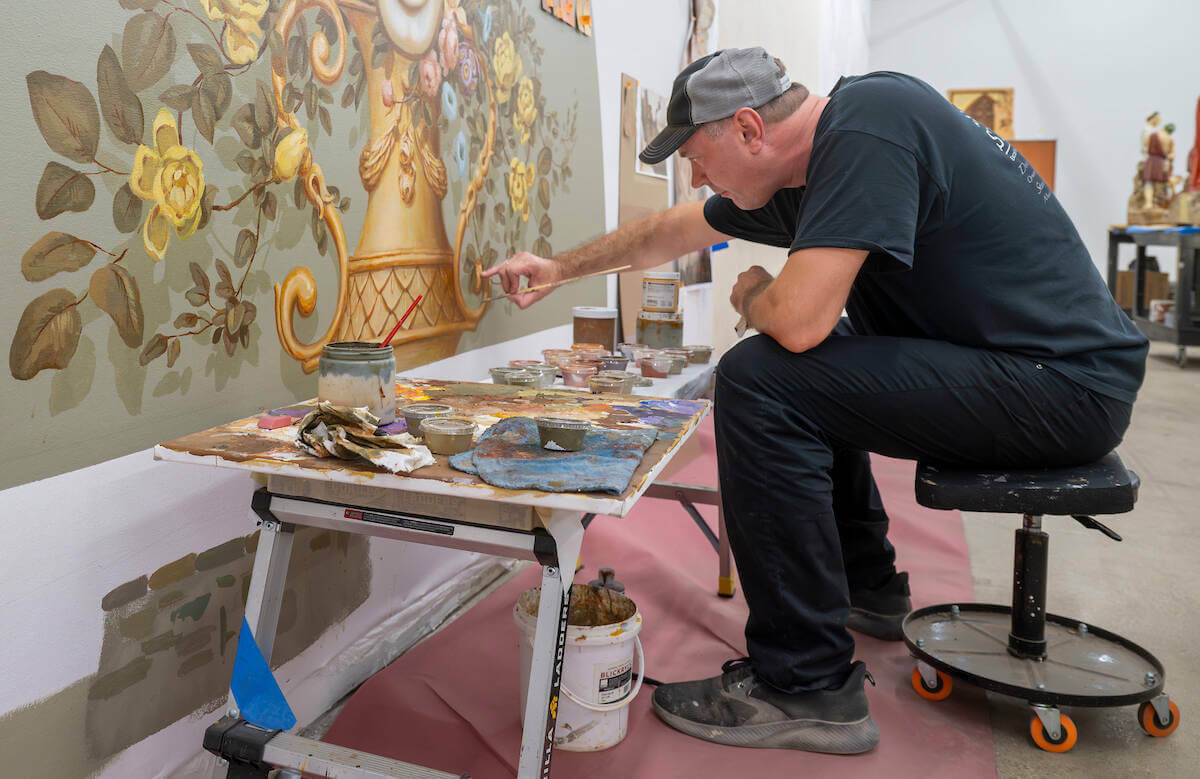
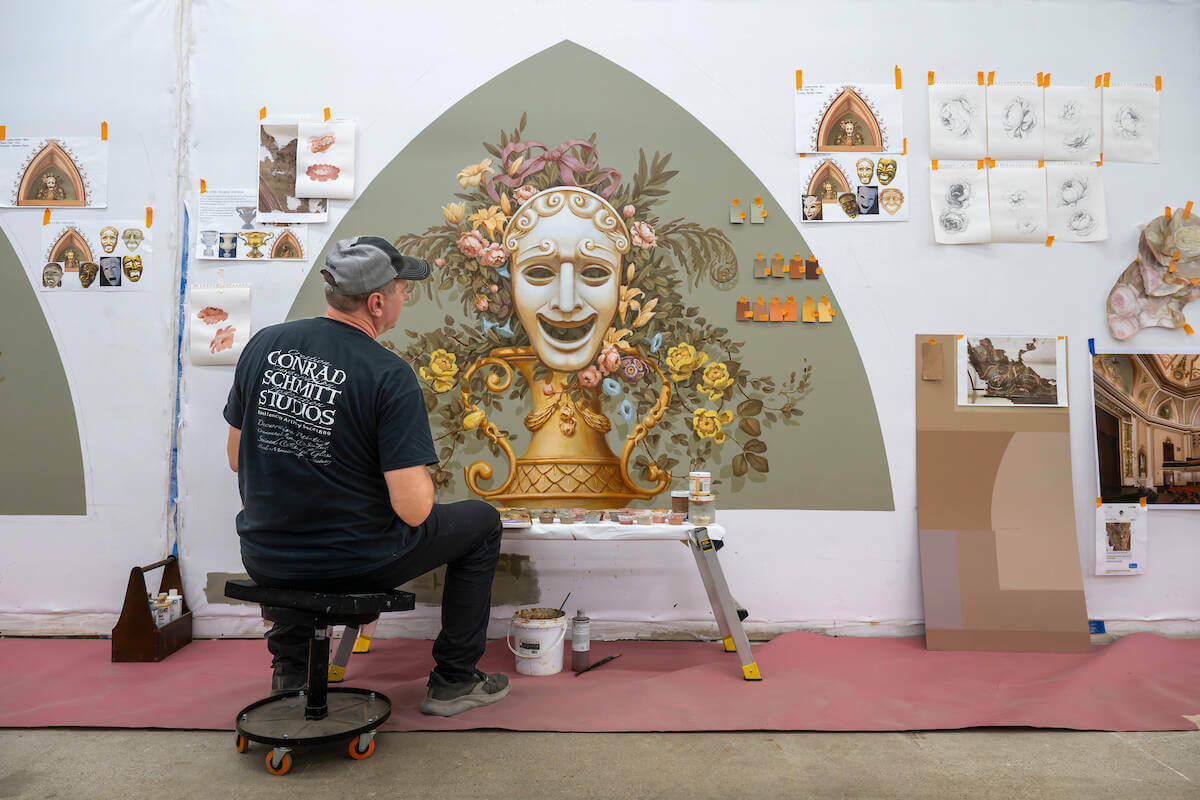
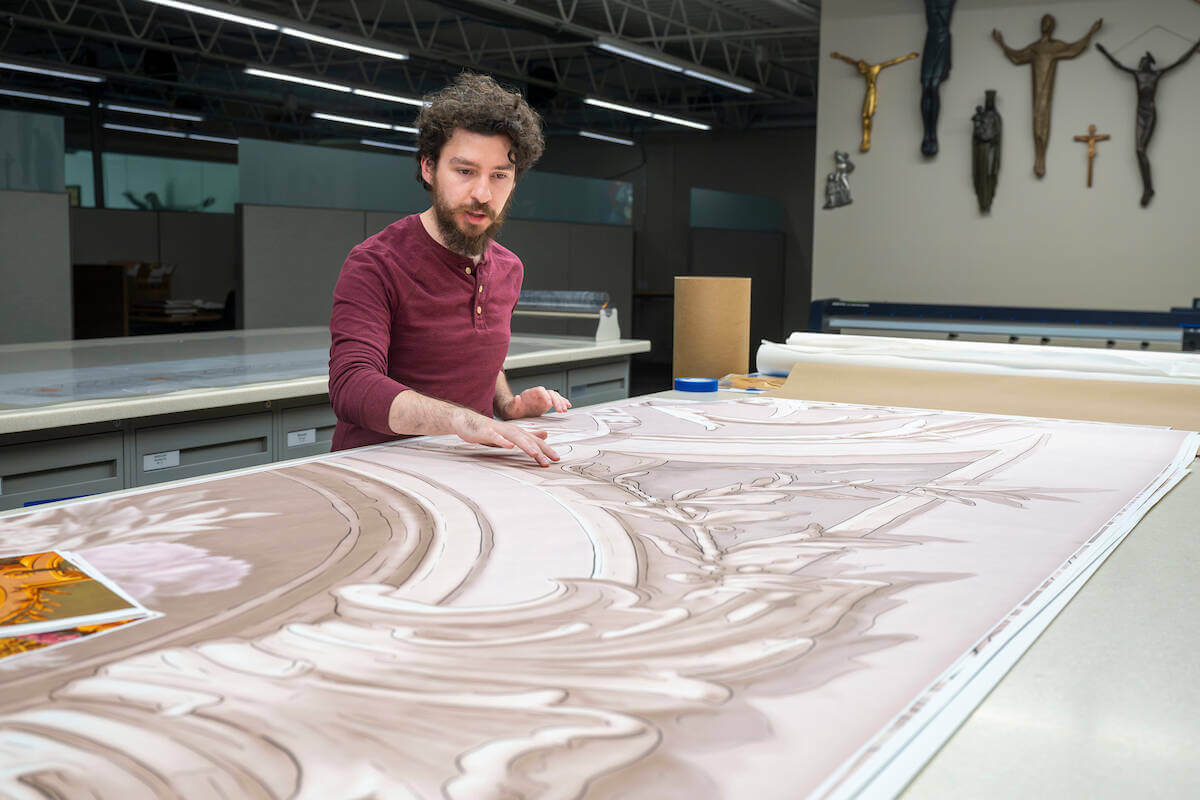
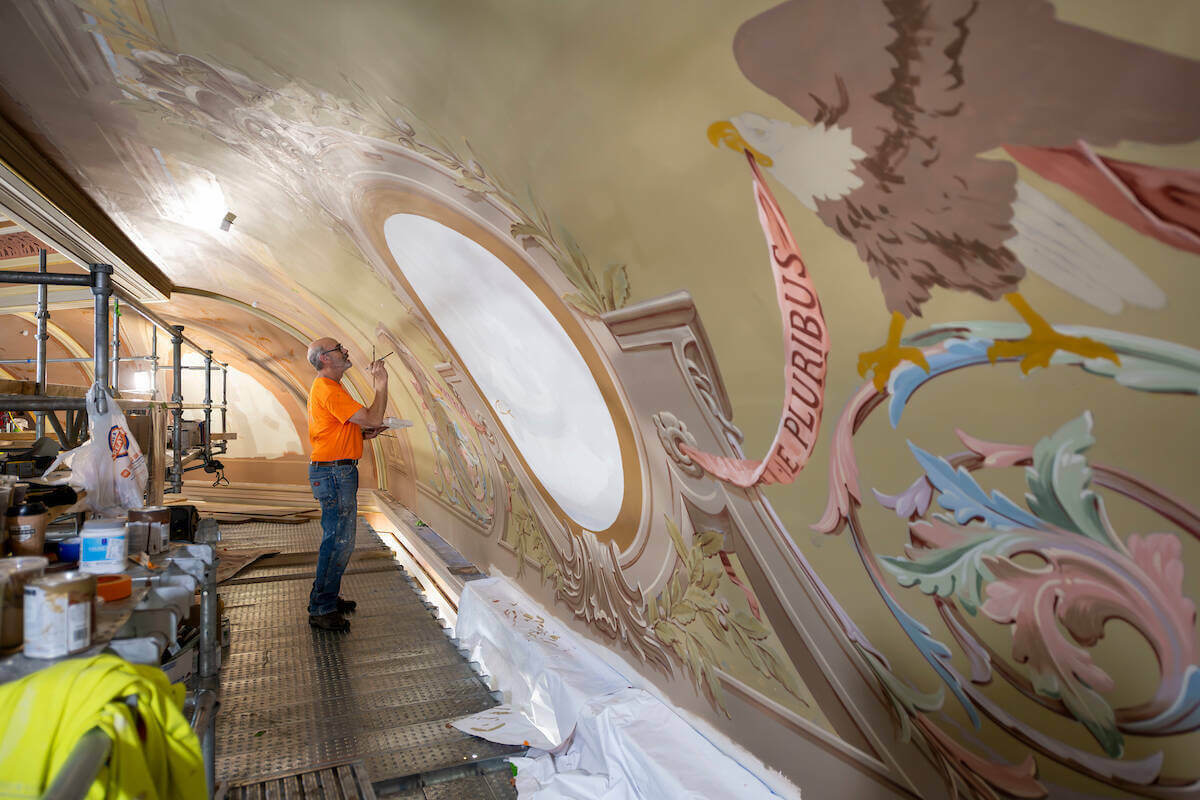
 Artist Oleksandr Lytvynenko works on a mural for Washington Hall at Conrad Schmitt Studios in Wisconsin. Photography by Barbara Johnston
Editor’s Note: This is the second in a Notre Dame Magazine series chronicling the interior renovation of Washington Hall, the University’s 143-year-old campus auditorium.
- The Once and Future Washington Hall
- A Retrospective Renovation
- Setting the Scene
- Questionnaire: Mark Pilkinton
- Dream Job
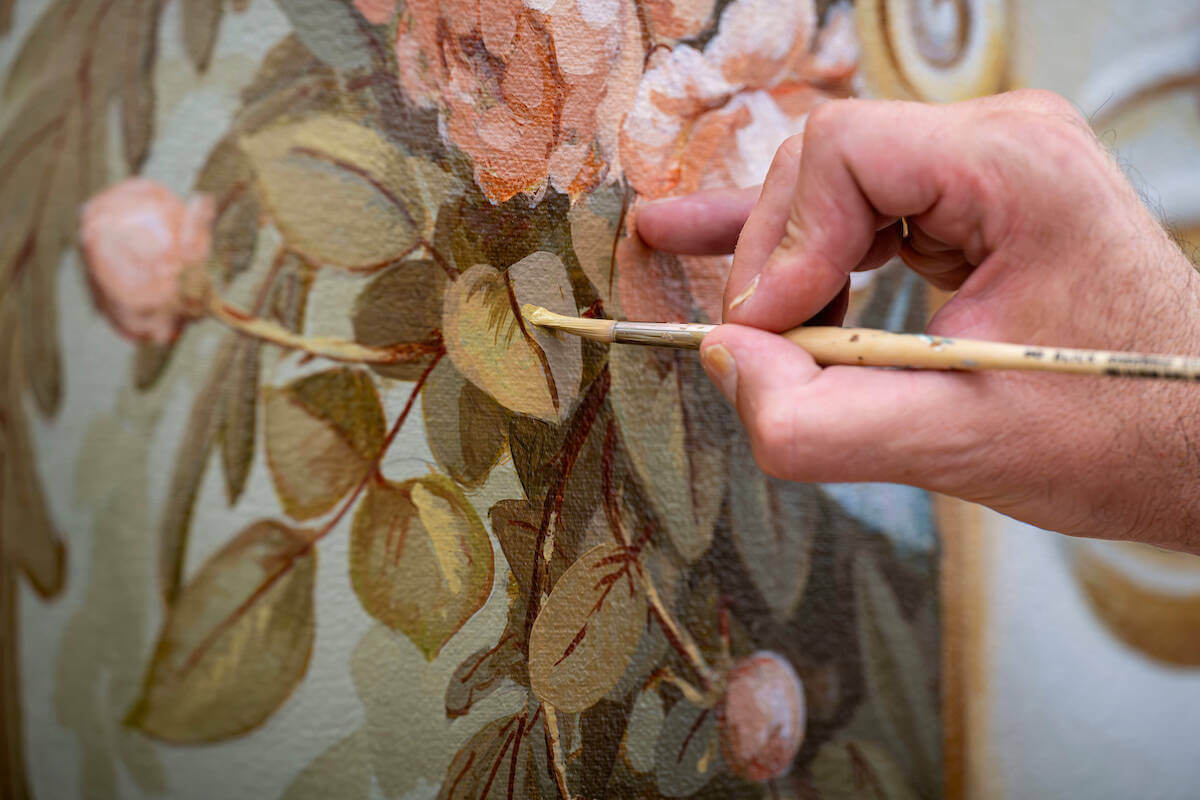
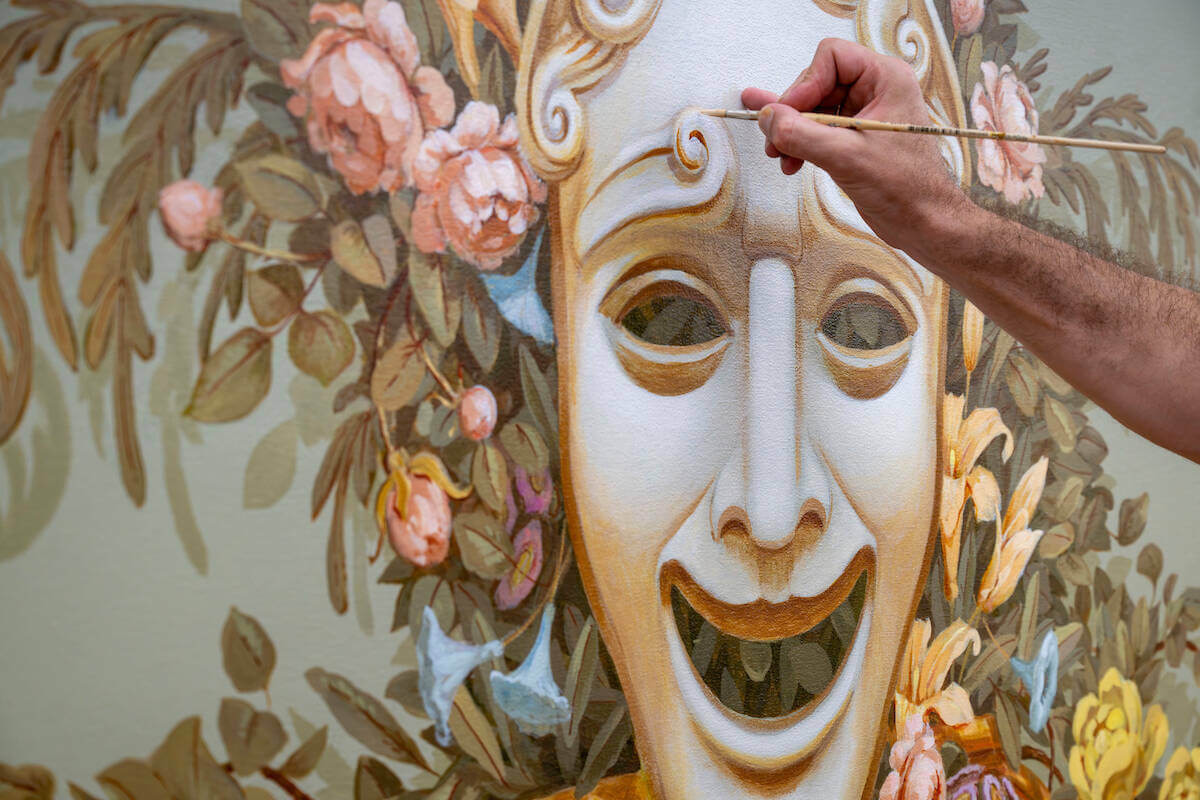
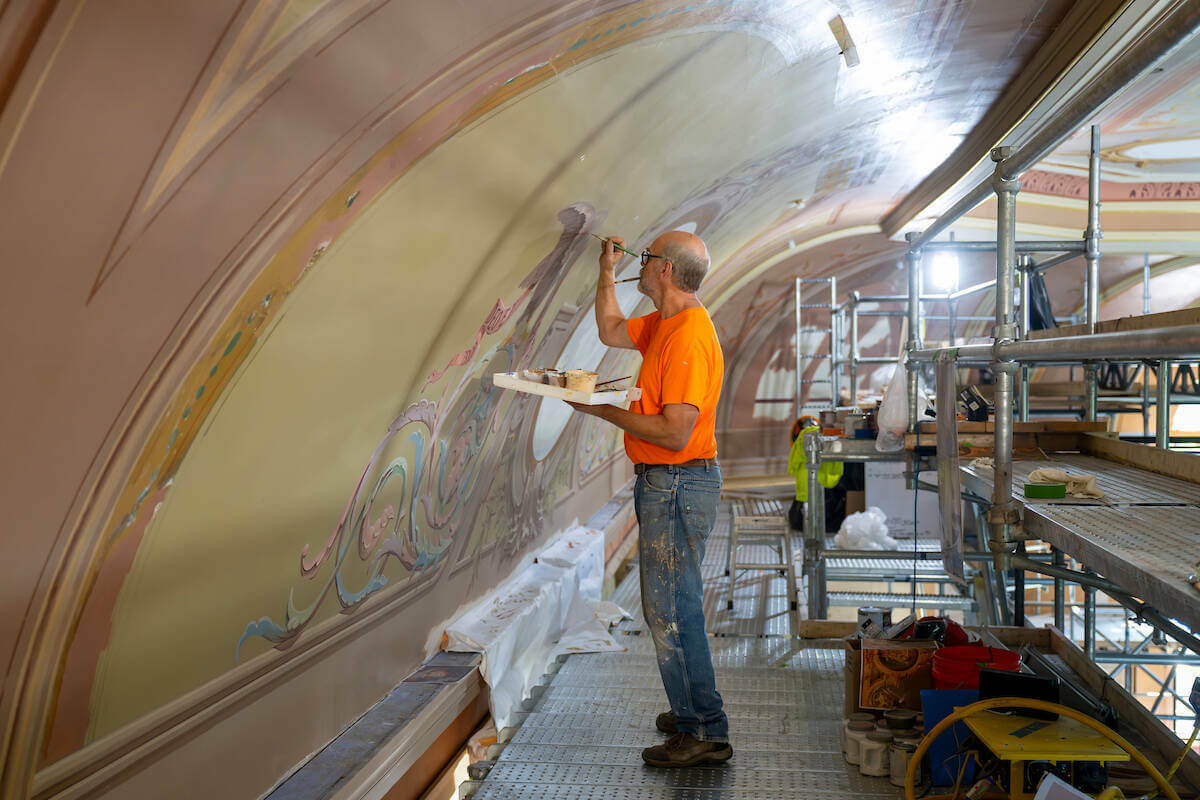
Mural artist Oleksandr Lytvynenko dips a slender brush into a small container of acrylic paint, blends it on a nearby palette and touches the tip to a six-foot-tall canvas on the wall.
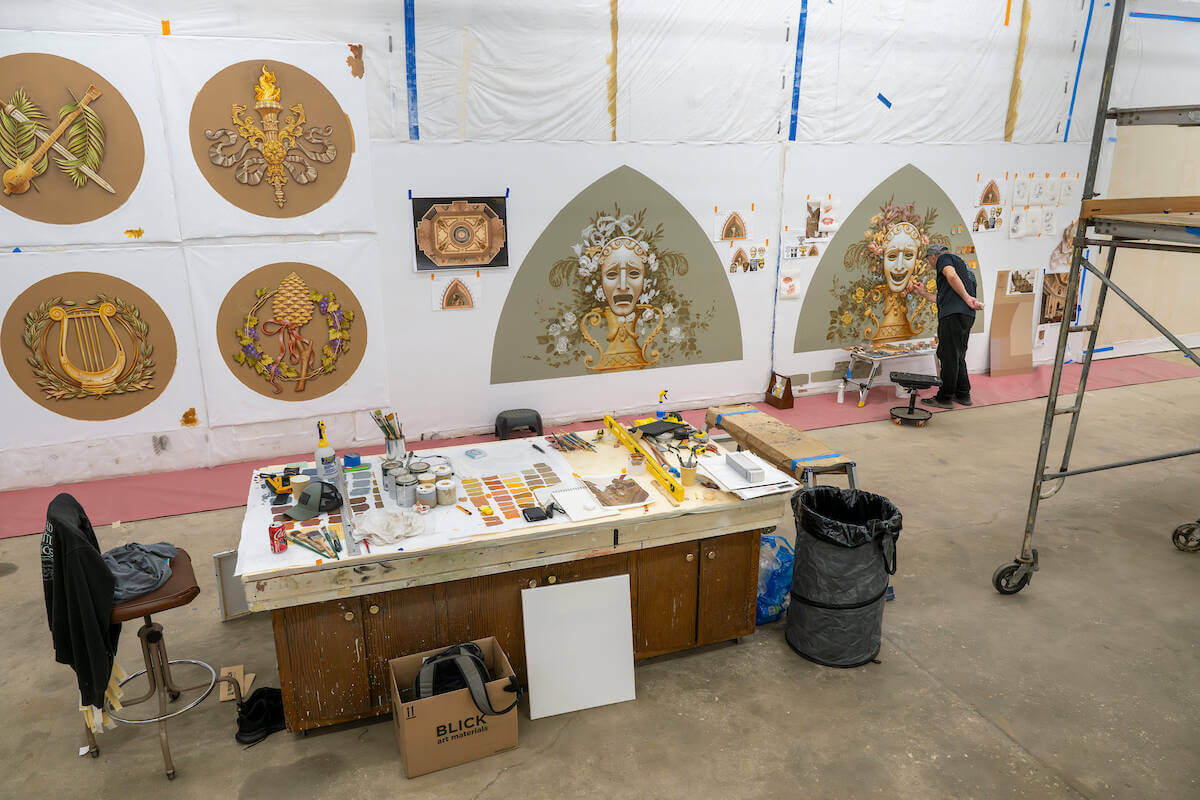
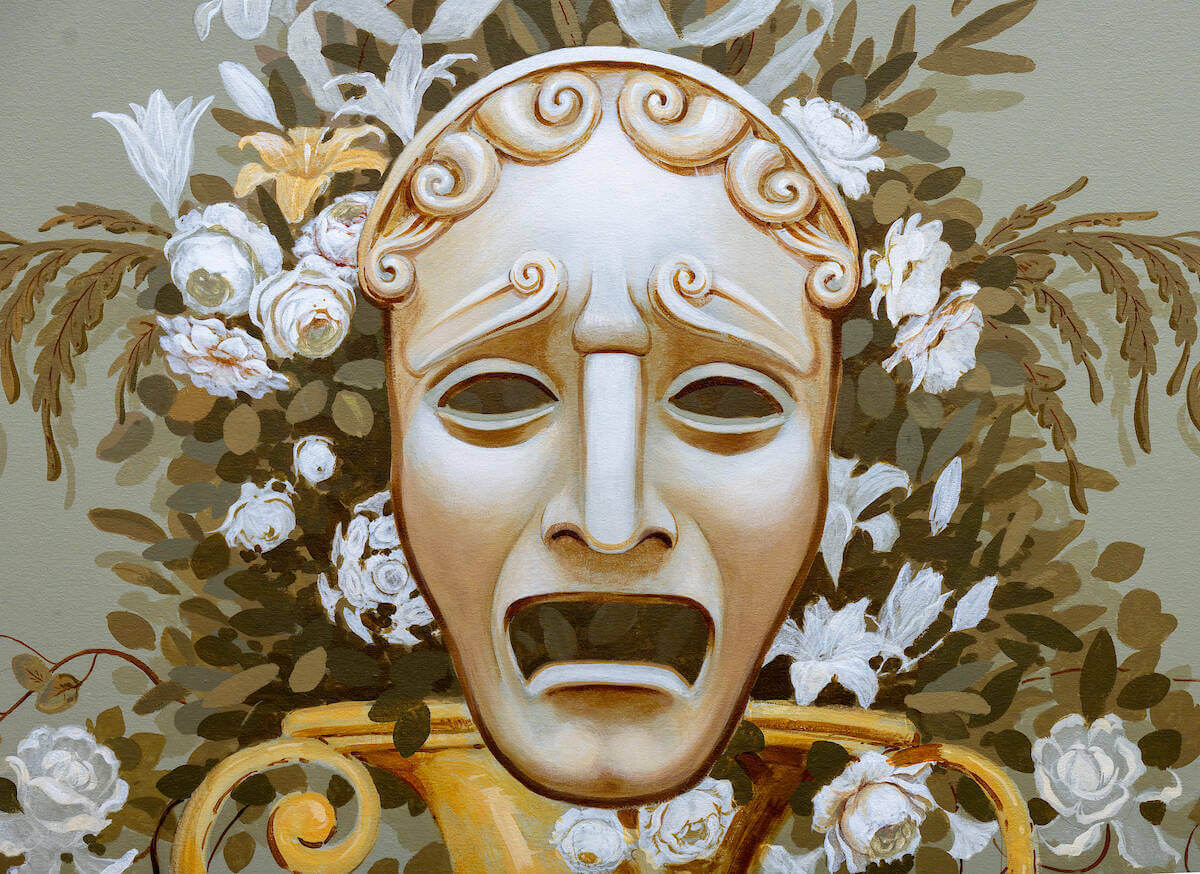
One brushstroke at a time, yellow roses bloom next to a stylized smiling face mask that represents theatrical comedy. Perched atop a golden vase, the face is surrounded by a riot of flowers in pastel colors with olive green leaves.
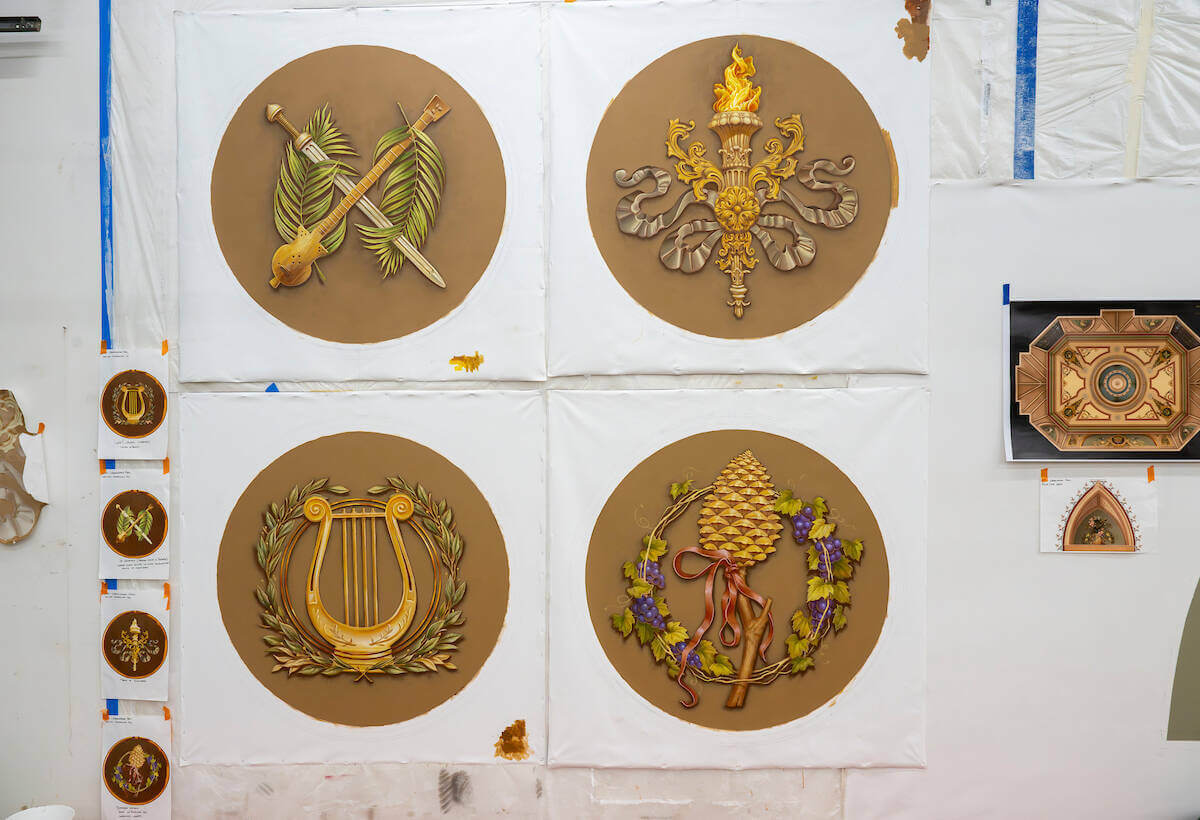
Nearby, smaller round painted ceiling medallions representing the Greek god Dionysus, a torch of knowledge, St. Genesius (patron saint of the theater), and a lyre and laurel wreath hang finished on the wall.
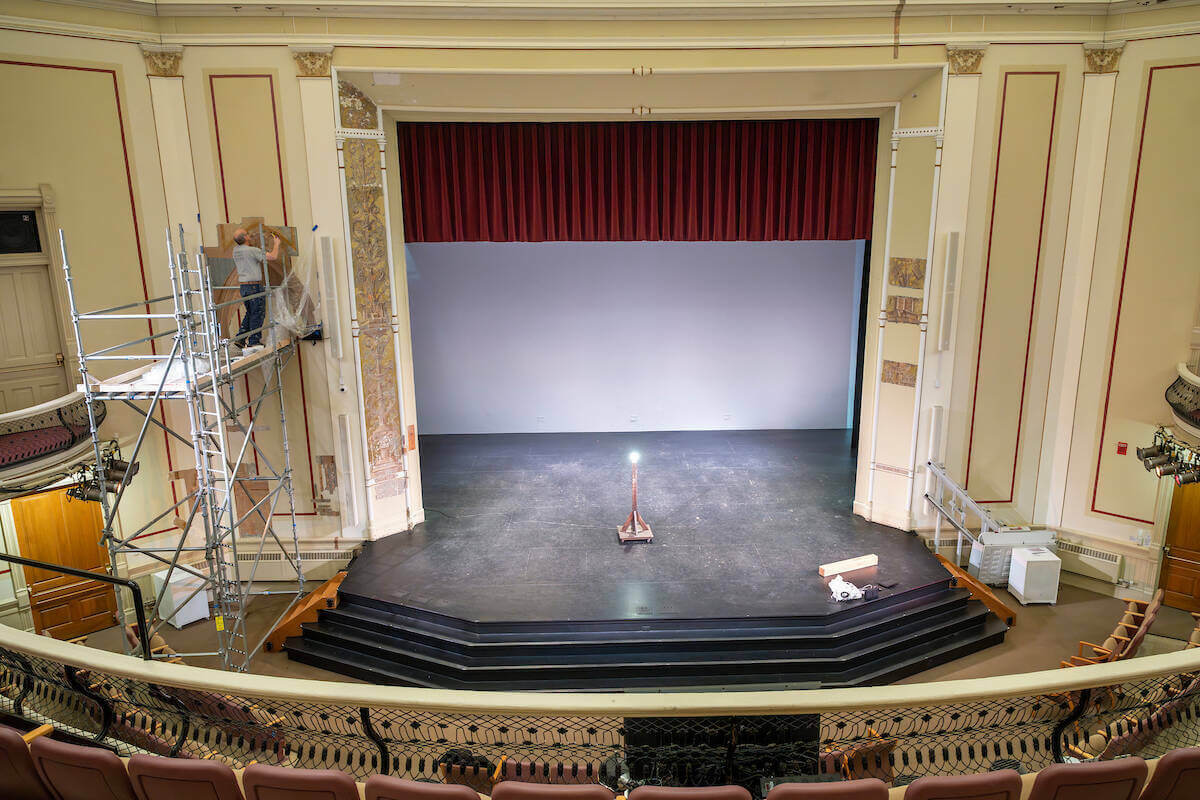
These colorful works being crafted by a team of artists at the Conrad Schmitt Studios in New Berlin, Wisconsin, are awaiting shipment to Notre Dame. The paintings will adorn key spots on the walls and ceiling of Washington Hall, the 143-year-old campus auditorium that this summer is undergoing a major renovation.
The goal of the project is to renovate the auditorium for today’s audiences. In the process, the project is recreating the style and many of the high Victorian interior artistic details that were added inside Washington Hall in 1894 by Luigi Gregori and Louis Rusca, Italian artists who also decorated the interior of the Main Building and Sacred Heart basilica. (The auditorium’s portraits were removed and the rest of the ornate artwork was painted over in 1956.)
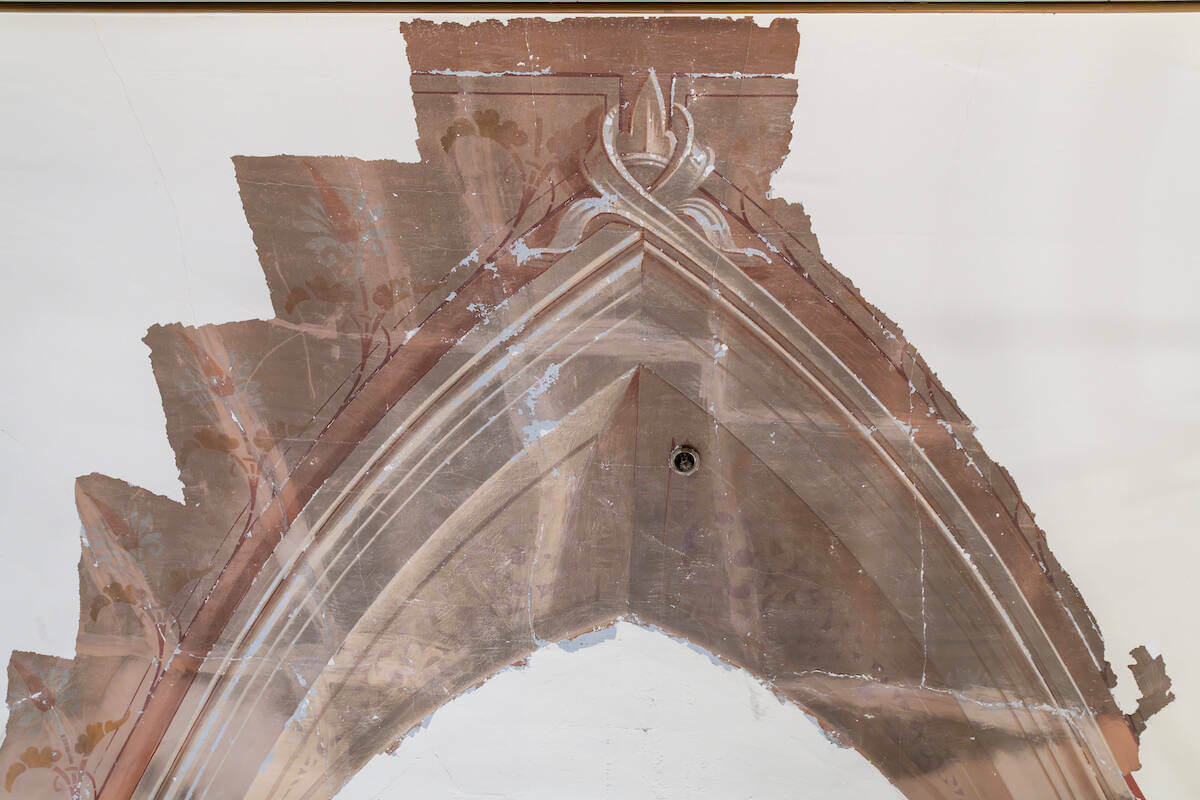
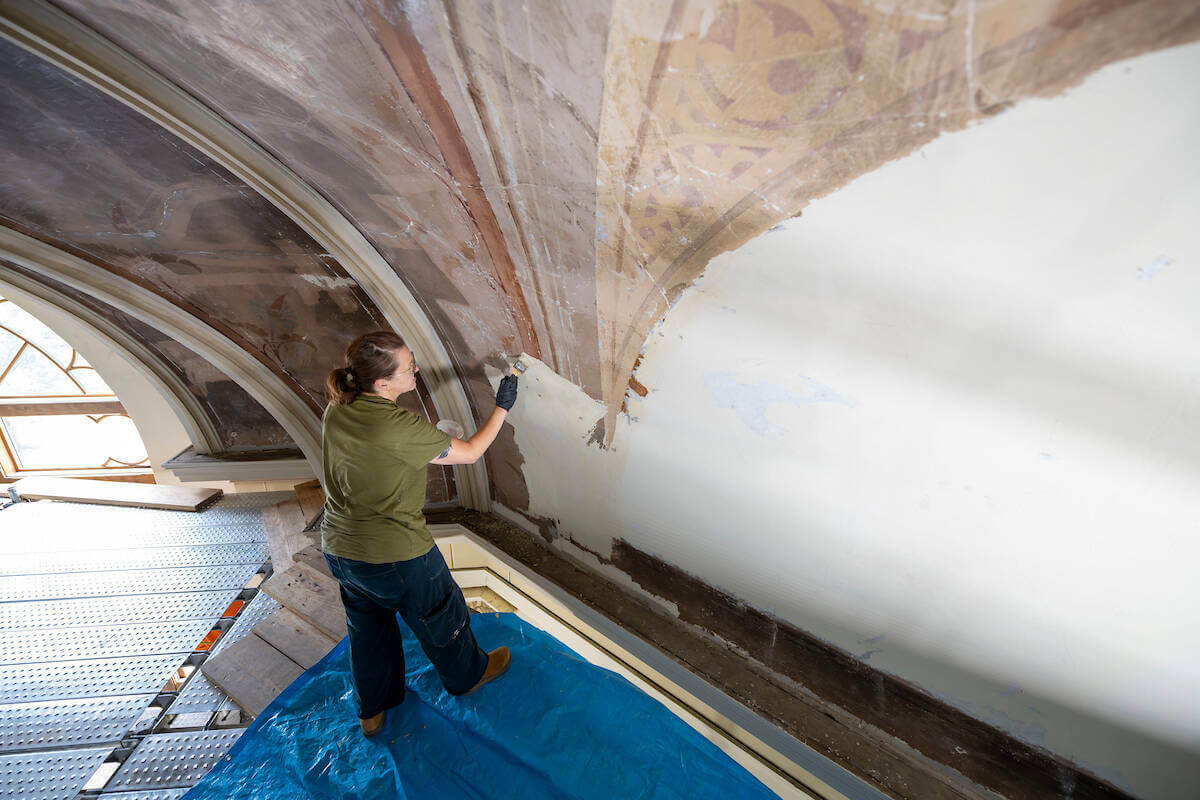
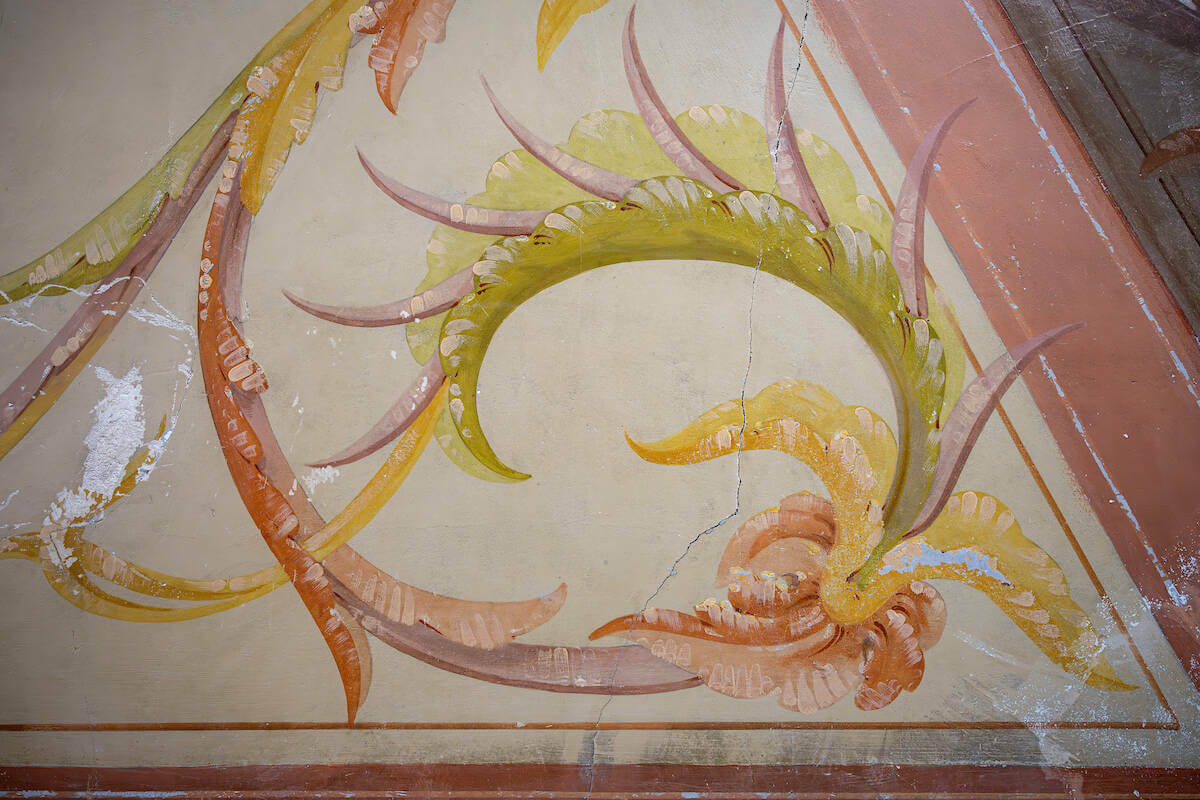
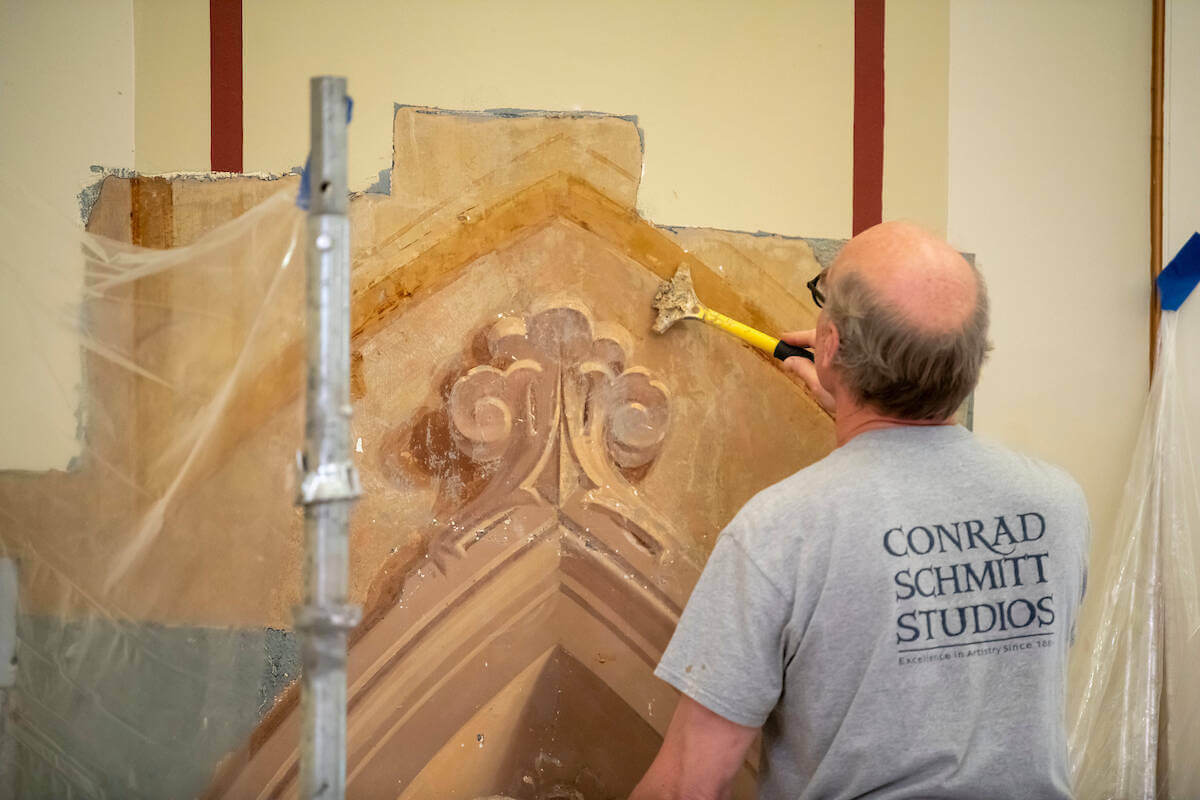
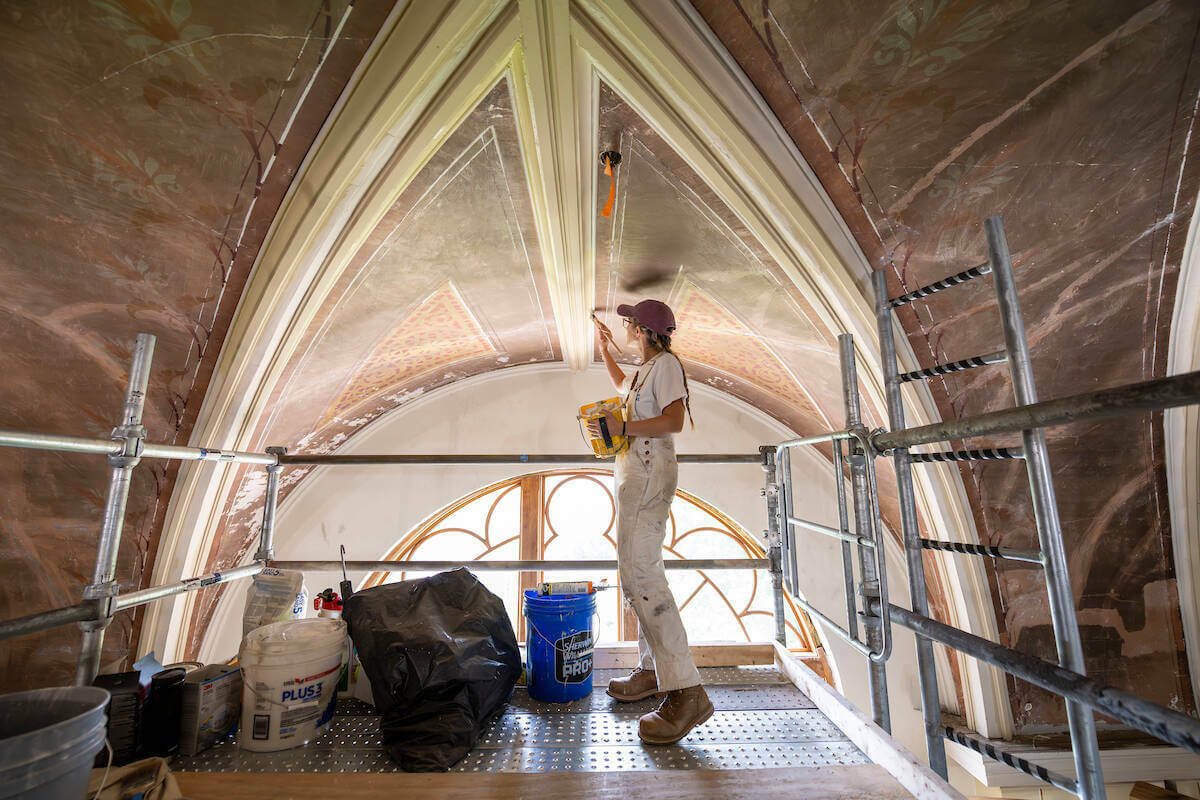
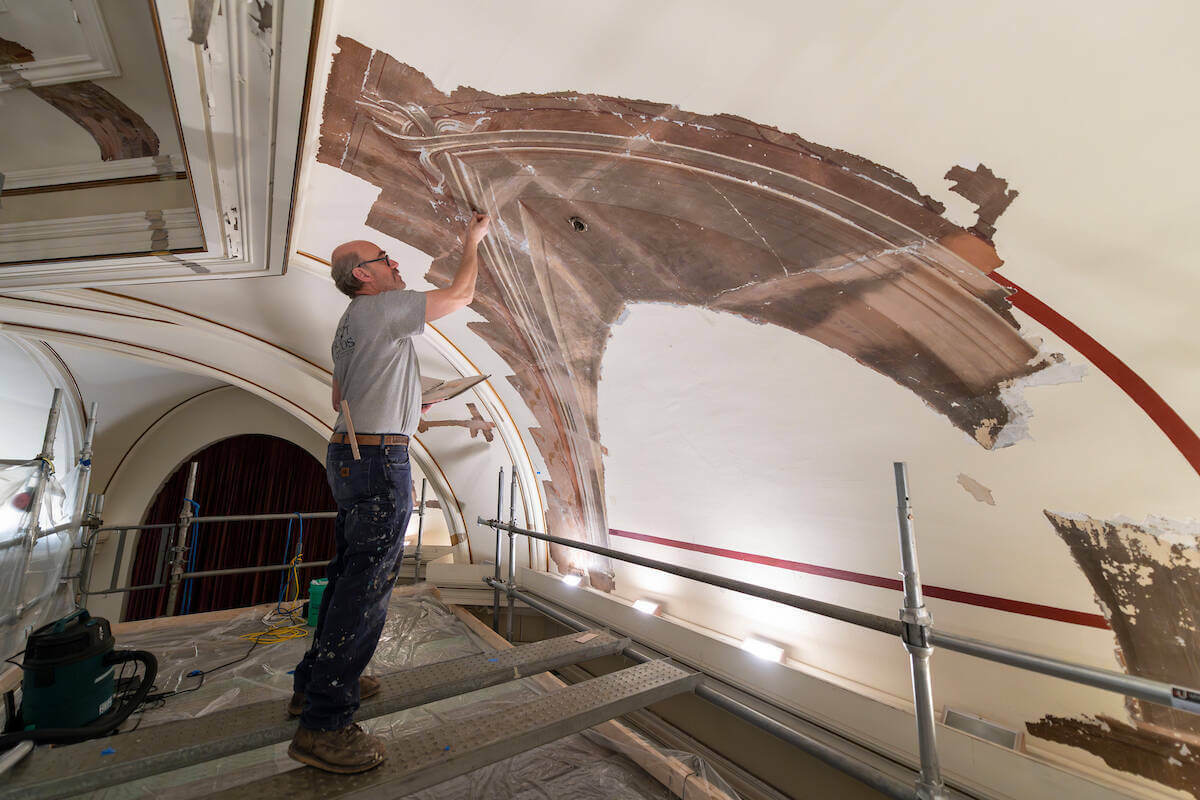
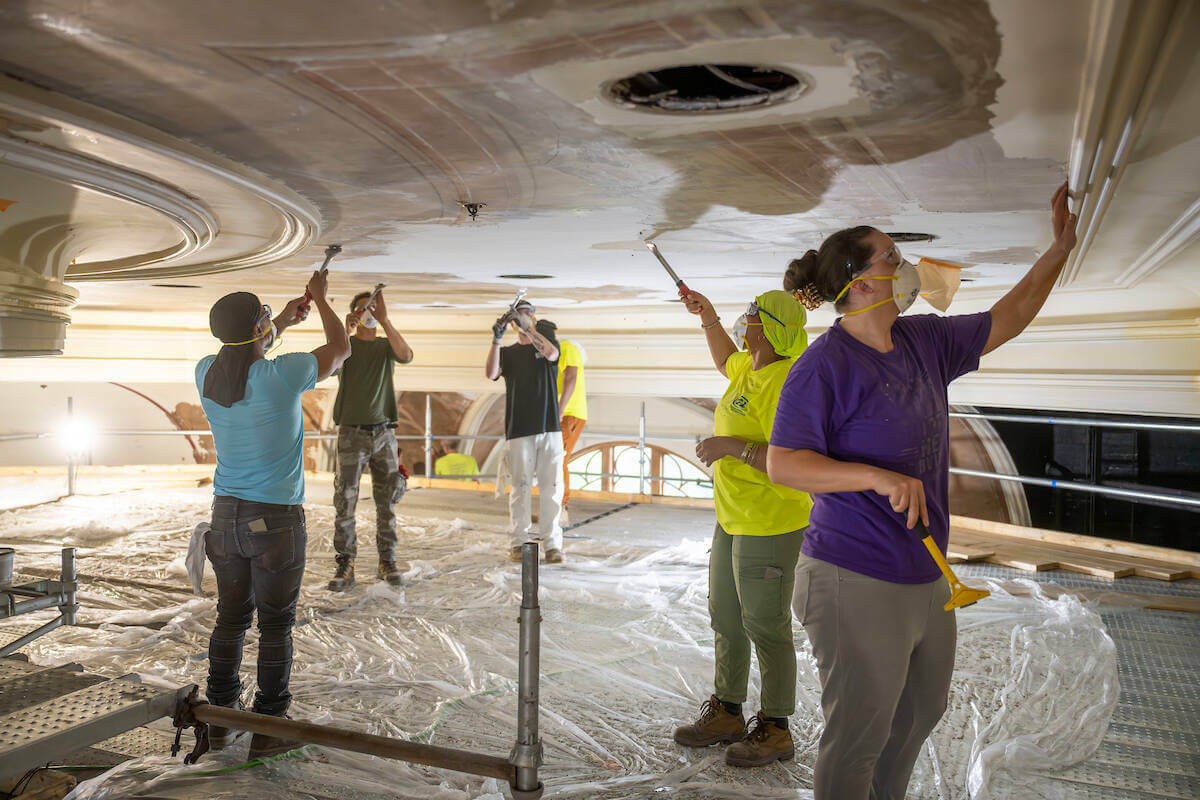
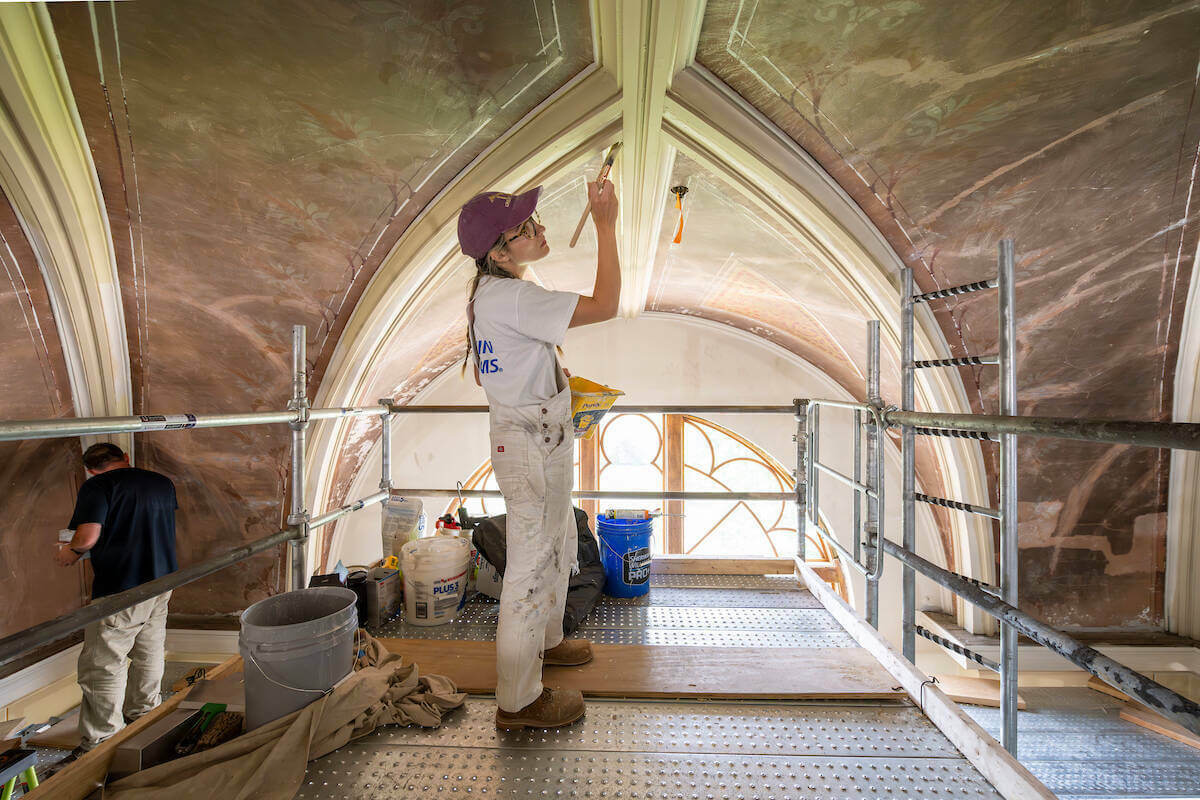
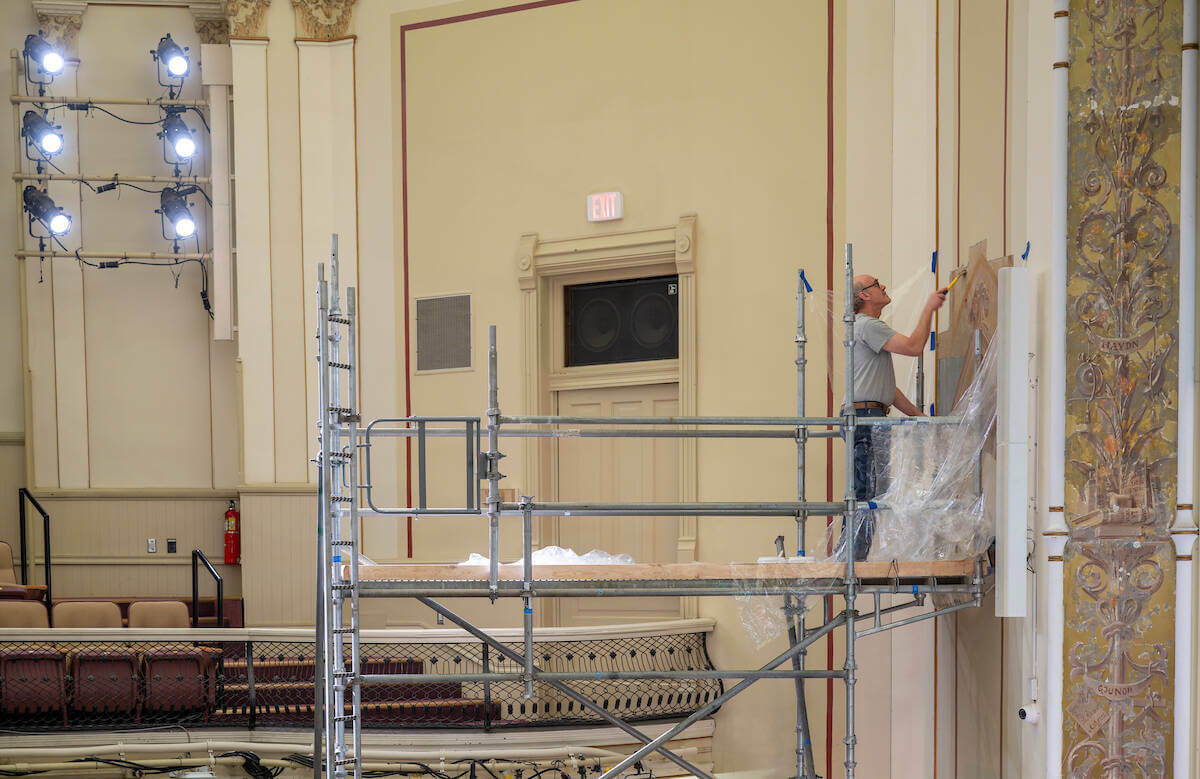
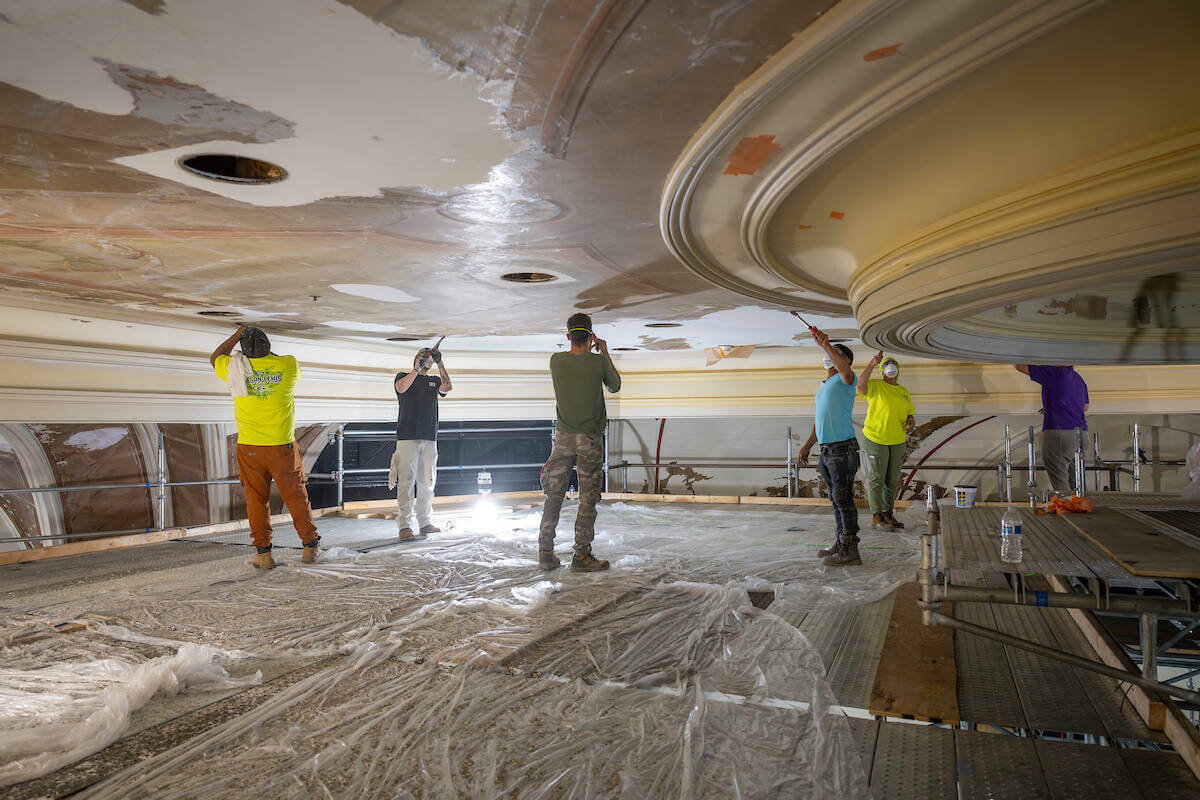
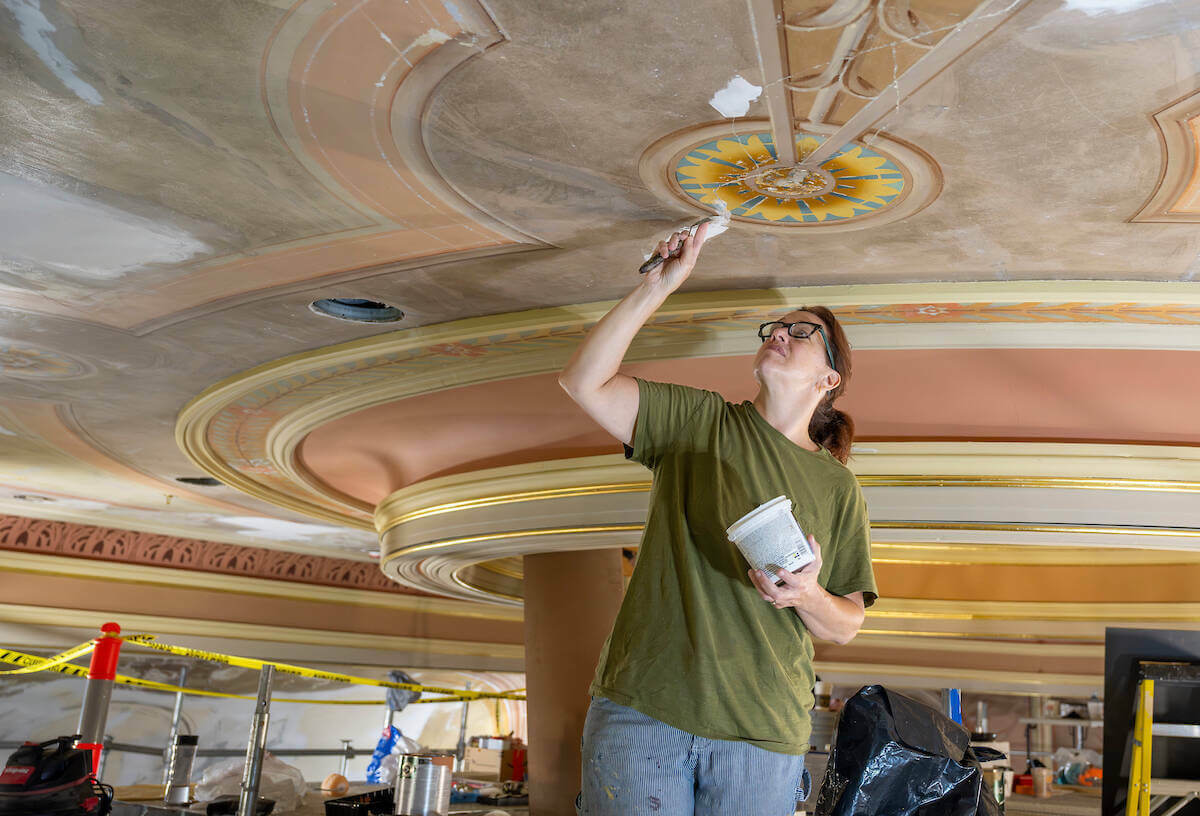
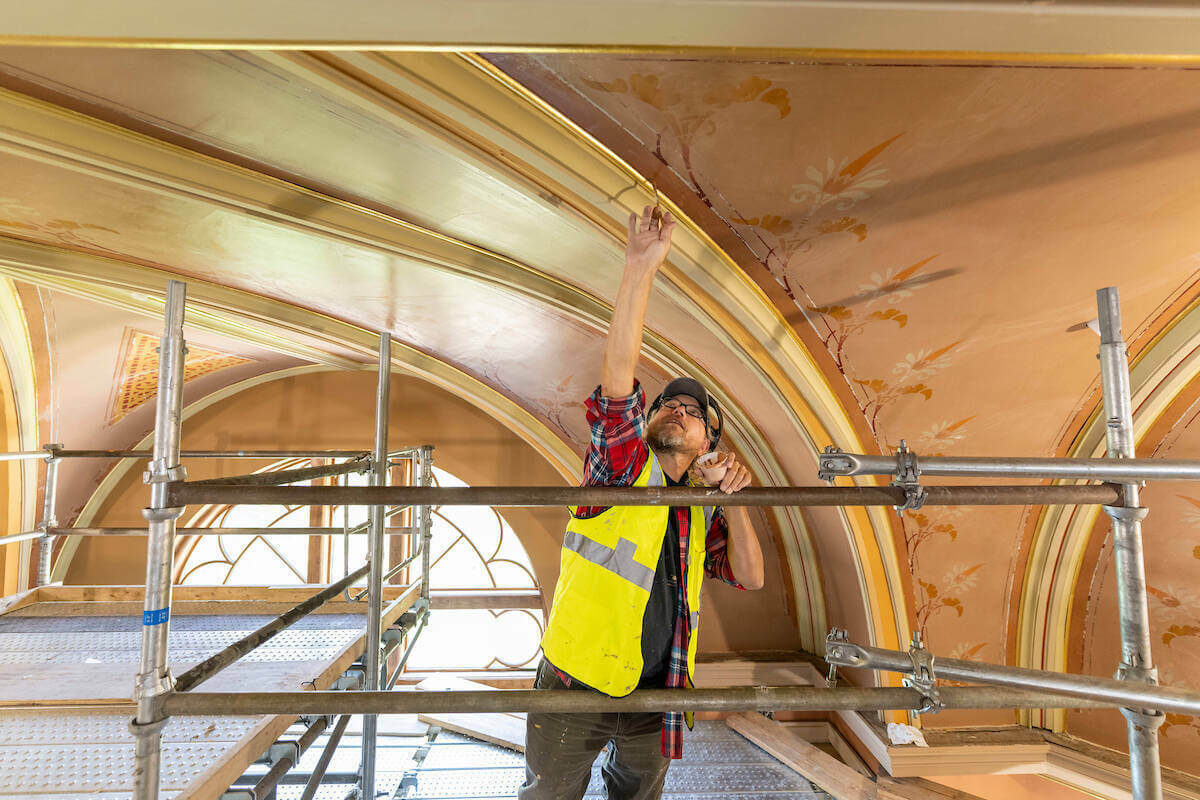
The initial exploration was in February, when artists from Conrad Schmitt carefully chipped away at the paint in a few areas of the auditorium and discovered buried treasure — much of the 1890s artwork was hidden underneath.
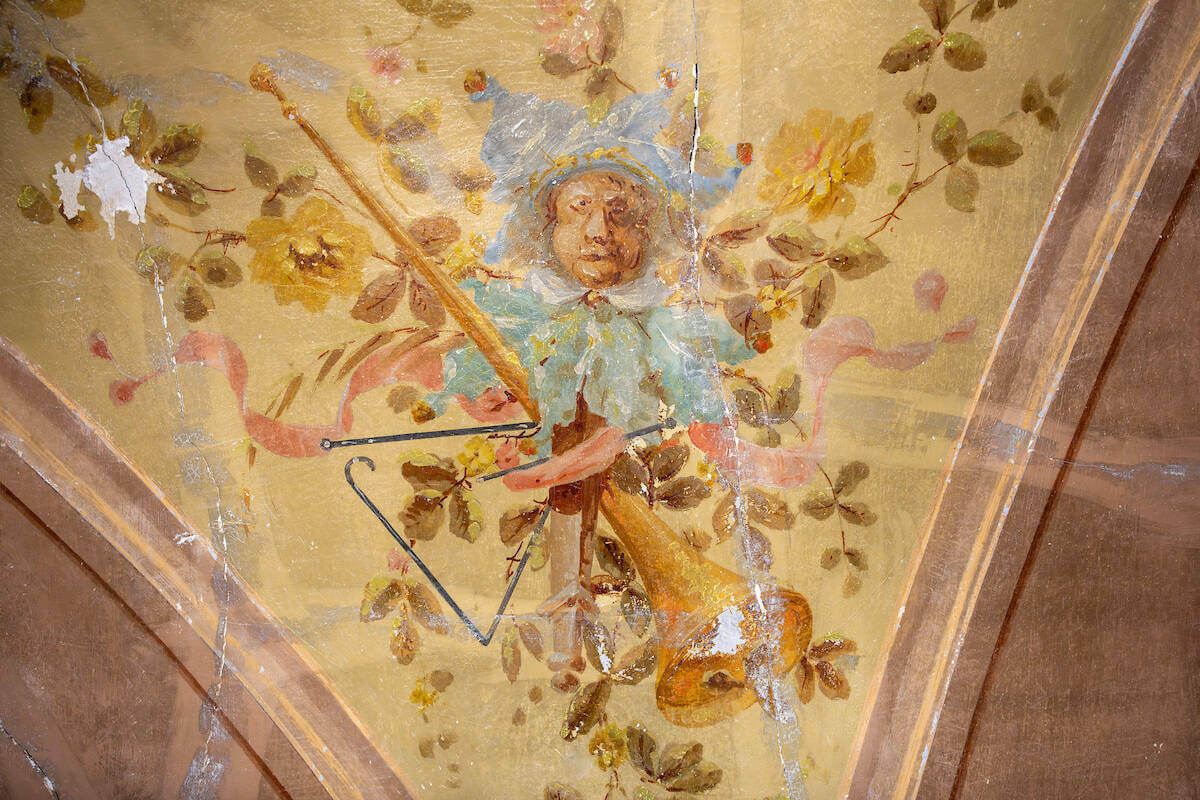
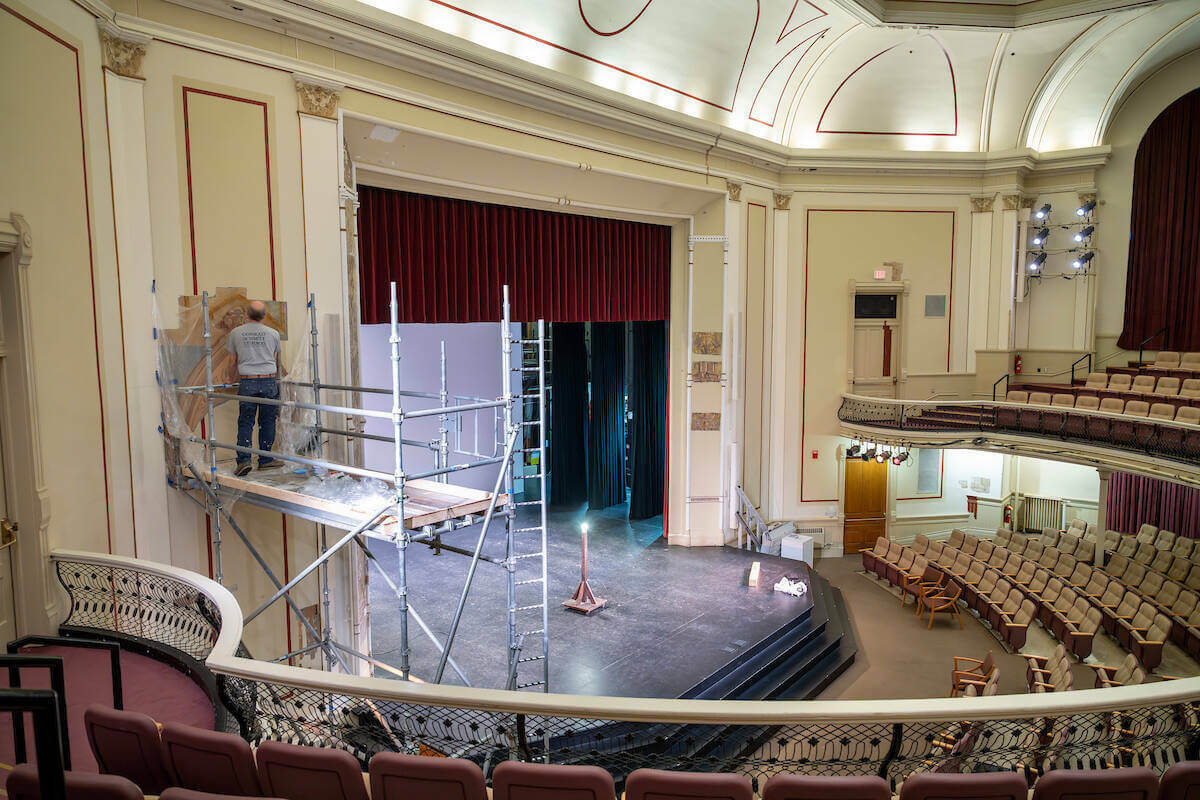
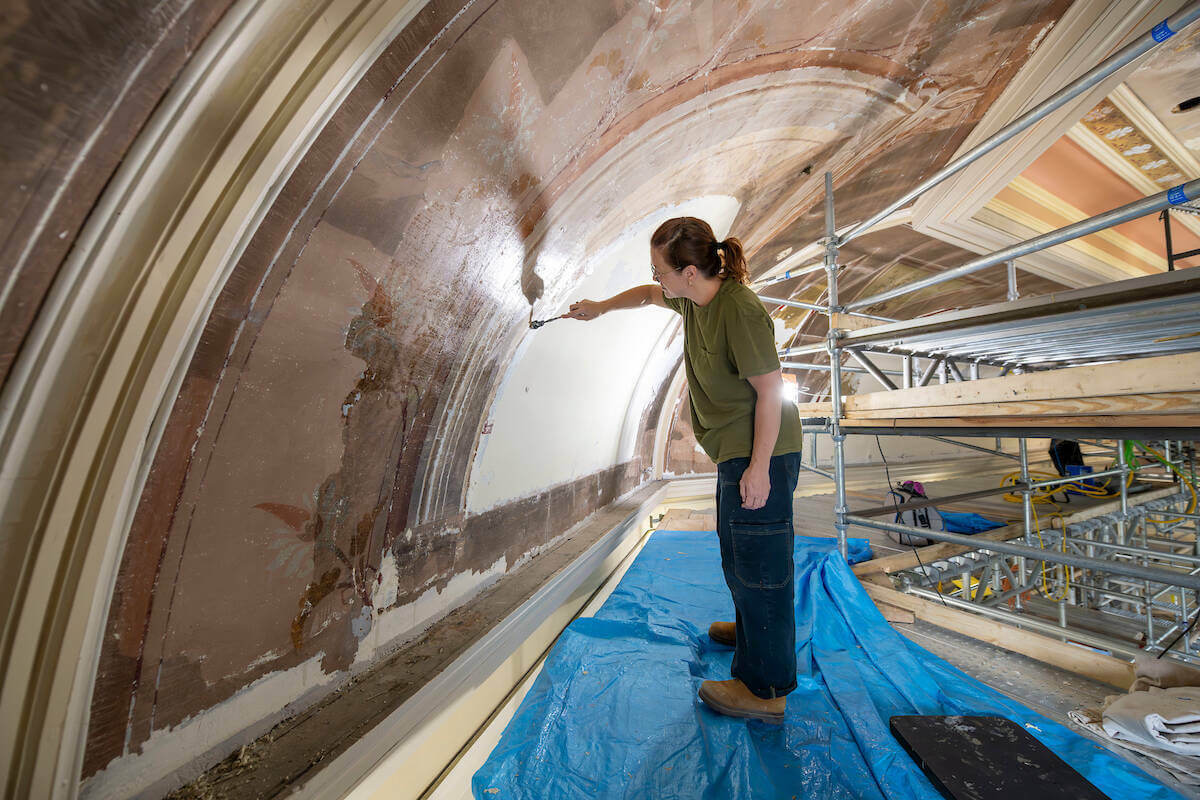
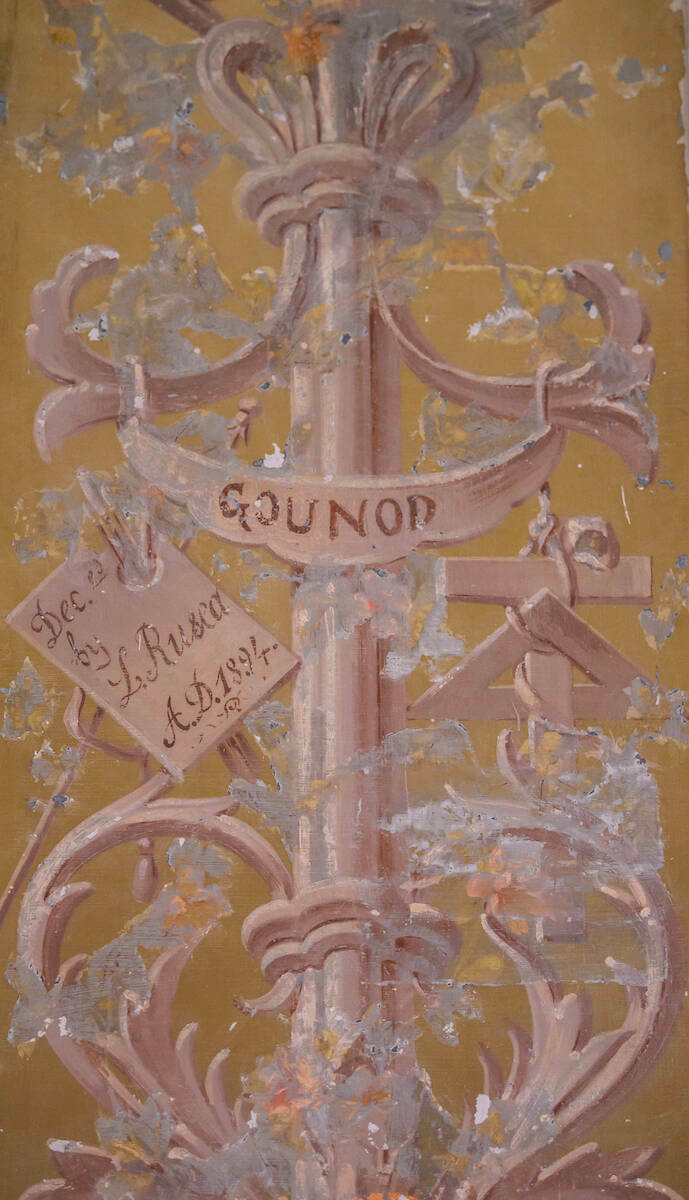
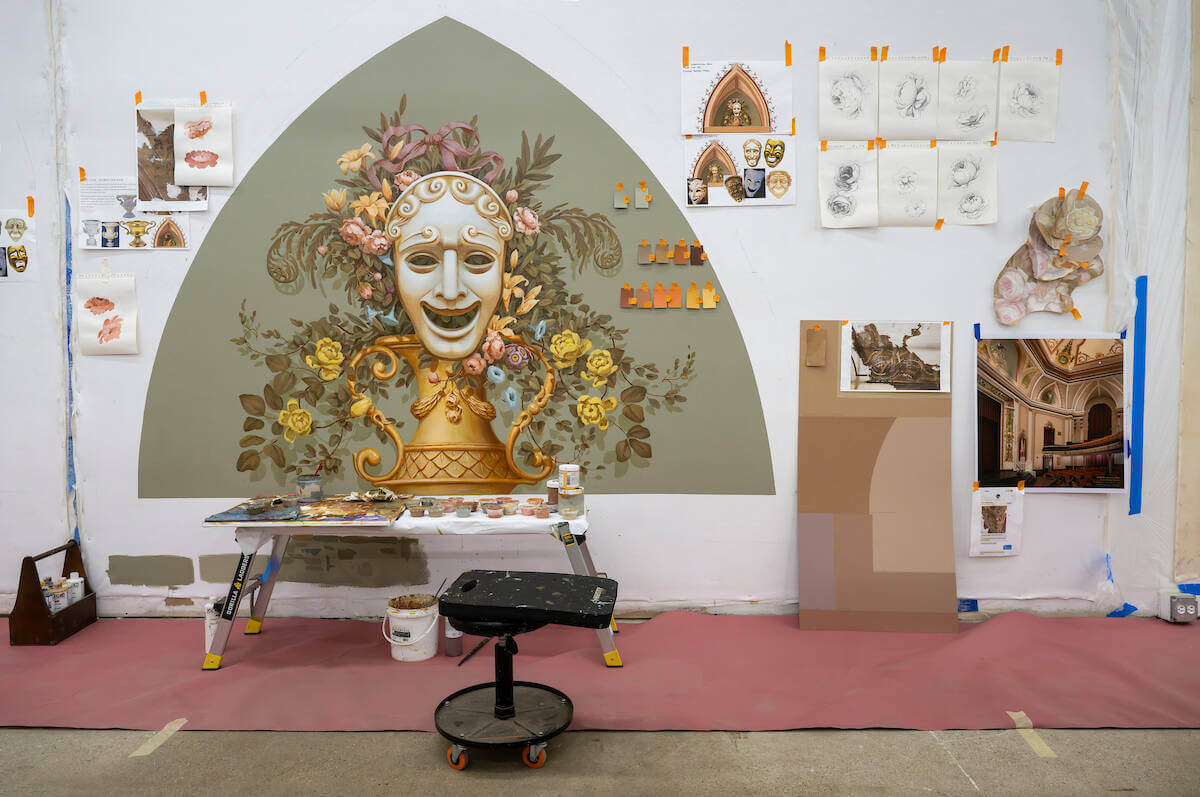
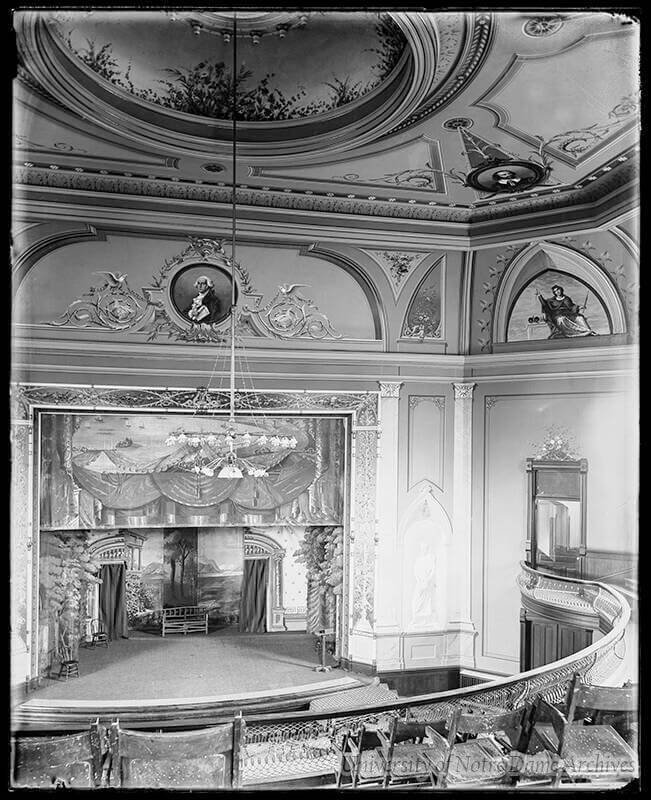
Formal planning for the new decor began with a single image: a circa-1895 sharply detailed, black-and-white photograph in the Notre Dame Archives. It shows the stage and northeast section of the auditorium, a portrait of President George Washington above the proscenium, other painted figures at the corners, a floral scene on the domed ceiling, and delicate filigree and scrollwork throughout.
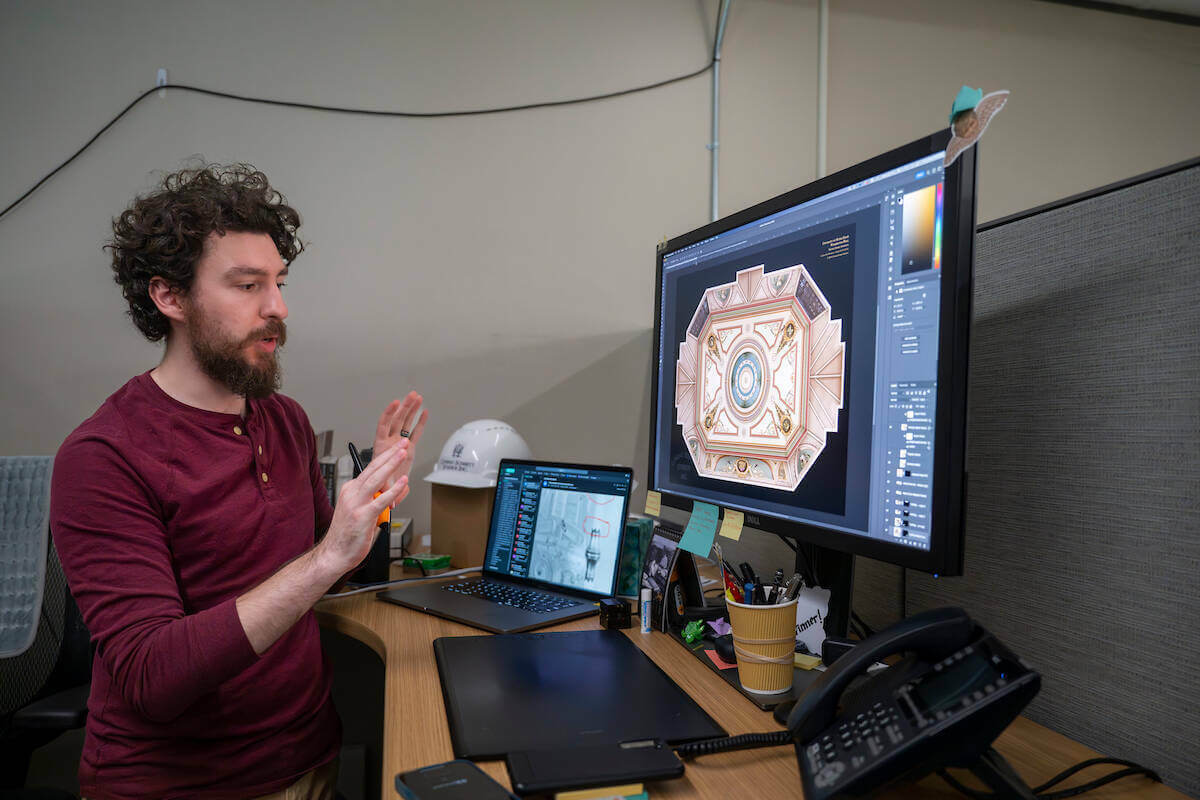
“This historical image — the quality for when it was taken was pretty amazing. I was able to identify a lot of the details, but the colors were a mystery,” says Aidan Gruber, a historic decorative digital designer who crafted a plan for the project on his computer at the Wisconsin studio.
Gruber created a decorative plan for the auditorium that leaned heavily on that 1890s photo for the details. Early this summer, as workers carefully scraped and uncovered more artwork on the walls and ceiling, he updated the plan with a color scheme drawn from the newly revealed Gregori/Rusca details.

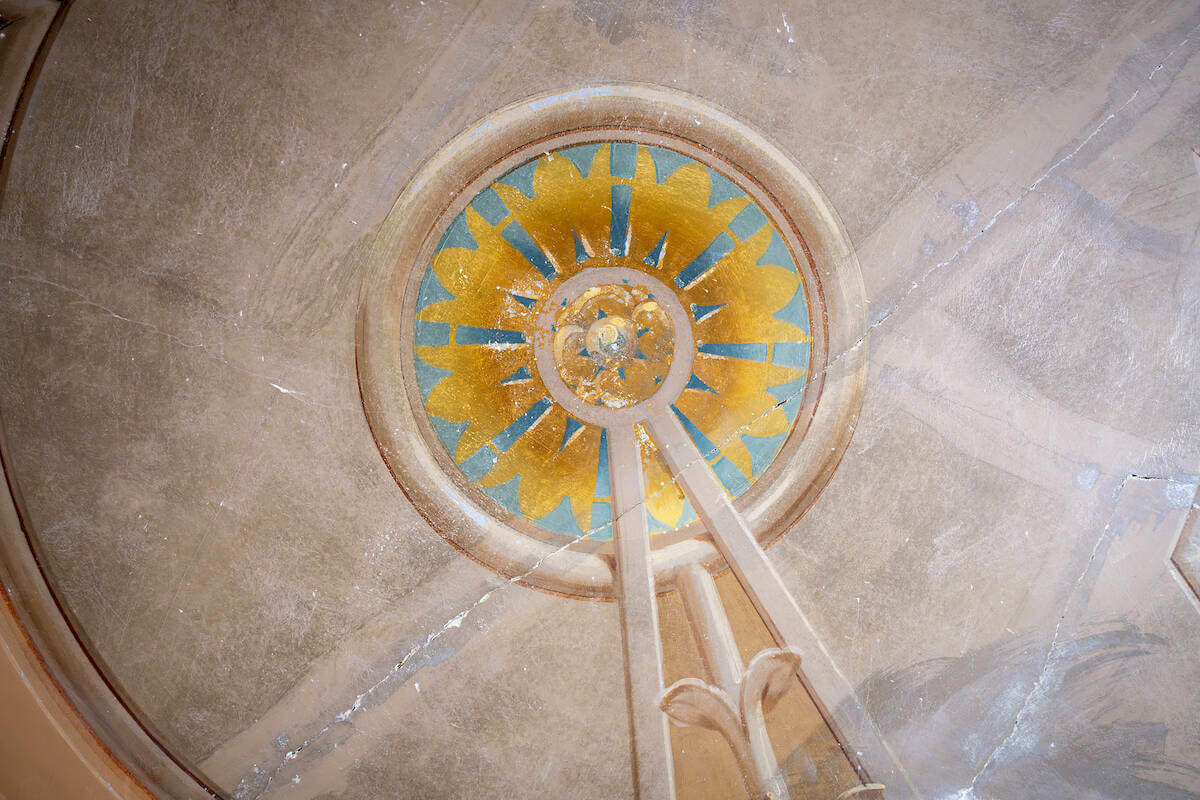
A swirl of gold filigree above the stage, for example, changed to intertwining hues of gold, plum and green. A monotone ceiling flower morphed to bold yellow on a sky-blue background.
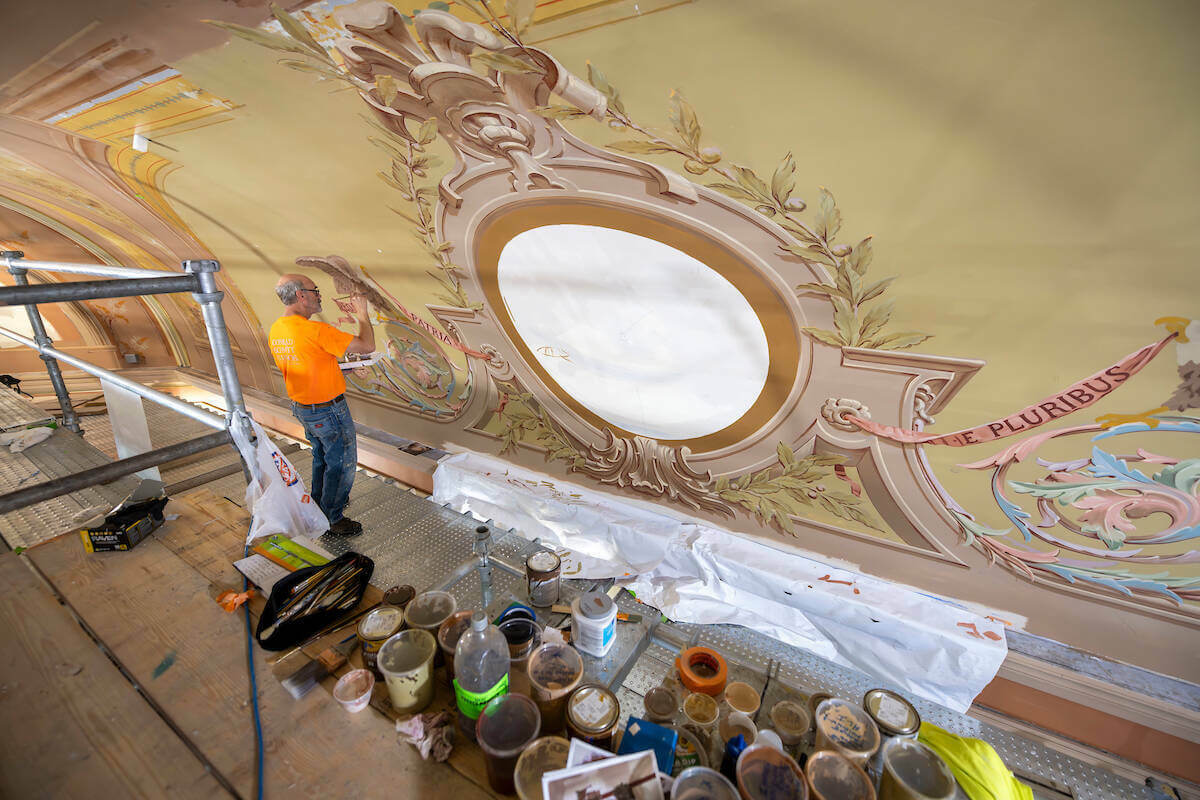
The artists on site at Notre Dame created tracings of the artwork they uncovered, which Gruber used for sizing new stylized murals and medallions. They will fit precisely in the spaces where Gregori’s portraits of Washington and various artists — lost and likely destroyed — once hung.
The workers on campus sometimes sent Gruber closeup images of specific geometric designs they had just uncovered. It was like working a jigsaw puzzle to figure out where in the auditorium those smaller motifs belonged in the plan.
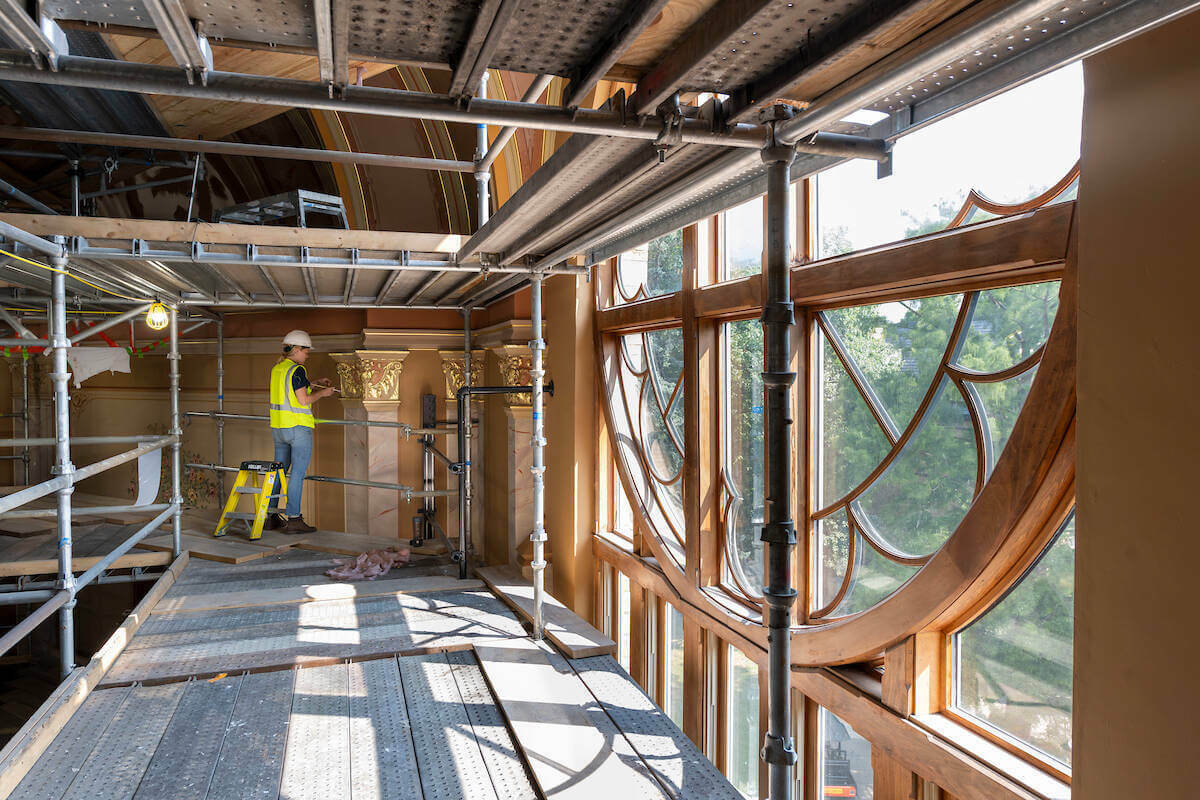
Meanwhile, back on campus, the renovation work is progressing inside Washington Hall. While some surfaces are still being stripped of layers of paint and cleaned, final artwork also is being added.
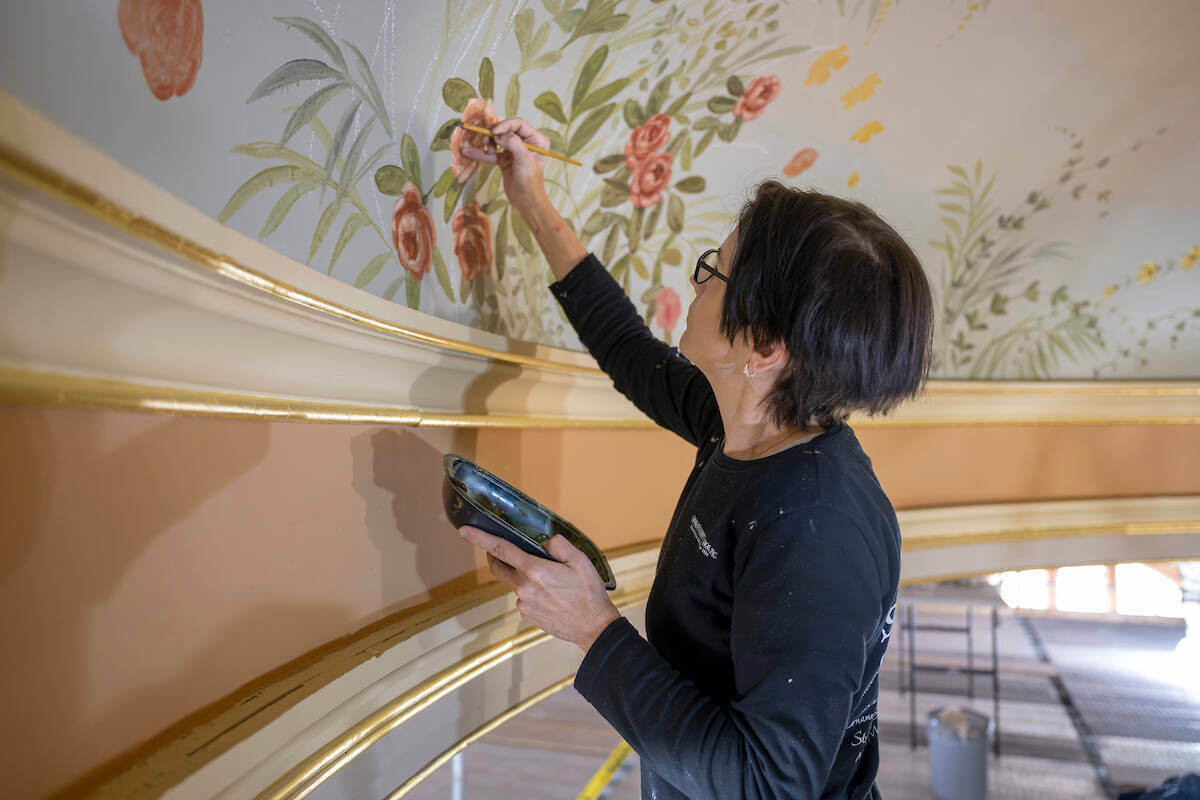
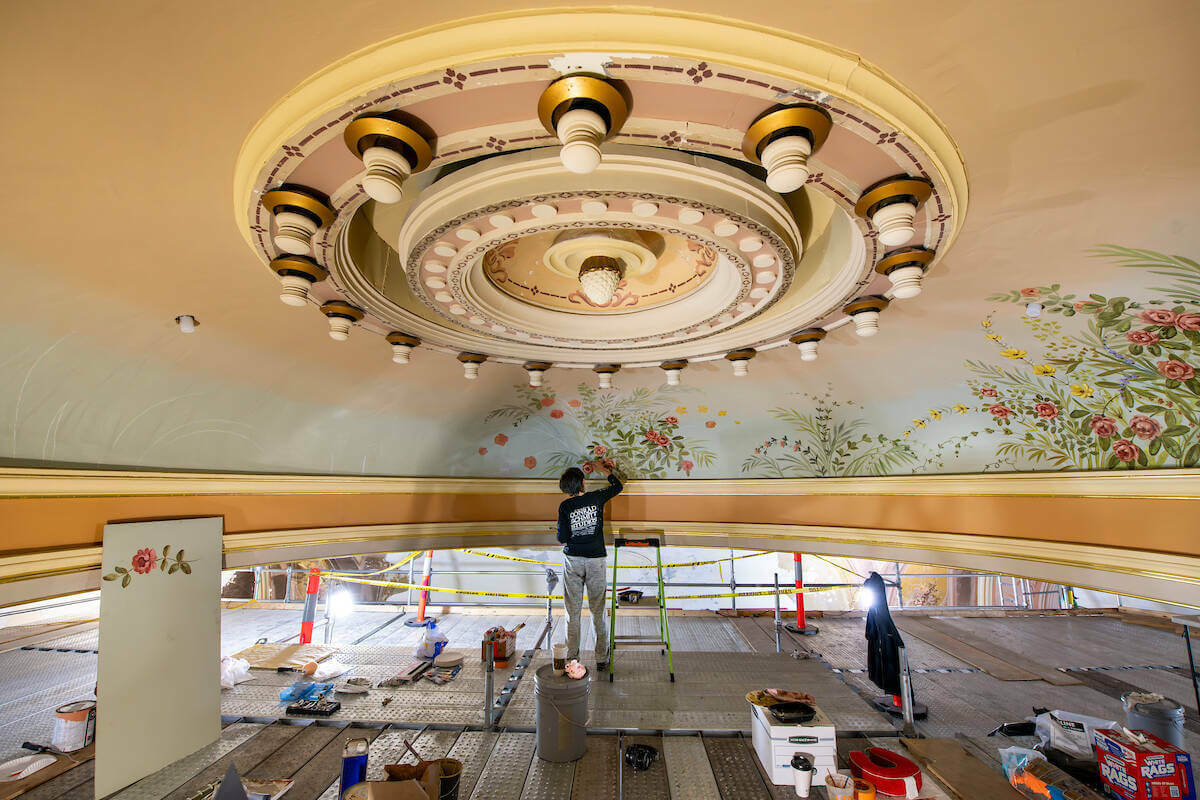
A colorful scene of flowers and grasses — based on details from that 1890s photo — was hand painted on the ceiling’s inner dome by Inga Belozerova, a New Jersey-based artist. That work took four days.
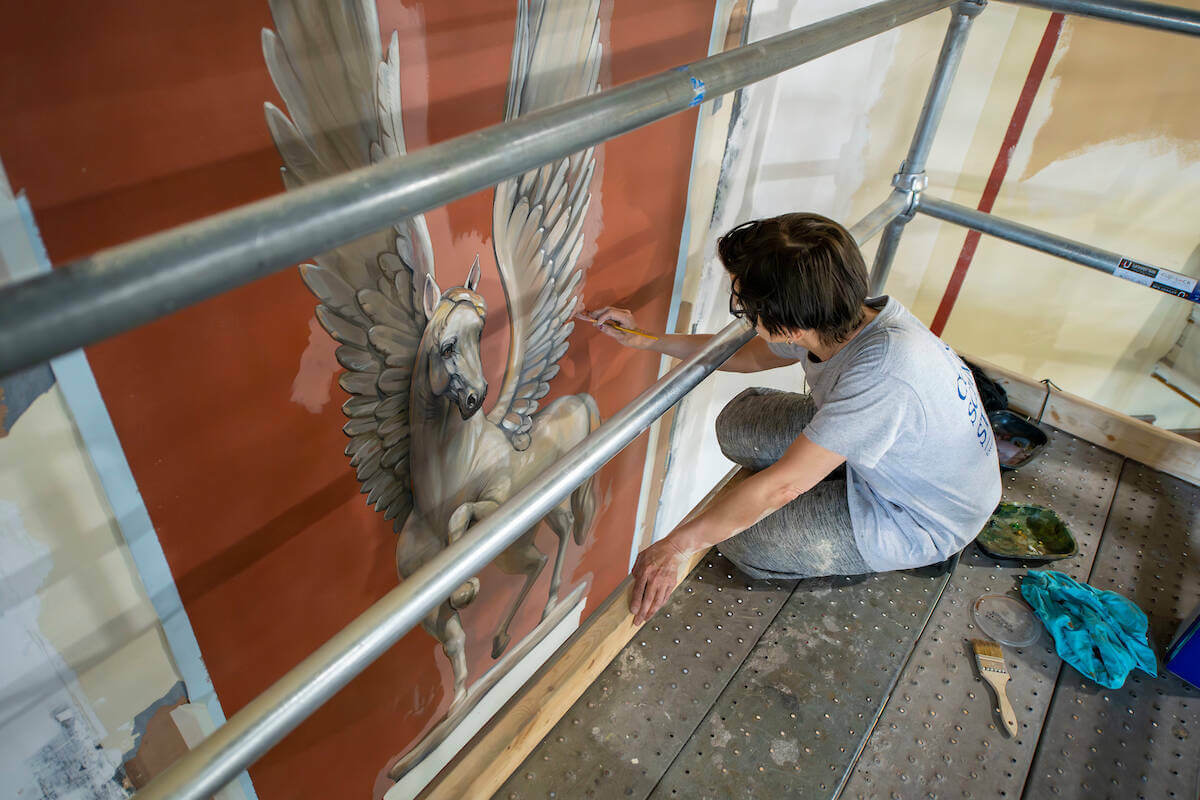
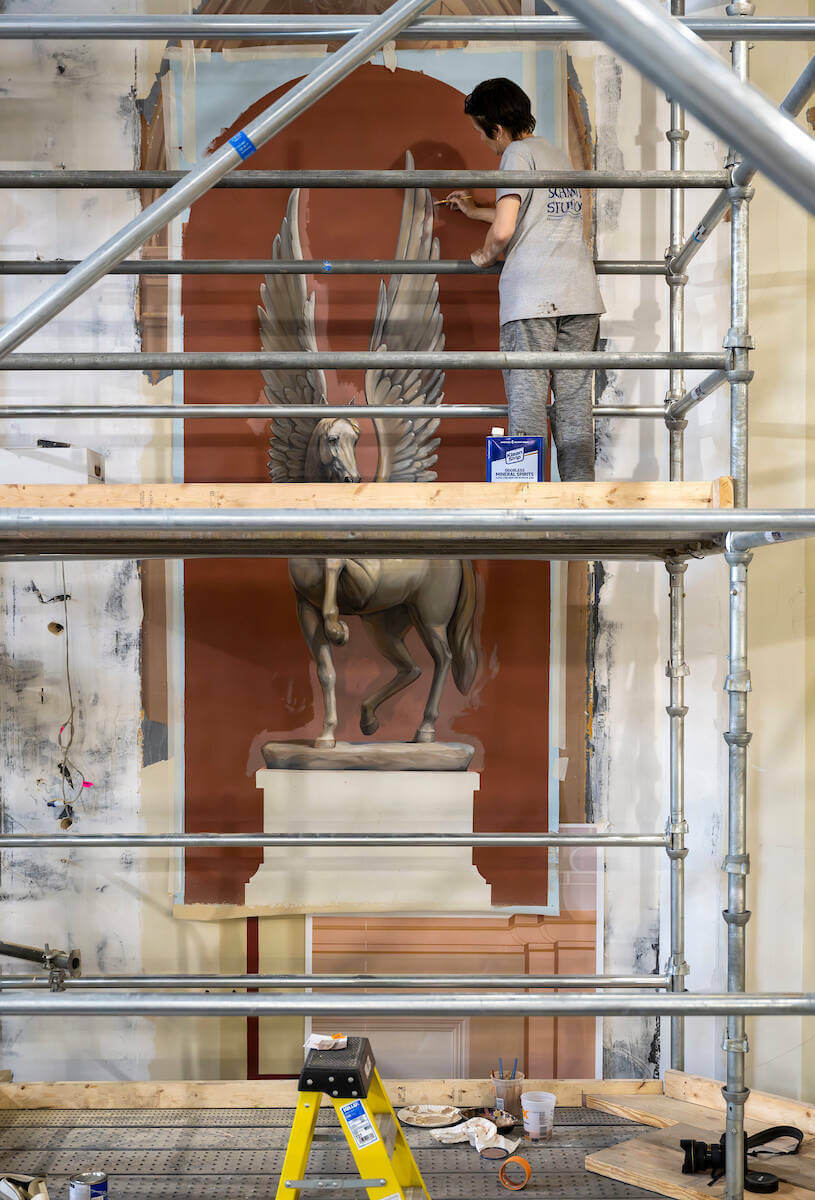
A trompe l'oeil mural of Pegasus, the winged horse from Greek mythology, now is progressing at the right side of the stage.
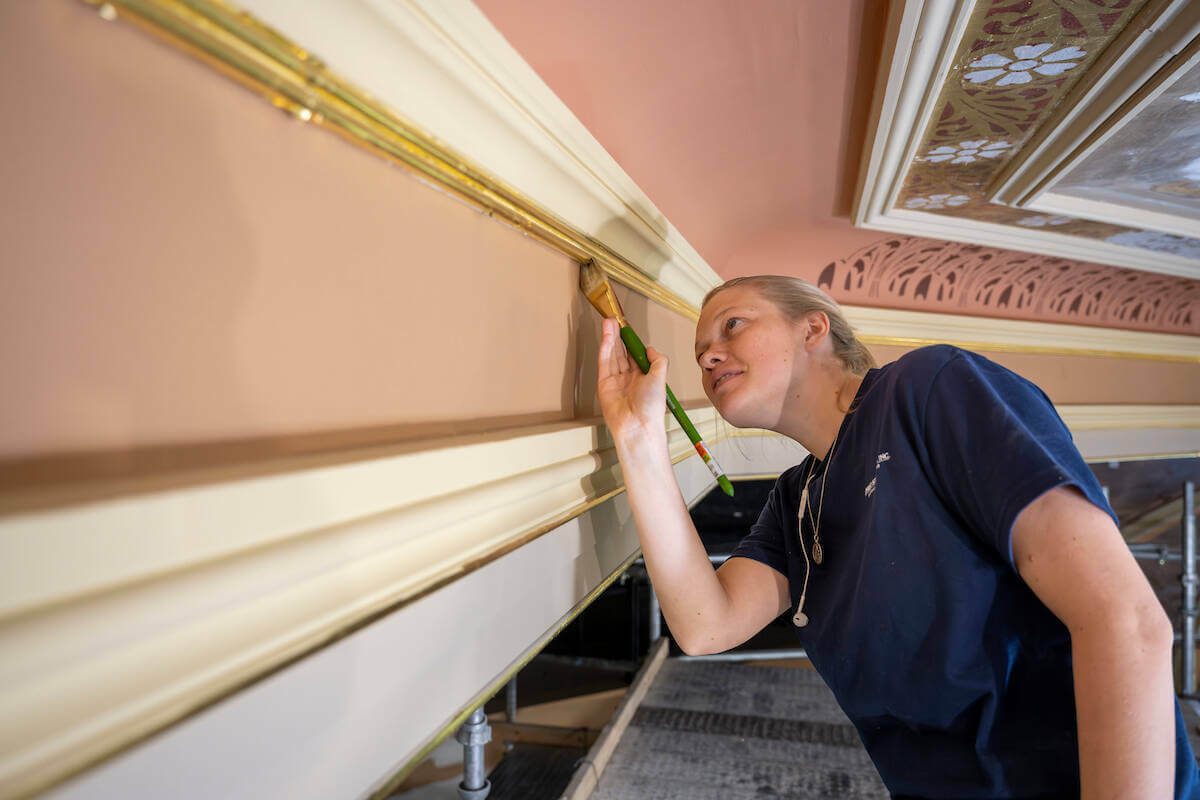
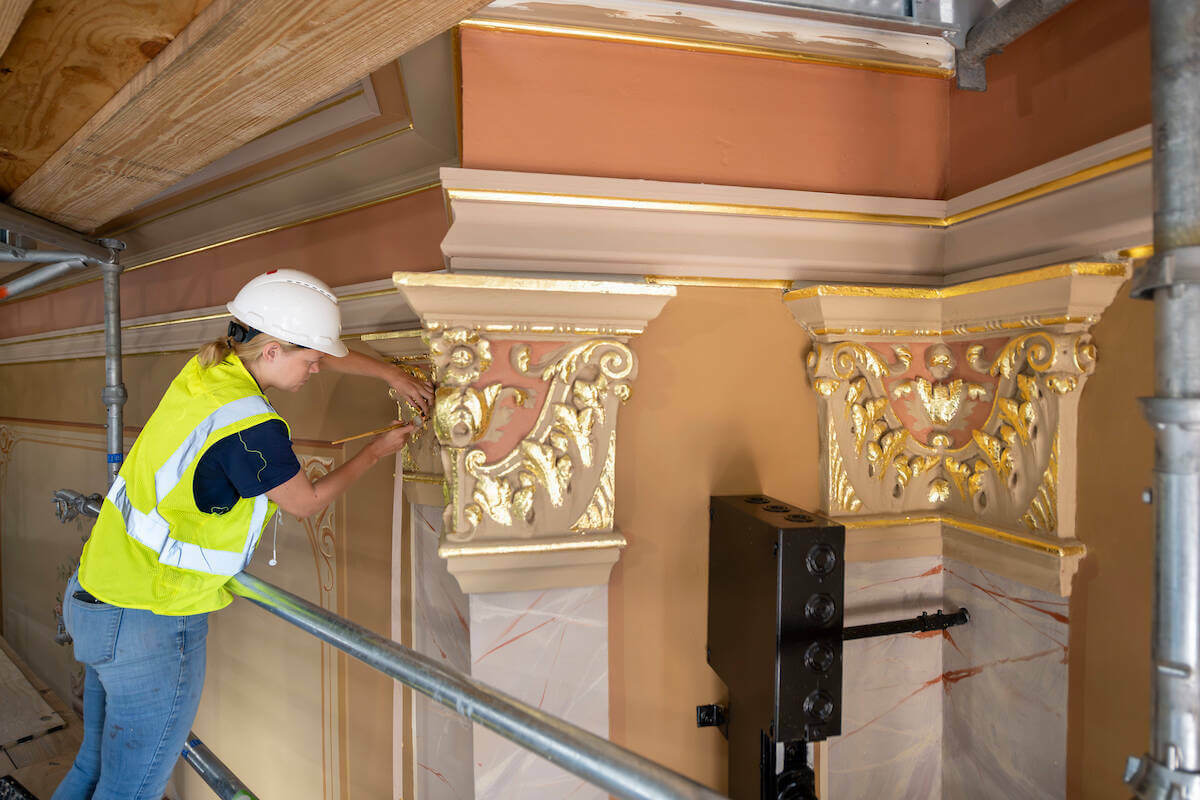
A worker carefully measures before placing a stencil to paint an ornate repeating pattern in chocolate brown over a dusty salmon background on the crown molding that connects the walls with the ceiling. Nearby, another artist painstakingly applies a powder-thin layer of bright gold leaf to wooden edging just below the stenciled pattern.
Gruber, the digital artist in the Wisconsin studio, has never visited Notre Dame. But he plans to after the project is finished to view the results of his work.
“Designing these new murals and medallions has been pretty fun — aiming to keep the energy and the idea of the original murals,” he says, “but incorporating them into a more contemporary style.”
Margaret Fosmoe is an associate editor of this magazine.