
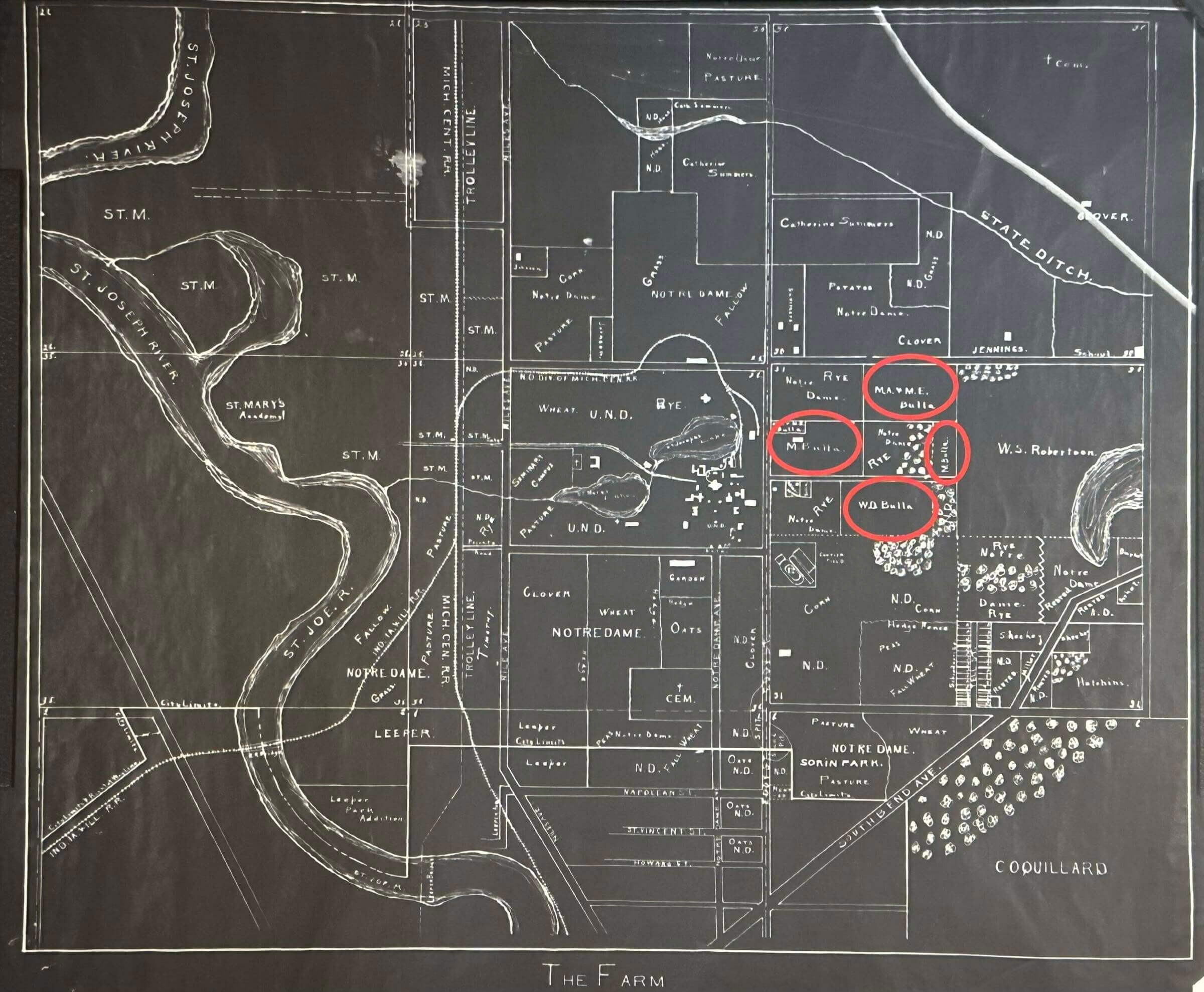
A decade before Father Edward Sorin’s 1842 arrival in northern Indiana to found Notre Dame, pioneer and abolitionist Thomas P. Bulla established his farm on what is now the northeast section of campus. The farm stood about where Flanner and Grace halls stand today.
The only remaining hint of that history is Bulla Road, an east-west street near campus named after Bulla and his family.
The built landscape of Notre Dame, Saint Mary’s College and South Bend is the focus of “City and Campus: Rediscovering Lost Landmarks,” a current exhibit at The History Museum in South Bend.
The exhibit includes photographs of Thomas Bulla, an early map showing the location of his farm and a circa 1835 brass compass he used in his role as St. Joseph County surveyor.
The exhibit was inspired by the 2024 book, City and Campus: An Architectural History of South Bend, Notre Dame, and Saint Mary’s, authored by the late Notre Dame architecture professor John W. Stamper.
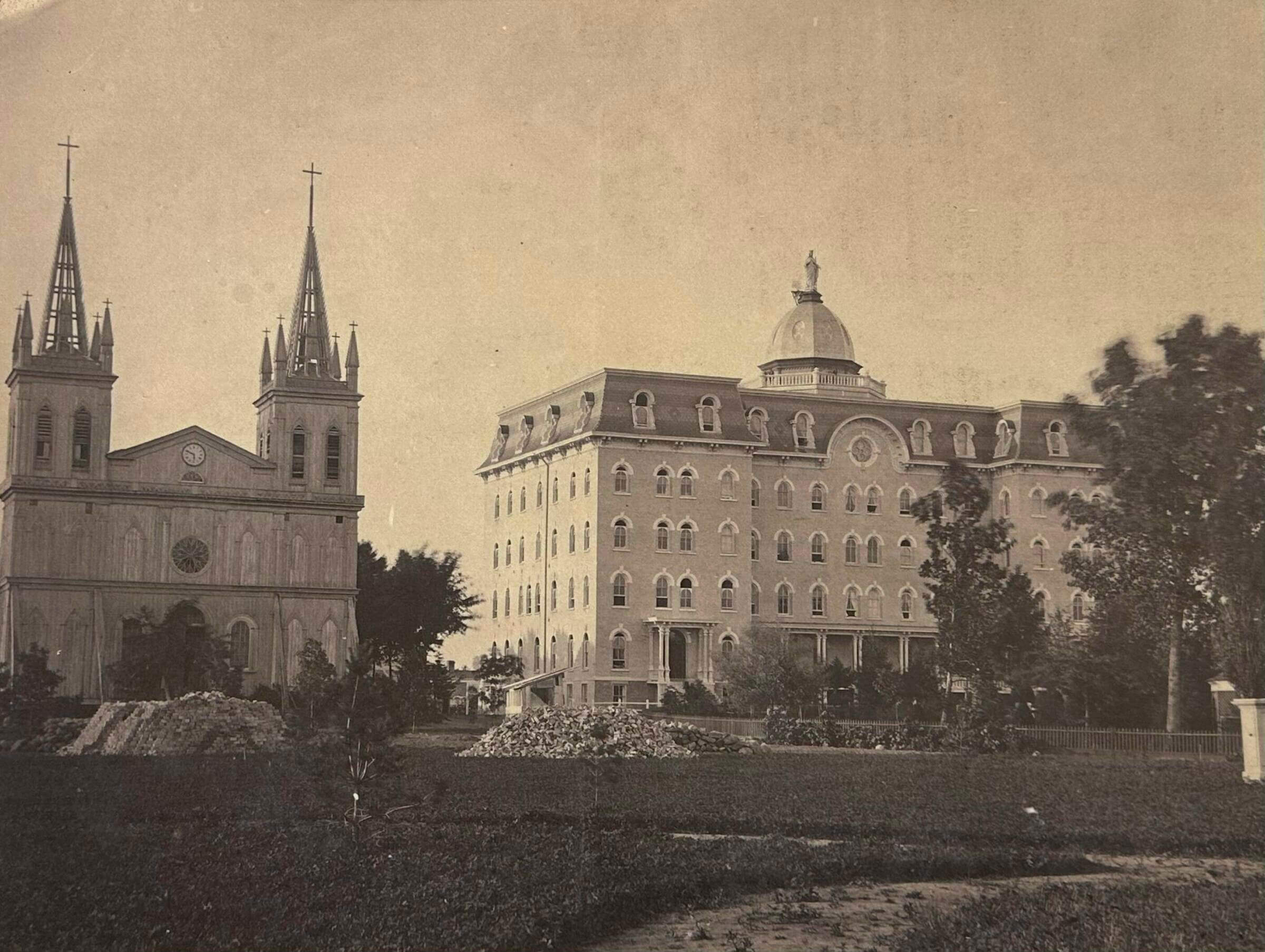
The exhibit in the Raclin Gallery of Notre Dame History includes photographs, maps, stories and artifacts about buildings — some still standing and others long gone — on the two campuses and in the city. It’s an engrossing look at the growth of South Bend and the two institutions.
There’s a section about Notre Dame’s Log Chapel. The original log cabin, built before Sorin’s time, was destroyed by fire about 1856. The current Log Chapel is a replica built in 1906 by a formerly enslaved man named William Arnett, who used a broad axe to hand hew the beams.

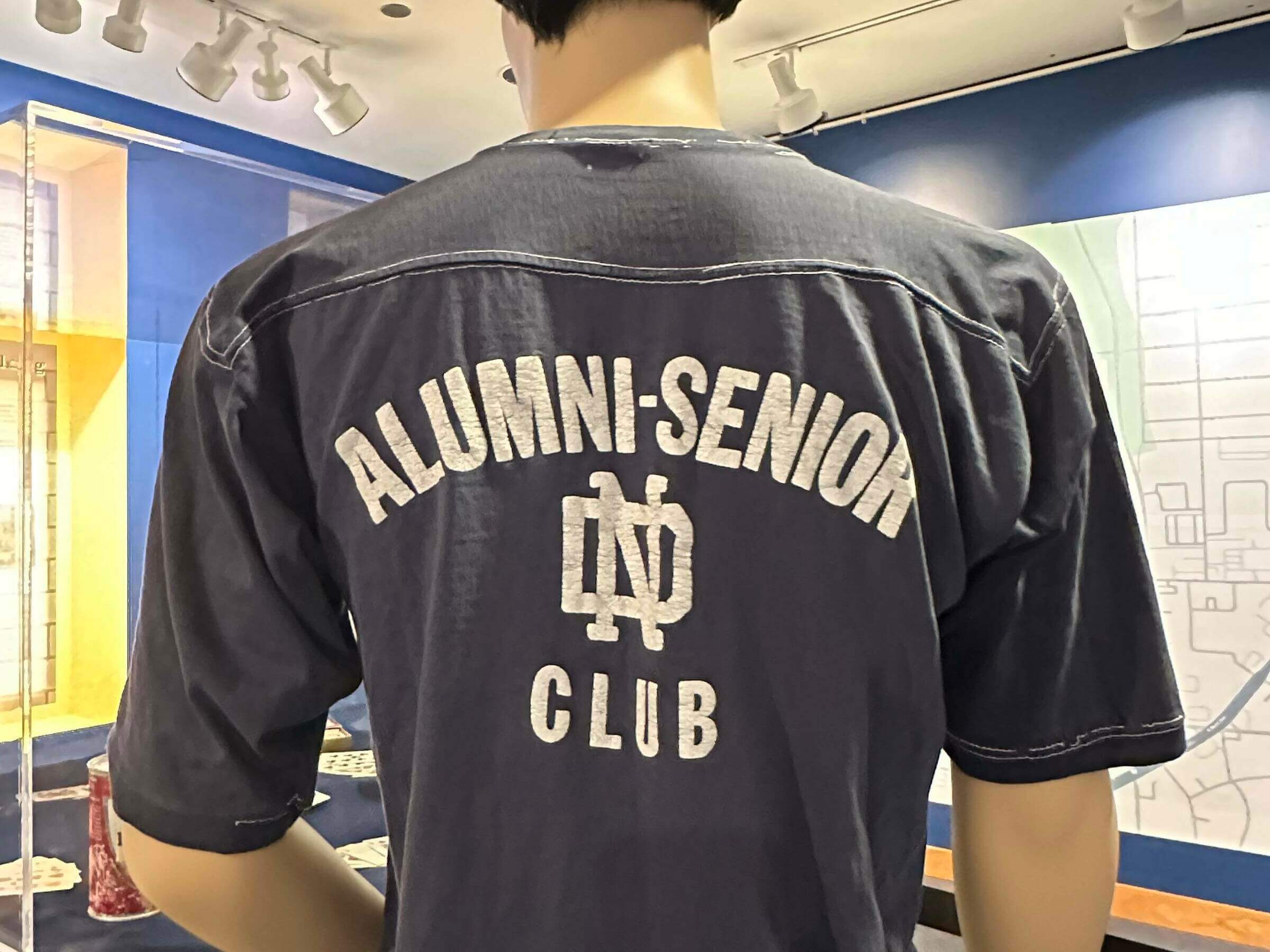
Part of the exhibit is a nod to Notre Dame’s former Alumni-Senior Club — better known as Senior Bar. From 1969 to 1982, the popular student-run tavern operated in the old McNamara place, a former family home that stood just southwest of Notre Dame Stadium. In 1982, that brick structure was demolished and the student watering spot moved into a new building next door, which today is Legends of Notre Dame restaurant.
There’s a map and photos of the site in southwestern Michigan where the Sisters of Holy Cross operated Saint Mary’s Academy — which later became Saint Mary’s College — from 1844 to 1855, before moving to land west of Notre Dame.
The display also offers photos and details about Cartier Field, an early football venue; Notre Dame’s former Manual Labor School; the University farm; the Oliver Opera House and other downtown movie palaces; the city’s street car system; and St. Joseph’s Church and parish in South Bend, which was established by Sorin.
The exhibit continues through December 31, 2025.
Margaret Fosmoe is an associate editor of this magazine.